Blog

  • Food Science & Avian Biology: Understanding Egg Structures

    Food Science & Avian Biology: Understanding Egg Structures

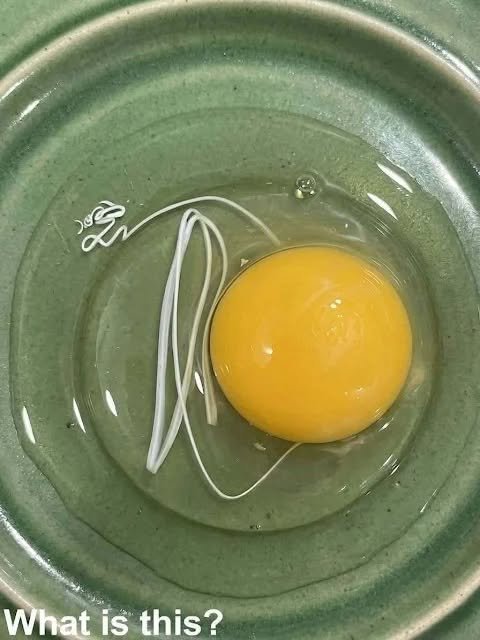
    That long, smooth white ribbon resting in the egg white is a chalaza (pronounced kuh-LAY-zuh), an entirely natural and safe anatomical structure found in every fresh chicken egg.

    What Is the Chalaza?

    1. Natural Anchor System:
      • The chalaza consists of dense, twisted strands of egg white protein (albumen).
      • There are two chalazae inside every egg—one on each side of the yolk. Their biological function is to suspend the yolk in the center of the egg, preventing it from floating to the top or smashing against the shell walls.
    2. Sign of High Freshness:
      • A prominent, thick, or distinct white chalaza is actually a indicator that the egg is extremely fresh.
      • As an egg ages in storage, these protein cords naturally thin out, dissolve, and become transparent, blending into the surrounding egg white.
    3. Edibility and Preparation:
      • The chalaza is 100% edible, harmless, and safe to cook and eat.
      • It cooks down along with the rest of the egg white. The only reason chefs sometimes strain or remove chalazae is to achieve an ultra-smooth texture when preparing delicate custards, flans, or curd sauces.

    Deconstructing “Food Horror” Clickbait Narratives

    Posts featuring an abnormally stretched or thick chalaza paired with sensational text follow a common social media template designed to trigger disgust:

    1. Parasite Panic: These images are frequently shared with captions implying the white strand is an intestinal parasite or roundworm (Ascaridia galli), exploiting revulsion around food contamination.
    2. First-Person Drama: Stories detailing a dramatic loss of appetite or a prolonged panic in the kitchen build emotional tension, encouraging readers to engage in the comments.
    3. Comment-Section Debates: Frightened viewers and reassuring cooks clash in the comments, driving high interaction rates that boost the post across recommendation algorithms.

  • Biological Reality: Identifying the Hammerhead Worm

    Biological Reality: Identifying the Hammerhead Worm

    The creature in the photo is a Hammerhead Worm (genus Bipalium), a terrestrial flatworm known for its characteristic fan-shaped or shovel-shaped head.

    While it looks alien or artificial, it is a real, predatory invertebrate commonly found in warm, humid regions and gardens around the world.

    Anatomy and Behavior of the Hammerhead Flatworm

    • The “Shovel” Head: The broad, flattened head is covered in sensory organs (chemoreceptors) that the worm uses to track scents and vibrations in the soil, allowing it to hunt prey in total darkness.
    • Predatory Nature: Hammerhead worms are carnivorous predators that hunt earthworms, slugs, and snails. They track earthworms into their burrows, paralyze them using a neurotoxin (tetrodotoxin—the same toxin found in pufferfish), and digest them externally.
    • Invasive Species Concerns: In many parts of North America and Europe, species like Bipalium adventitium and Bipalium kewense are invasive. Because they prey heavily on native earthworms, they can disrupt soil health and agricultural ecosystems.
    • Handling Warning: You should avoid touching them with bare hands. Their skin secretes tetrodotoxin and mild irritants that can cause skin reactions, and cutting them in half will not kill them—they regenerate into two separate living worms.

    Deconstructing “Unnatural Bug” Shock Clickbait

    Images of hammerhead worms frequently circulate on social media to generate shock, disgust, and artificial panic:

    1. Visceral “Alien” Framing: Captions calling real invertebrates “unnatural” or implying they are mutated, dangerous monsters exploit common fears of unknown pests.
    2. Comment-Section Outrage: Posts about hammerhead worms inevitably trigger intense debates in the comments regarding invasive species protocols (e.g., advising people to destroy them using salt or vinegar), which creates massive engagement.
    3. Algorithmic Boost: High interaction rates signal to social algorithms that the content is compelling, pushing the image out to broad audiences and driving traffic to monetized pages.
  • Fashion History: The Real Purpose of the Small Jeans Pocket

    Fashion History: The Real Purpose of the Small Jeans Pocket

    The image shows a classic pair of denim jeans with a red box and arrow highlighting the tiny secondary pocket nested inside the main front pocket. The overlay claims that “Most people will go their entire life without ever knowing what the tiny pocket on jeans is actually for”.

    Despite the dramatic clickbait claim, the history of this small pocket is well-documented by clothing historians and denim manufacturers like Levi Strauss & Co.

    The Historical Origin: The Watch Pocket

    1. Designed for Pocket Watches:
      • Introduced in 1873 on Levi’s original waist overalls (blue jeans), the small compartment was specifically designed as a watch pocket.
      • In the late 19th century, cowboys, gold miners, railroad workers, and laborers carried mechanical pocket watches on chains. Tucking the watch into this small, snug pouch kept it protected from scratches, dirt, and heavy physical impact during work.
    2. Evolution and Modern Use:
      • Over time, as wristwatches replaced pocket watches and jeans shifted from workwear to everyday fashion, the pocket was retained as an iconic design element.
      • Over the decades, people repurposed it for small everyday items: Zippo lighters, coins, folded cash, keys, guitar picks, and today, Wireless earbud cases (like AirPods) or USB drives.

    Deconstructing the “Hidden Knowledge” Clickbait Formula

    Posts like this are staple engagement drivers on social media platforms:

    • Sensationalized Framing: Claiming that “most people will never know” turns basic fashion trivia into a secret, irresistible mystery.
    • Universal Item: Using blue jeans—a garment worn globally—ensures that nearly every person scrolling by feels personally curious about the answer.
    • High-Volume Comment Section: The question prompts thousands of scrollers to jump into the comments to guess, share trivia, or post jokes, fueling the post’s algorithmic reach.
  • Avian Reality: Identifying the Andean Condor

    Avian Reality: Identifying the Andean Condor

    The photo grid shows a massive bird with dark plumage, a white neck ruff, and a broad wingspan landing on a residential lawn, often paired with viral captions like “Giant Eagle captured in…”.

    This bird is not an eagle. It is an Andean Condor (Vultur gryphus), one of the largest flying birds in the world, recognizable by its distinct bald head, white collar, and massive wingspan that can reach over 10 feet (3 meters).

    Wildlife Context & Misidentification

    • Species: The Andean Condor is a South American vulture species native to the Andes mountain range. It is primarily a scavenger (feeding on carrion) rather than a raptor/hunter like an eagle.
    • Why It Appears in Residential Areas: In regions bordering the Andes (such as parts of Chile, Argentina, or Peru), young or habituated condors occasionally land near human settlements or suburban hillsides searching for food scraps, animal carcasses, or water.
    • Size Confusion: Because of its enormous size and dark color, onlookers who are unfamiliar with South American wildlife frequently misidentify condors as “giant eagles” or mythical birds.

    Deconstructing “Motive Mystery” Clickbait

    Sensationalized posts sharing this series of images follow a standard social media viral formula:

    1. Sensationalized Framing: Calling a scavenger a “Giant Eagle” or trimming the location text (“Giant Eagle captured in Bro…”) creates instant drama and mystery.
    2. Forced Curiosity: Leaving the caption truncated or vague forces scrollers to open the comments or click linked pages to find out where the photo was taken or if the “giant monster” is real.
    3. Engagement Inflation: Birdwatchers, locals, and wildlife enthusiasts flood the comment section to correct the species name, driving up algorithmically rewarded interaction metrics.
  • Food Safety Analysis: Foreign Objects and Contamination Risks in Frozen Foods

    Food Safety Analysis: Foreign Objects and Contamination Risks in Frozen Foods

    The image reveals a whole scorpion embedded directly beneath the waffle cone lining of an ice cream bar.

    While a story about a daughter finding a mysterious object creates dramatic tension, discovering a venomous arachnid or pest inside commercially packaged food represents a severe food safety breakdown that requires immediate reporting rather than online storytelling.

    What to Do If You Find a Foreign Object or Pest in Packaged Food

    1. Do Not Consume or Discard the Product:
      • Keep the ice cream bar, wrapper, and foreign object intact.
      • Store it safely in a sealed bag inside your freezer in case food safety inspectors or the manufacturer require physical testing.
    2. Document Everything Immediately:
      • Take clear photos of the object, the item, the packaging, the store receipt, and the lot/batch number and expiration date printed on the wrapper.
    3. Report to Regulatory Authorities:
      • In the US: File an official consumer complaint with the USDA or FDA (depending on the product category). For dairy and frozen desserts, contact your state or local Health Department and local FDA Consumer Complaint Coordinator.
      • In Other Regions: Report the issue directly to your national food standards agency (such as the FSA in the UK or EFSA in Europe) or local municipal environmental health office.
    4. Notify the Manufacturer and Retailer:
      • Contact the customer service department of the brand listed on the package to report a potential batch recall. Provide the lot number so they can trace factory conditions and production lines.

    Deconstructing Food Panic Clickbait Templates

    This post employs a classic narrative template engineered for viral engagement on social media platform feeds:

    1. The Suspense Cliffhanger: Truncating the narrative at “Hidden directly beneath the chocolate, we discovered…” relies on the “curiosity gap.” Readers are forced to click into the comment section or an external link tree to find out what was found.
    2. Relatable Domestic Narrative: Framing the discovery around an everyday family moment—a daughter enjoying an after-school snack—evokes immediate fear, empathy, and disgust from parents.
    3. Shock-Value Imagery: Using a photo featuring an unexpected, dangerous pest (a scorpion) embedded in a common treat triggers a strong visceral reaction.
    4. Algorithmic Manipulation: Shocked users flood the comment section with horror, jokes, or health questions, which platform algorithms reward with elevated reach and wider distribution.
  • Media Analysis: Deconstructing “Petty Revenge” Clickbait Narratives

    Media Analysis: Deconstructing “Petty Revenge” Clickbait Narratives

    The post features an image of a black Ford F-150 parked on a residential front lawn, tearing up deep tire ruts in the grass, paired with a dramatic first-person story about an elderly homeowner getting “ruthless revenge” on entitled neighbors.

    This format represents one of the most prolific types of social media engagement bait: the fabricated text-and-stock-photo revenge story.

    Legal and Practical Reality: Dealing with Illegal Lawn Parking

    In real-life scenarios involving property line disputes or unauthorized vehicles on private land, homeowners have simple, enforceable legal remedies without resorting to theatrical “revenge”:

    • Private Property Towing: Parking on someone else’s manicured lawn constitutes civil trespass and property damage. A homeowner can call local police or a commercial towing company to have an unauthorized vehicle impounded immediately at the vehicle owner’s expense.
    • Code Enforcement Violations: Most municipalities have strict code enforcement ordinances prohibiting vehicles from being parked on unpaved surfaces or front lawns, carrying daily fines for violators.
    • Civil Claims for Property Damage: Deep tire ruts require resodding, soil leveling, and landscaping work. Homeowners can file a claim in small claims court or through auto insurance to recover full restoration costs.

    Deconstructing the “ProRevenge” Story Formula

    This post relies on a standardized copywriting formula popular across Facebook pages, Reddit repost bots, and content farm websites:

    1. The Archetypal Villains: The narrative introduces exaggerated caricatures—an “entitled” couple with a “permanent sour expression” and a “constant scowl”—designed to make the audience feel immediate indignation.
    2. The Vulnerable Protagonist: Framing the victim as an elderly person who has lived in their home for “fifty years” plays on empathy and respect for seniors, sharpening the emotional contrast.
    3. The Cliffhanger Hook: Ending the text right before explaining the “ruthless revenge” forces curious readers to click on the link in the comments or bio to read “Part 2” on an ad-heavy website.
    4. Stolen / Out-of-Context Imagery: The photo itself is typically scraped from homeowner forums, insurance claims, or neighborhood complaint boards (such as Reddit’s r/mildlyinfuriating) and repurposed to act as “proof” for a completely fictional narrative.
    5. Algorithmic Engagement: Stories of petty justice or neighbor disputes generate thousands of rage-comments, shares, and advice replies, which social media algorithms reward with massive reach.
  • Cultural Significance vs. Social Media Paranoia: Elephant Statues at the Front Door

    Cultural Significance vs. Social Media Paranoia: Elephant Statues at the Front Door

    The graphic displays a text-based story on a gradient background with the headline: “The Hidden Meaning Behind an Elephant Statue at the Front Door”. The post narrative claims: “I’ve just moved in new house and a few families in the neighborhood have already invited me in.. I noticed that they all have an elephant statue at their front door. I’m little scared and refrained from asking. Does anyone know what this means?”

    Despite the sensationalized framing implying a sinister neighborhood secret, placing an elephant statue near a doorway is a traditional, centuries-old practice rooted in Feng Shui, Vastu Shastra, and global cultural symbolism symbolizing protection, prosperity, and good fortune.

    The Real Cultural Meaning of Elephant Statues

    1. Feng Shui and Energy Flow (Chi):
      • In traditional Chinese Feng Shui, elephants are revered as symbols of power, wisdom, protection, and fertility.
      • Trunk Up vs. Trunk Down: An elephant with its trunk pointed upward is believed to absorb and attract good luck, wealth, and positive energy into the home. Placing one facing inward near the main entrance invites prosperity inside. An elephant with its trunk down is associated with grounding energy, longevity, and stability.
      • Protectors of the Home: Placing a pair of elephant statues outside or beside the front entrance serves as symbolic “guardians” to ward off negative energy and protect the household.
    2. Vastu Shastra and Hindu Symbolism:
      • In Indian Vastu Shastra and Hindu tradition, elephants are closely associated with Ganesha (the deity of new beginnings, wisdom, and the remover of obstacles) and Gaja Lakshmi (the goddess of wealth).
      • Displaying an elephant statue at the threshold welcomes success, stability, and spiritual blessing into a new home.
    3. General Interior Decor and Hospitality:
      • Beyond spiritual practices, elephant decor is widely popular globally simply as an aesthetic design element signifying strength, peace, and welcoming hospitality.

    Deconstructing the “Secret Neighborhood” Paranoia Clickbait

    This post relies on a classic engagement-farming template designed to turn harmless home decor into an artificial mystery:

    • Manufactured Anxiety: Expressing fear over a common household item (“I’m little scared and refrained from asking”) creates an artificial emotional hook.
    • Neighborhood “Subculture” Urban Legends: Clickbait creators frequently post fake “neighborhood warning” stories (e.g., claiming pineapples, specific porch light colors, or animal statues are “secret signals” for swingers or illicit groups) to provoke gossip.
    • Comment Section Traps: Asking “Does anyone know what this means?” guarantees thousands of replies from people eager to share genuine cultural facts, make jokes, or debate urban legends.
    • Algorithmic Boost & Traffic Routing: The flood of responses signals high user interest to platform algorithms. Pinned comments on these posts typically link to ad-saturated blog posts or monetization pages.
  • Mechanical Reality: Identifying the Vintage Kitchen Mincer

    Mechanical Reality: Identifying the Vintage Kitchen Mincer

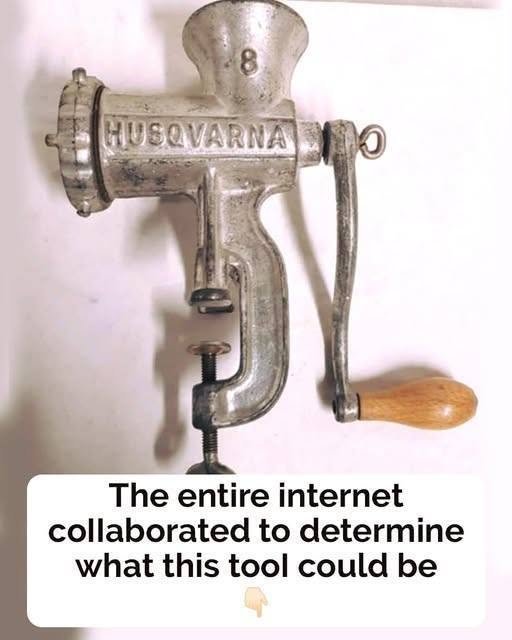
    The image shows a cast-metal, hand-cranked meat grinder (or mincer) made by the Swedish brand Husqvarna (specifically a Size 8 model) designed to clamp onto a countertop edge.

    The headline claims that “The entire internet collaborated to determine what this tool could be,” framing a ubiquitous, widely recognizable antique appliance as an unsolved mystery.

    Technical Anatomy & Historical Context

    • Identification: This is a classic manual meat mincer (Köttkvarn in Swedish). Husqvarna, though famous today for chainsaws and motorcycles, produced a vast array of cast-iron household goods—including sewing machines, stoves, and kitchen grinders—throughout the late 19th and 20th centuries.
    • How It Works:
      • Hopper: Food is fed into the top funnel (marked with size “8”).
      • Internal Augers (Feed Screw): Turning the wooden handle rotates a spiral worm gear inside that forces meat, lard, or vegetables toward the front.
      • Cutting Blade & Extrusion Plate: A rotating cross-blade chops the material against a perforated metal plate before extruding it through the front cap ring.
      • Table Clamp: The threaded screw at the base secures the heavy tool to a table or countertop to withstand the torque required for grinding.

    Deconstructing “Fake Mystery” Clickbait Mechanics

    This graphic exemplifies a common social media content-farming trope:

    1. Manufactured Ignorance: Claiming that a completely common, mass-produced vintage tool stumped “the entire internet” relies on extreme exaggeration to spark disbelief.
    2. Comment Influx as Engagement Fuel: Older generations who grew up using these tools, along with home cooks and antique collectors, immediately feel compelled to comment “It’s just a meat grinder!”
    3. Algorithmic Exploitation: The sudden surge of hundreds of users leaving obvious corrections signals high user activity to platform algorithms, pushing the image to thousands of additional feeds.
    4. Link Routing: Pinned comments or pointing-finger emojis below the post typically guide users to ad-heavy websites, affiliate product catalogs, or spam blog networks.
  • Design Mechanics: The Real Purpose of the Hole in Nail Clippers

    Design Mechanics: The Real Purpose of the Hole in Nail Clippers

    The graphic displays a standard pair of fingernail clippers with a red arrow pointing to the small hole at the non-cutting base. The overlay headline presents a familiar social media narrative: “My mother-in-law couldn’t stop laughing when she realized I had no clue what that tiny hole in a nail clipper is for. Now I’m wondering… am I the only one who never knew this?”

    While clickbait posts attempt to frame this hole as a “hidden trick” or secret household hack, its actual functions are simple, practical manufacturing and storage features.

    What the Hole Is Actually For

    1. Keychain Attachment & Portability:
      • The primary user-facing purpose of the hole is to allow a small ball chain, keyring, or lanyard to pass through. This makes it easy to attach clippers to a toiletry bag, keyring, or travel kit so they do not get lost at the bottom of a bag.
    2. Assembly and Manufacturing Alignment:
      • During the industrial stamping and electroplating process, machines use these small holes to align, hold, and transport the metal base components along factory conveyor lines.
      • Hanging the raw metal pieces by this hole allows protective coatings (like nickel or chrome plating) to adhere evenly without leaving unplated grip marks.
    3. Retail Display and Storage:
      • In retail environments or home organization racks, the hole enables clippers to be hung individually on pegboard hooks or wire displays without requiring bulky blister packaging.

    Deconstructing the “Hidden Feature” Clickbait Formula

    This post uses a textbook combination of viral engagement tactics:

    • Relatable Household Object: Choosing an everyday item almost everyone owns guarantees maximum audience reach and familiarity.
    • The “Pinned Comment” Redirect: The caption “More details in the comments below” is a classic redirection mechanism. The poster pins a link leading to an ad-heavy website, a multi-page slideshow, or a affiliate store, monetizing the curiosity of scrollers looking for the “secret”.
    • Artificial Mockery / Family Drama: Framing the realization around a laughing mother-in-law creates an artificial emotional hook designed to make the reader feel out of the loop or validated.
    • Comment-Driven Algorithmic Reach: Prompting “am I the only one who never knew this?” encourages thousands of users to comment with their own guesses, boosting the post’s organic distribution across news feeds.
  • Horticultural Reality: Why Tree Trunks Are Painted White

    Horticultural Reality: Why Tree Trunks Are Painted White

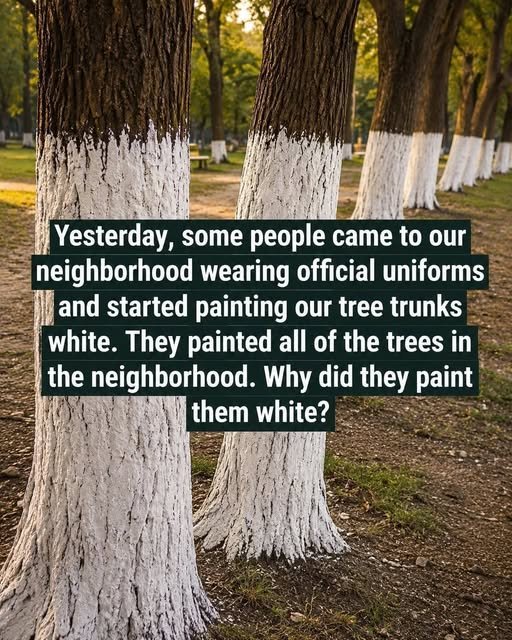
    The image shows a row of trees with their lower trunks painted bright white, accompanied by a story-like text overlay asking why municipal workers or crews paint trees in neighborhoods.

    While viral posts frame this as an unsettling mystery or secret municipal code, painting tree trunks white is a standard, centuries-old arboricultural technique known as tree whitewashing.

    Practical Reasons Trees Are Painted White

    1. Sunscald and Temperature Protection (Thermal Cracking):
      • Young or thin-barked trees can absorb excessive heat from direct sunlight on cold winter days or bright summer afternoons.
      • During winter, dark bark warms up under direct sunlight, causing dormant cells beneath the surface to reactivate. When temperatures drop rapidly after sunset, those active cells freeze and die, creating vertical cracks known as sunscald or frost cracks.
      • The white paint reflects sunlight, keeping the trunk at a stable temperature and preventing heat stress.
    2. Pest and Insect Deterrence:
      • Whitewash typically consists of a diluted water-based latex paint mixed with hydrated lime (calcium hydroxide).
      • This coating seals micro-fissures in the bark where boring insects, beetles, and moths like to lay eggs or overwinter. The lime creates an alkaline barrier that repels burrowing pests.
    3. Disease Control and Fungus Prevention:
      • The addition of lime acts as a mild fungicide, protecting the base of the trunk from fungal infections and moss accumulation, especially in high-humidity climates or irrigated parks.
    4. Road Safety and Visibility:
      • In urban planning and along rural roadways, painting the base of trees serves as a low-tech safety reflector, helping drivers spot roadside obstacles at night.

    How Whitewash Is Applied Safely

    • Water-Based Latex Only: Municipalities and orchardists use a 50/50 mix of water and standard water-based interior latex paint (or traditional whitewash lime).
    • Never Oil-Based: Oil-based or enamel paints are toxic to trees because they block the lenticels (small pores in the bark) and suffocate the live vascular tissue beneath.

    Deconstructing Everyday Curiosity Clickbait

    Posts framed like “Yesterday, some people came to our neighborhood… Why did they paint them white?” follow a familiar engagement format:

    1. Story-Based Suspense: Presenting a common landscaping practice as a sudden, mysterious event piques interest and invites scrollers to guess in the comments.
    2. Artificial Mystery: Leaving out simple agricultural terms like “whitewashing” keeps the audience scrolling through the comment section or clicking attached blog links to find the explanation.
    3. Algorithmic Boost: Comment sections quickly fill up with helpful answers, conspiracy theories, and anecdotes, which social media algorithms reward with elevated reach.