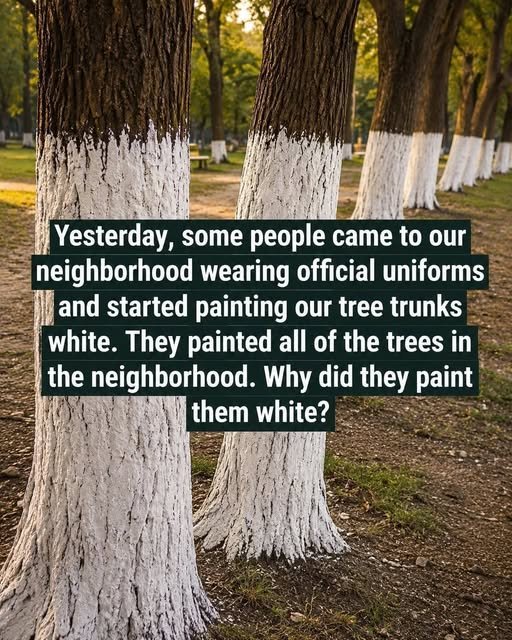
The image shows a row of trees with their lower trunks painted bright white, accompanied by a story-like text overlay asking why municipal workers or crews paint trees in neighborhoods.
While viral posts frame this as an unsettling mystery or secret municipal code, painting tree trunks white is a standard, centuries-old arboricultural technique known as tree whitewashing.
Practical Reasons Trees Are Painted White
- Sunscald and Temperature Protection (Thermal Cracking):
- Young or thin-barked trees can absorb excessive heat from direct sunlight on cold winter days or bright summer afternoons.
- During winter, dark bark warms up under direct sunlight, causing dormant cells beneath the surface to reactivate. When temperatures drop rapidly after sunset, those active cells freeze and die, creating vertical cracks known as sunscald or frost cracks.
- The white paint reflects sunlight, keeping the trunk at a stable temperature and preventing heat stress.
- Pest and Insect Deterrence:
- Whitewash typically consists of a diluted water-based latex paint mixed with hydrated lime (calcium hydroxide).
- This coating seals micro-fissures in the bark where boring insects, beetles, and moths like to lay eggs or overwinter. The lime creates an alkaline barrier that repels burrowing pests.
- Disease Control and Fungus Prevention:
- The addition of lime acts as a mild fungicide, protecting the base of the trunk from fungal infections and moss accumulation, especially in high-humidity climates or irrigated parks.
- Road Safety and Visibility:
- In urban planning and along rural roadways, painting the base of trees serves as a low-tech safety reflector, helping drivers spot roadside obstacles at night.
How Whitewash Is Applied Safely
- Water-Based Latex Only: Municipalities and orchardists use a 50/50 mix of water and standard water-based interior latex paint (or traditional whitewash lime).
- Never Oil-Based: Oil-based or enamel paints are toxic to trees because they block the lenticels (small pores in the bark) and suffocate the live vascular tissue beneath.
Deconstructing Everyday Curiosity Clickbait
Posts framed like “Yesterday, some people came to our neighborhood… Why did they paint them white?” follow a familiar engagement format:
- Story-Based Suspense: Presenting a common landscaping practice as a sudden, mysterious event piques interest and invites scrollers to guess in the comments.
- Artificial Mystery: Leaving out simple agricultural terms like “whitewashing” keeps the audience scrolling through the comment section or clicking attached blog links to find the explanation.
- Algorithmic Boost: Comment sections quickly fill up with helpful answers, conspiracy theories, and anecdotes, which social media algorithms reward with elevated reach.
Leave a Reply