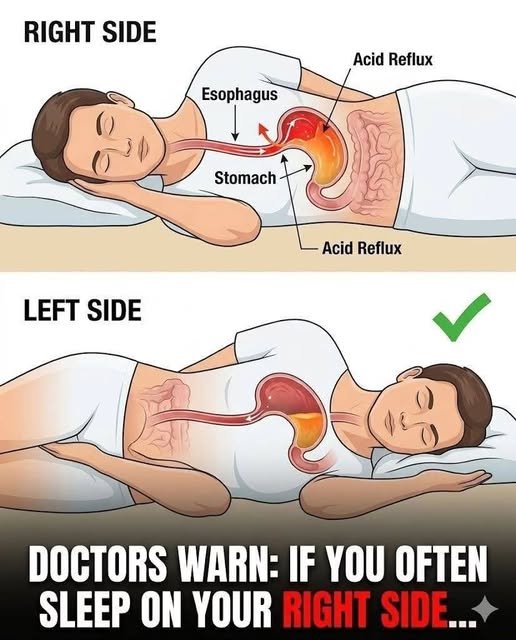
The image illustrates a comparison between sleeping on the right side versus the left side, highlighting stomach acid flowing into the esophagus on the right side, paired with the clickbait headline: “DOCTORS WARN: IF YOU OFTEN SLEEP ON YOUR RIGHT SIDE…”
While the graphic uses typical sensational formatting (complete with a trailing ellipsis and a glowing green checkmark), the underlying anatomical concept regarding gastroesophageal reflux disease (GERD) and heartburn is medically grounded, even if exaggerated into a catastrophic “warning.”
The Medical Science of Sleeping Positions
- Why Right-Side Sleeping Can Worsen Reflux:
- Anatomical Alignment: The human stomach sits primarily on the left side of the upper abdomen below the esophagus. The junction between the stomach and esophagus—the lower esophageal sphincter (LES)—is positioned higher when lying on the left side.
- Gravity & Acid Pooling: When sleeping on your right side, the stomach sits higher than the lower part of the esophagus. This allows gastric acid to pool directly against the lower esophageal sphincter, increasing the likelihood of acid leaking upward into the esophagus, causing heartburn or GERD flare-ups.
- Why Left-Side Sleeping Offers Relief:
- Gravity Advantage: Lying on your left side keeps the gastroesophageal junction elevated above the pool of gastric contents. Gravity naturally helps keep stomach acid contained below the sphincter.
- Faster Clearance: Clinical studies confirm that while acid reflux can still occur on the left side, stomach acid clears from the esophagus significantly faster when sleeping on the left compared to the right.
- Context Matters (It Is Not a Universal Danger):
- Sleeping on your right side is not inherently dangerous for healthy individuals who do not suffer from acid reflux, GERD, or hiatal hernias.
- People without reflux issues can comfortably sleep on whichever side or position provides the best spinal alignment and rest quality.
Deconstructing the Clickbait Mechanics
This post leverages classic engagement-farming strategies to drive views:
- Truncated Curiosity Gap (“IF YOU OFTEN SLEEP ON YOUR RIGHT SIDE…”): Cutting off the title mid-phrase forces users to click through to an article or hunt through the comments to find out what “happens” to them.
- Exaggerated Alarmism (“DOCTORS WARN”): Framing a simple postural tip for heartburn management as an urgent medical “warning” induces unnecessary anxiety in average sleepers.
- Universal Relatability: Millions of people sleep on their side, making the graphic immediately relevant to a vast audience. Viewers tag partners or discuss sleep habits in the comments, which algorithms reward with wider distribution.
Leave a Reply