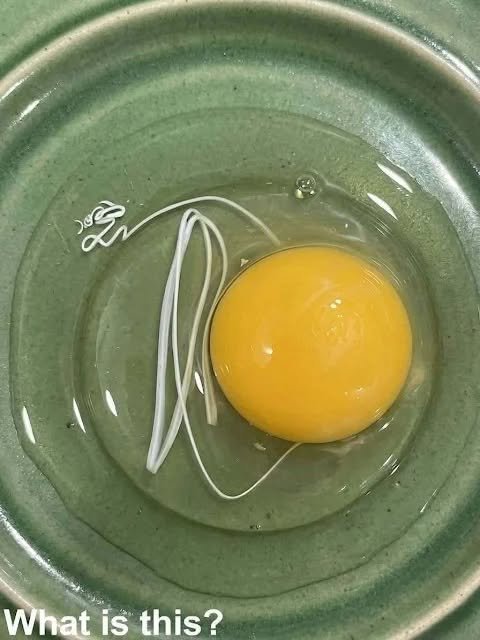
That long, smooth white ribbon resting in the egg white is a chalaza (pronounced kuh-LAY-zuh), an entirely natural and safe anatomical structure found in every fresh chicken egg.
What Is the Chalaza?
- Natural Anchor System:
- The chalaza consists of dense, twisted strands of egg white protein (albumen).
- There are two chalazae inside every egg—one on each side of the yolk. Their biological function is to suspend the yolk in the center of the egg, preventing it from floating to the top or smashing against the shell walls.
- Sign of High Freshness:
- A prominent, thick, or distinct white chalaza is actually a indicator that the egg is extremely fresh.
- As an egg ages in storage, these protein cords naturally thin out, dissolve, and become transparent, blending into the surrounding egg white.
- Edibility and Preparation:
- The chalaza is 100% edible, harmless, and safe to cook and eat.
- It cooks down along with the rest of the egg white. The only reason chefs sometimes strain or remove chalazae is to achieve an ultra-smooth texture when preparing delicate custards, flans, or curd sauces.
Deconstructing “Food Horror” Clickbait Narratives
Posts featuring an abnormally stretched or thick chalaza paired with sensational text follow a common social media template designed to trigger disgust:
- Parasite Panic: These images are frequently shared with captions implying the white strand is an intestinal parasite or roundworm (Ascaridia galli), exploiting revulsion around food contamination.
- First-Person Drama: Stories detailing a dramatic loss of appetite or a prolonged panic in the kitchen build emotional tension, encouraging readers to engage in the comments.
- Comment-Section Debates: Frightened viewers and reassuring cooks clash in the comments, driving high interaction rates that boost the post across recommendation algorithms.
Leave a Reply