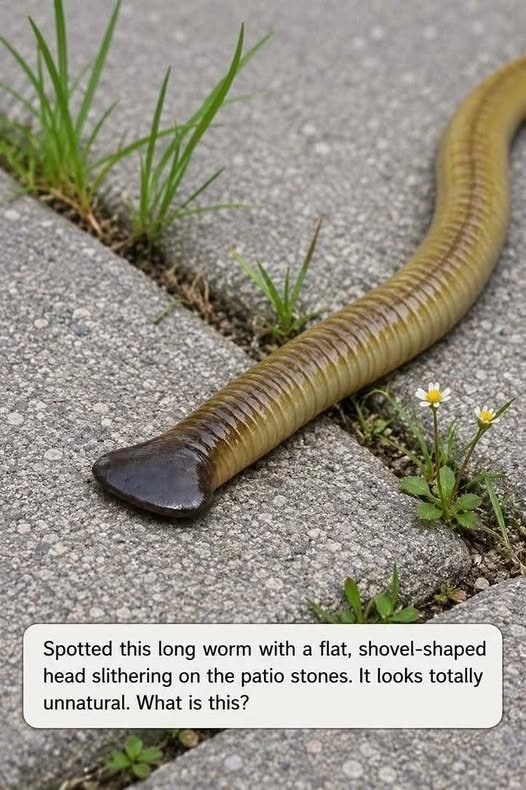
The creature in the photo is a Hammerhead Worm (genus Bipalium), a terrestrial flatworm known for its characteristic fan-shaped or shovel-shaped head.
While it looks alien or artificial, it is a real, predatory invertebrate commonly found in warm, humid regions and gardens around the world.
Anatomy and Behavior of the Hammerhead Flatworm
- The “Shovel” Head: The broad, flattened head is covered in sensory organs (chemoreceptors) that the worm uses to track scents and vibrations in the soil, allowing it to hunt prey in total darkness.
- Predatory Nature: Hammerhead worms are carnivorous predators that hunt earthworms, slugs, and snails. They track earthworms into their burrows, paralyze them using a neurotoxin (tetrodotoxin—the same toxin found in pufferfish), and digest them externally.
- Invasive Species Concerns: In many parts of North America and Europe, species like Bipalium adventitium and Bipalium kewense are invasive. Because they prey heavily on native earthworms, they can disrupt soil health and agricultural ecosystems.
- Handling Warning: You should avoid touching them with bare hands. Their skin secretes tetrodotoxin and mild irritants that can cause skin reactions, and cutting them in half will not kill them—they regenerate into two separate living worms.
Deconstructing “Unnatural Bug” Shock Clickbait
Images of hammerhead worms frequently circulate on social media to generate shock, disgust, and artificial panic:
- Visceral “Alien” Framing: Captions calling real invertebrates “unnatural” or implying they are mutated, dangerous monsters exploit common fears of unknown pests.
- Comment-Section Outrage: Posts about hammerhead worms inevitably trigger intense debates in the comments regarding invasive species protocols (e.g., advising people to destroy them using salt or vinegar), which creates massive engagement.
- Algorithmic Boost: High interaction rates signal to social algorithms that the content is compelling, pushing the image out to broad audiences and driving traffic to monetized pages.
Leave a Reply