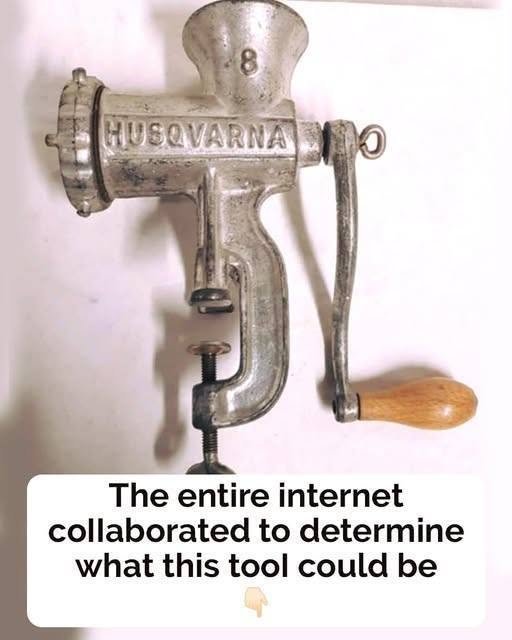
The image shows a cast-metal, hand-cranked meat grinder (or mincer) made by the Swedish brand Husqvarna (specifically a Size 8 model) designed to clamp onto a countertop edge.
The headline claims that “The entire internet collaborated to determine what this tool could be,” framing a ubiquitous, widely recognizable antique appliance as an unsolved mystery.
Technical Anatomy & Historical Context
- Identification: This is a classic manual meat mincer (Köttkvarn in Swedish). Husqvarna, though famous today for chainsaws and motorcycles, produced a vast array of cast-iron household goods—including sewing machines, stoves, and kitchen grinders—throughout the late 19th and 20th centuries.
- How It Works:
- Hopper: Food is fed into the top funnel (marked with size “8”).
- Internal Augers (Feed Screw): Turning the wooden handle rotates a spiral worm gear inside that forces meat, lard, or vegetables toward the front.
- Cutting Blade & Extrusion Plate: A rotating cross-blade chops the material against a perforated metal plate before extruding it through the front cap ring.
- Table Clamp: The threaded screw at the base secures the heavy tool to a table or countertop to withstand the torque required for grinding.
Deconstructing “Fake Mystery” Clickbait Mechanics
This graphic exemplifies a common social media content-farming trope:
- Manufactured Ignorance: Claiming that a completely common, mass-produced vintage tool stumped “the entire internet” relies on extreme exaggeration to spark disbelief.
- Comment Influx as Engagement Fuel: Older generations who grew up using these tools, along with home cooks and antique collectors, immediately feel compelled to comment “It’s just a meat grinder!”
- Algorithmic Exploitation: The sudden surge of hundreds of users leaving obvious corrections signals high user activity to platform algorithms, pushing the image to thousands of additional feeds.
- Link Routing: Pinned comments or pointing-finger emojis below the post typically guide users to ad-heavy websites, affiliate product catalogs, or spam blog networks.
Leave a Reply