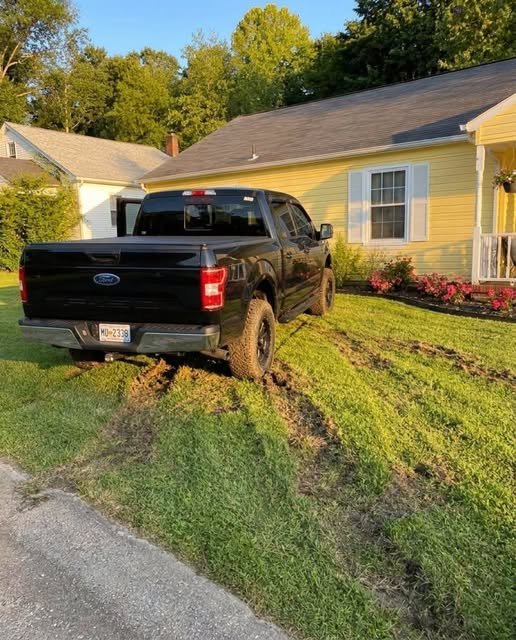
The post features an image of a black Ford F-150 parked on a residential front lawn, tearing up deep tire ruts in the grass, paired with a dramatic first-person story about an elderly homeowner getting “ruthless revenge” on entitled neighbors.
This format represents one of the most prolific types of social media engagement bait: the fabricated text-and-stock-photo revenge story.
Legal and Practical Reality: Dealing with Illegal Lawn Parking
In real-life scenarios involving property line disputes or unauthorized vehicles on private land, homeowners have simple, enforceable legal remedies without resorting to theatrical “revenge”:
- Private Property Towing: Parking on someone else’s manicured lawn constitutes civil trespass and property damage. A homeowner can call local police or a commercial towing company to have an unauthorized vehicle impounded immediately at the vehicle owner’s expense.
- Code Enforcement Violations: Most municipalities have strict code enforcement ordinances prohibiting vehicles from being parked on unpaved surfaces or front lawns, carrying daily fines for violators.
- Civil Claims for Property Damage: Deep tire ruts require resodding, soil leveling, and landscaping work. Homeowners can file a claim in small claims court or through auto insurance to recover full restoration costs.
Deconstructing the “ProRevenge” Story Formula
This post relies on a standardized copywriting formula popular across Facebook pages, Reddit repost bots, and content farm websites:
- The Archetypal Villains: The narrative introduces exaggerated caricatures—an “entitled” couple with a “permanent sour expression” and a “constant scowl”—designed to make the audience feel immediate indignation.
- The Vulnerable Protagonist: Framing the victim as an elderly person who has lived in their home for “fifty years” plays on empathy and respect for seniors, sharpening the emotional contrast.
- The Cliffhanger Hook: Ending the text right before explaining the “ruthless revenge” forces curious readers to click on the link in the comments or bio to read “Part 2” on an ad-heavy website.
- Stolen / Out-of-Context Imagery: The photo itself is typically scraped from homeowner forums, insurance claims, or neighborhood complaint boards (such as Reddit’s r/mildlyinfuriating) and repurposed to act as “proof” for a completely fictional narrative.
- Algorithmic Engagement: Stories of petty justice or neighbor disputes generate thousands of rage-comments, shares, and advice replies, which social media algorithms reward with massive reach.
Leave a Reply