Blog

  • It Is Very Simple to Tell Real Honey Apart From Fake Honey

    It Is Very Simple to Tell Real Honey Apart From Fake Honey

    Honey is frequently surrounded by viral “home tests” claiming that you can identify pure honey instantly with a water test, thumb test, flame test, or bread test. While these methods are popular online, they are not reliable ways to prove that honey is genuine. Pure honey can vary naturally in color, thickness, aroma, and crystallization depending on the flowers visited by bees, processing, and storage. Some genuine honey may be thick, while other varieties are naturally more fluid. The National Honey Board notes that honey can differ considerably in color and flavor, and crystallization is a natural process rather than evidence that honey is fake. (honey.com)

    One common claim says that real honey will not dissolve quickly in water, while fake honey supposedly spreads immediately. This isn’t a dependable test because honey’s behavior in water depends on its moisture content, temperature, concentration, and how the test is performed. Similarly, trying to burn honey with a match or lighter does not establish authenticity and can create an unnecessary fire hazard. Another popular trick involves putting honey on your thumb or a piece of bread, but viscosity alone cannot tell you whether a product has been adulterated. Food adulteration is often difficult to detect without laboratory analysis, particularly when syrups have been added in proportions that don’t produce obvious visual differences.

    The most dependable way to determine whether commercially purchased honey has been adulterated with undeclared sweeteners is through appropriate laboratory testing and supply-chain verification. At home, you can still look for useful clues: check the ingredient label, buy from a reputable producer, examine the packaging for tampering, and be cautious about products making extraordinary claims about purity or health benefits. Crystallized honey is not automatically fake—in fact, many genuine honeys naturally crystallize over time. If you want to preserve honey, keep it sealed and stored appropriately at room temperature. Disclaimer: This article is for general educational and food-information purposes only. There is no simple household test that can reliably prove honey authenticity in every case. Always verify purity claims through reputable producers, recognized food-testing laboratories, or relevant food-safety authorities rather than relying on viral internet tests.


  • With Heavy Hearts, We Share Sad News About This Beloved and Multi-Talented Actor

    With Heavy Hearts, We Share Sad News About This Beloved and Multi-Talented Actor

    The entertainment world is often reminded of how deeply an actor can touch people’s lives. When a beloved performer passes away, fans don’t simply remember the roles they played—they remember the characters, performances, humor, and emotions that became part of their own lives. Recent reports about the deaths of several respected performers have once again prompted tributes from colleagues and audiences around the world. For example, actor Anthony Head, known internationally for Buffy the Vampire Slayer, Merlin, and Ted Lasso, died in June 2026 at age 72 after complications from pneumonia, according to reports citing his family.

    A talented actor’s legacy can extend far beyond a single film or television series. The most memorable performers often demonstrate remarkable versatility—moving between drama, comedy, television, film, theatre, and other creative work throughout their careers. Their performances can introduce audiences to unforgettable characters while inspiring younger generations of artists. This is why news of a respected actor’s passing can feel surprisingly personal even to people who never met them. Their work may have been part of someone’s childhood, family movie nights, favorite television series, or simply a memorable moment in their life. Tributes from fellow performers and fans often become a way of celebrating that lasting contribution rather than focusing only on the circumstances of their death.

    When sharing a headline about a celebrity’s passing, however, it is important to verify the person’s identity and the reported details. Viral social-media posts sometimes use emotional wording such as “beloved and multi-talented actor” without clearly naming the person, and similar headlines can be reused for different individuals. Search results for this exact wording also lead to social-media posts without enough information to establish which actor the headline refers to. The safest approach is to check a reputable news organization, the actor’s official representatives, or a verified family statement before sharing the claim. Disclaimer: This article is for general informational and entertainment purposes only. The specific actor referenced by the supplied headline has not been identified or independently verified from the headline alone, so no particular person’s death should be inferred from it. Always confirm celebrity death announcements through reliable sources before treating them as factual.

  • That White Ribbon in Your Egg Is Probably Completely Normal

    That White Ribbon in Your Egg Is Probably Completely Normal

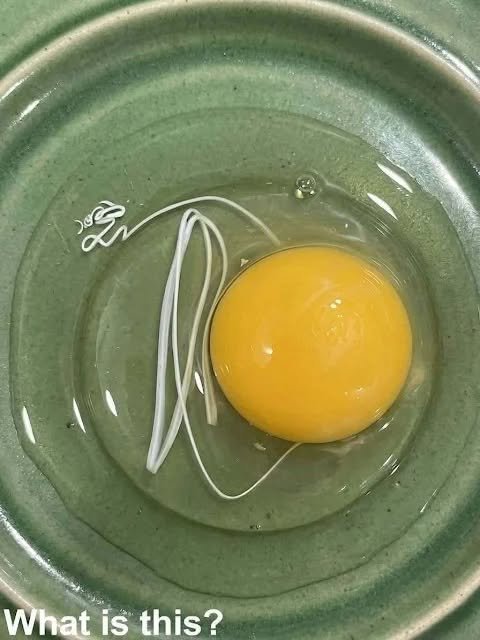
    If you crack open an egg and see a white, ribbon-like or stringy strand attached to the yolk, don’t immediately assume you’ve discovered a parasite or something dangerous. What you’re most likely seeing is a chalaza (pronounced kuh-LAY-zuh), a natural structure made from twisted strands of egg white. The chalaza helps anchor the yolk in the center of the egg and can be especially noticeable when an egg is fresh. The USDA specifically describes chalazae as twisted, cord-like strands of egg white that support the yolk. So although it can look strange enough to ruin your appetite for a moment, the white “ribbon” is normally just part of the egg.

    A chalaza is not a worm, parasite, or developing chick, and you don’t need to remove it before cooking. Its appearance can actually be a sign that the egg is relatively fresh, because these structures become less prominent as an egg ages. You may notice one or two white cords extending from the yolk into the surrounding egg white, and they can vary considerably in size. This is completely different from an egg showing unusual spoilage signs. According to the USDA, pink or iridescent egg white can indicate bacterial spoilage, while normal variations in yolk color or cloudy egg white are not necessarily safety problems. If the egg has an unusual smell, abnormal discoloration, a cracked shell, or other obvious signs of spoilage, it’s safer to discard it.

    If the egg looks and smells normal, the main concern is proper cooking and handling, not the chalaza. Keep eggs refrigerated and cook them until both the white and yolk are firm; the FDA specifically recommends these precautions because even clean, uncracked eggs can potentially contain Salmonella. If you simply dislike the appearance, you can easily remove the chalaza with a clean utensil before cooking. So that mysterious white ribbon may look alarming, but in most cases it is simply one of the egg’s natural structures doing exactly what it is supposed to do. Disclaimer: This article is for general educational and food-safety information only and does not constitute medical advice or a definitive identification of a particular egg. If the object looks significantly different from a normal chalaza or the egg shows signs of spoilage, discard it and consult a reliable food-safety source. Always follow proper egg storage and cooking guidance.

  • That Strange Shovel-Headed Worm Is Probably a Hammerhead Flatworm

    That Strange Shovel-Headed Worm Is Probably a Hammerhead Flatworm

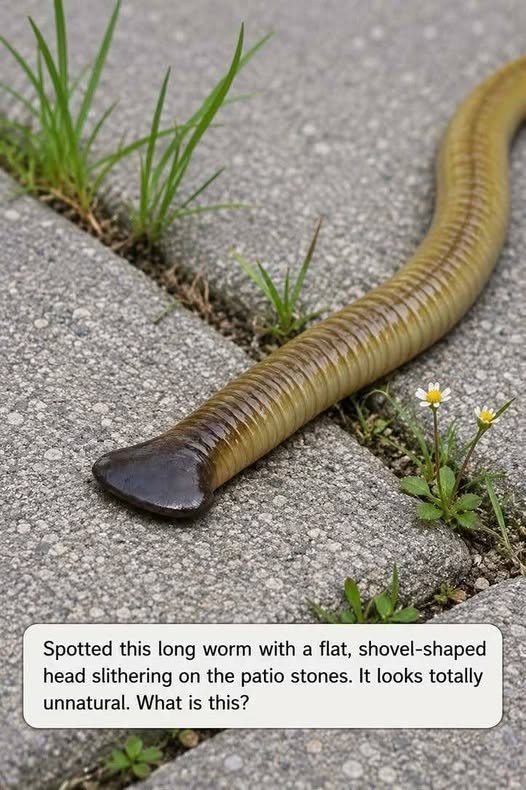
    That bizarre creature crawling across the patio is probably a hammerhead flatworm, also called a land planarian or shovel-headed garden worm. Its most unmistakable feature is the strange, flattened head that resembles a tiny shovel, pickaxe, or hammerhead shark. Unlike ordinary earthworms, these animals have long, flat, unsegmented bodies and move by gliding across a thin layer of mucus. They are usually found in damp environments, particularly around mulch, leaf litter, rocks, logs, flowerpots, and other places where moisture remains.

    Despite looking like something from a science-fiction movie, it isn’t a mysterious new creature. Hammerhead flatworms are predatory terrestrial flatworms that hunt other small animals, especially earthworms and, depending on the species, slugs and other soft-bodied prey. They capture prey using mucus and consume it with a mouth located on the underside of the body rather than at the head. Some species can grow surprisingly long—certain shovel-headed garden worms can reach around 12 inches (30 cm). Their unusual appearance and predatory behavior are why gardeners sometimes become concerned when they discover one.

    If you find one, avoid handling it with bare hands. Extension specialists recommend using gloves because some hammerhead worms produce mucus containing tetrodotoxin, and contact with the eyes or mouth should be avoided. They are not considered a typical danger to people, but they can be ecologically significant because they prey on earthworms that contribute to healthy soil. Also, don’t deliberately cut one into pieces: some land planarians can regenerate after fragmentation, potentially producing additional individuals. If you want an exact species identification, a clear photograph showing the head shape, body stripes, size, and location is usually needed because several species look very similar. Disclaimer: This article provides general educational information and cannot confirm the identification of a particular specimen without seeing it. Hammerhead flatworms vary by species and region, so verify identification with a local extension service or qualified wildlife/entomology expert before taking action.

  • Does Anyone Know the Real Purpose of That Small Little Pocket?

    Does Anyone Know the Real Purpose of That Small Little Pocket?

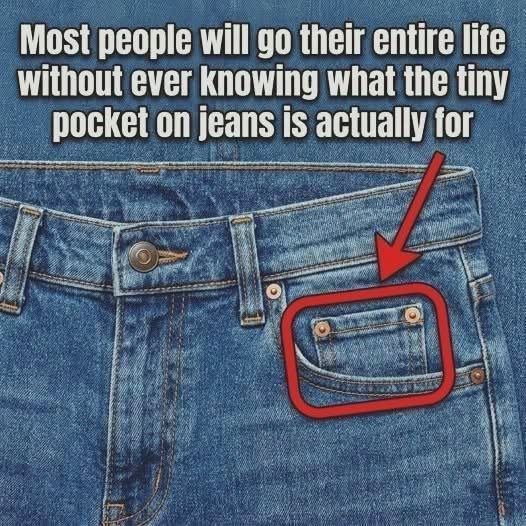
    If you’re talking about the tiny pocket inside the front pocket of a pair of jeans, it has a surprisingly old-fashioned purpose. It was originally designed as a watch pocket for carrying a pocket watch safely. In the 1800s, pocket watches were common, especially among workers such as miners, cowboys, and other laborers who needed a secure place to keep a delicate timepiece. Levi Strauss & Co. confirms that the small pocket was part of the early riveted workwear design and was specifically intended for a pocket watch.

    Today, most people have no use for a pocket watch, so the little pocket has become more of a heritage feature of jeans. It can still be surprisingly useful for storing small objects such as coins, keys, or other tiny items. Interestingly, calling it the “fifth pocket” isn’t technically accurate in Levi’s history. The small watch pocket existed in the early design, while the second back pocket was added later, in 1901, creating the familiar five-pocket configuration.

    So the next time you see that tiny pocket, remember: it wasn’t originally made for coins—it was made for a pocket watch! A tiny piece of 19th-century clothing technology has survived for more than a century, even though the object it was designed to hold has largely disappeared from everyday life. That’s why ordinary jeans contain a little piece of fashion history that most people never think about. Disclaimer: Pocket designs vary between manufacturers and eras, so not every small pocket has exactly the same history or purpose. The explanation above refers specifically to the traditional small pocket found in classic jeans.

  • Giant Eagle Captured in Brazil — What’s Really Going On?

    Giant Eagle Captured in Brazil — What’s Really Going On?

    A dramatic photograph or video showing an apparently enormous eagle can spread across social media within hours, especially when the caption claims that a “giant eagle was captured in Brazil.” Images of unusually large birds can be genuinely fascinating, but viral captions often exaggerate an animal’s size or leave out important context. Brazil is home to the harpy eagle, one of the world’s largest and most powerful eagles. Adults can have a wingspan of roughly 6.5 to 7.5 feet (around 2–2.3 meters), making them look enormous when photographed up close. Their large talons, broad wings, and distinctive head feathers can make them appear even bigger than they really are.

    The harpy eagle is a real species and is found in tropical forests of Central and South America. Despite its impressive appearance, photographs can easily distort an animal’s apparent size depending on the camera angle, distance, and what the bird is standing beside. A person holding a bird close to the camera, for example, can make it appear dramatically larger than it would look at normal viewing distance. This is why claims that a photograph proves the existence of a previously unknown “giant eagle” should be treated cautiously. A spectacular image does not by itself establish the bird’s species, measurements, location, or circumstances of capture.

    If you encounter a viral post claiming that an enormous eagle has been discovered or captured, look for independent confirmation from wildlife authorities, reputable zoological organizations, or established news outlets. Check whether the image has been digitally altered, whether the location is actually known, and whether the bird’s size has been measured rather than estimated from a photograph. The harpy eagle itself is extraordinary enough without exaggeration—it is a powerful apex predator that plays an important role in its forest ecosystem. Disclaimer: The specific viral claim referenced by the headline has not been independently verified here. Photographs can be misleading, and an animal’s apparent size should not be treated as a scientific measurement. Always verify unusual wildlife claims through reputable conservation or zoological sources before sharing them as fact.

  • My Daughter Opened Her Favorite Chocolate Ice Cream Today

    My Daughter Opened Her Favorite Chocolate Ice Cream Today

    My daughter opened her favorite chocolate ice cream today, the same little after-school treat she has enjoyed nearly every day. She was already smiling as she peeled back the lid, expecting nothing more than a few peaceful minutes with her favorite dessert. Then she suddenly stopped. Instead of taking the first bite, she stared into the container and called me into the kitchen. Something about the ice cream looked different, and neither of us could immediately understand what we were seeing. I checked the packaging, the expiration date, and the container itself, wondering whether the ice cream had somehow been damaged during storage.

    At first, I thought it might simply be a harmless change in texture caused by freezer burn or temperature fluctuations. Ice cream can develop ice crystals when moisture moves through the product and refreezes, especially when it has partially thawed and been frozen again. The texture may become rough, dry, or unusually crystallized without necessarily meaning that something strange has been added. However, if the container was swollen, leaking, badly damaged, smelled unusual, or appeared to have been improperly stored, I wouldn’t take any chances. Food safety is more important than saving a single tub of ice cream.

    We decided not to eat it until we could determine exactly what had happened. I took photographs, kept the packaging, and contacted the manufacturer with the product details. It turned out to be a good reminder that even familiar foods deserve a quick check when something looks unusual. If a food doesn’t look, smell, or appear the way you expect, don’t force yourself to eat it simply because it is a favorite. When in doubt, follow the manufacturer’s guidance or discard the product. Sometimes the strange-looking discovery is completely harmless—but there is no reason to gamble with food safety. Disclaimer: This is a fictionalized, educational-style story based on the supplied scenario. Without photographs or product information, the unusual appearance cannot be identified or attributed to a specific cause. Always verify food-safety concerns through the manufacturer or a reliable food-safety authority.

  • The Hidden Meaning Behind an Elephant Statue at the Front Door

    The Hidden Meaning Behind an Elephant Statue at the Front Door

    An elephant statue placed near a front door can carry different meanings depending on the culture, tradition, and personal beliefs of the household. Elephants have long been associated with strength, wisdom, stability, protection, and good fortune in various cultures. In some South Asian traditions, elephant imagery is connected with prosperity and auspiciousness, while in other contexts elephants symbolize patience, family bonds, and resilience. This is one reason elephant figures are popular as decorative pieces in homes, gardens, and entrances. However, there is no universal rule saying that placing an elephant statue at the front door will automatically bring wealth or protect a household.

    The position and orientation of the elephant may also have symbolic interpretations in certain traditions. Some people prefer an elephant facing inward because they believe it represents welcoming prosperity and positive energy into the home. Others choose an elephant facing outward because they associate it with protection and guarding the entrance. These interpretations are generally rooted in cultural or spiritual traditions rather than scientifically established effects. Similarly, claims that a particular trunk position guarantees wealth, prevents misfortune, or changes someone’s destiny should be understood as beliefs rather than proven facts. If you follow a particular cultural or religious tradition, it is better to consult an authoritative source within that tradition rather than relying solely on viral social-media advice.

    Beyond symbolism, an elephant statue can simply be a beautiful reminder of qualities people admire—strength during difficult times, wisdom in decision-making, loyalty to family, and patience. For many homeowners, its meaning is personal rather than supernatural. If you enjoy the symbolism, placing an elephant near your entrance can make the space feel welcoming while representing values that are important to you. Ultimately, the meaning comes from the tradition and intention behind the decoration, not from the statue alone. Disclaimer: This article is for general cultural and informational purposes only. Beliefs about elephant statues, their direction, and their supposed effects on fortune or energy vary widely and are not scientifically proven. Always verify cultural or religious claims through reliable and appropriate sources.

  • The Whole Internet Worked Together to Figure Out What This Tool Might Be

    The Whole Internet Worked Together to Figure Out What This Tool Might Be

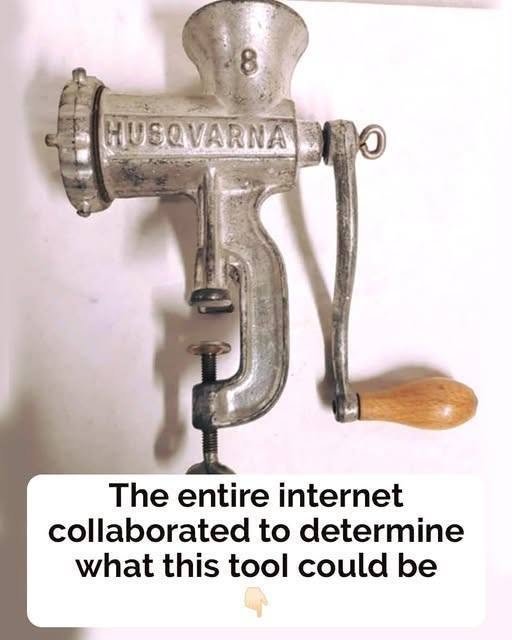
    Every so often, someone discovers an old or unusual tool that looks completely unfamiliar, even though it was probably designed for a very ordinary purpose. A mysterious handle, unusual hook, sharp edge, or strange mechanical part can leave thousands of people guessing. The internet is particularly good at solving these mysteries because someone somewhere may have seen the same object in a parent’s workshop, a grandparent’s kitchen, an old toolbox, or a forgotten piece of equipment. What initially looks like a strange invention can turn out to be a specialized tool from another era, created for a task that has become uncommon today.

    When trying to identify an unknown tool, the smallest details can provide the biggest clues. Look for engraved numbers, manufacturer names, patent markings, hinges, threaded sections, blades, hooks, clamps, or moving parts. The material can also help: an old cast-iron tool suggests a very different purpose from a lightweight plastic household gadget. Size matters too. A tool that looks enormous in a close-up photograph may actually fit comfortably in one hand. Searching for distinctive markings or comparing the object’s shape with vintage tool catalogs can often narrow down the possibilities. Taking photographs from several angles and placing the object next to a ruler or familiar item can make identification much easier.

    The most fascinating part of these mysteries is discovering that an object that looks completely useless today may once have been an essential everyday tool. Technology and household habits change, and many specialized tools eventually disappear from common use. That’s why an unfamiliar object can spark hundreds of wildly different guesses before someone recognizes it. If you have the mystery tool in front of you, don’t rely on one guess—photograph it clearly, record its dimensions, note where it was found, and look for identifying marks. You may be holding something much more interesting than it first appears. Disclaimer: Without a photograph or specific details about the tool, its identity cannot be determined reliably. Any identification should be verified through reputable historical, manufacturing, or tool-reference sources before being treated as fact.