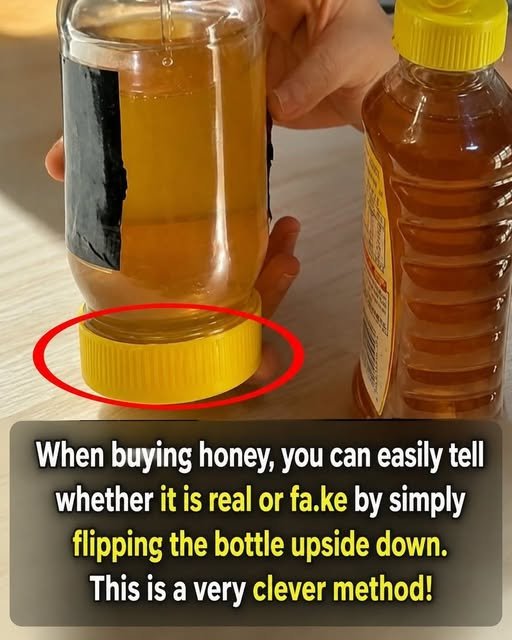
Honey is frequently surrounded by viral “home tests” claiming that you can identify pure honey instantly with a water test, thumb test, flame test, or bread test. While these methods are popular online, they are not reliable ways to prove that honey is genuine. Pure honey can vary naturally in color, thickness, aroma, and crystallization depending on the flowers visited by bees, processing, and storage. Some genuine honey may be thick, while other varieties are naturally more fluid. The National Honey Board notes that honey can differ considerably in color and flavor, and crystallization is a natural process rather than evidence that honey is fake. (honey.com)
One common claim says that real honey will not dissolve quickly in water, while fake honey supposedly spreads immediately. This isn’t a dependable test because honey’s behavior in water depends on its moisture content, temperature, concentration, and how the test is performed. Similarly, trying to burn honey with a match or lighter does not establish authenticity and can create an unnecessary fire hazard. Another popular trick involves putting honey on your thumb or a piece of bread, but viscosity alone cannot tell you whether a product has been adulterated. Food adulteration is often difficult to detect without laboratory analysis, particularly when syrups have been added in proportions that don’t produce obvious visual differences.
The most dependable way to determine whether commercially purchased honey has been adulterated with undeclared sweeteners is through appropriate laboratory testing and supply-chain verification. At home, you can still look for useful clues: check the ingredient label, buy from a reputable producer, examine the packaging for tampering, and be cautious about products making extraordinary claims about purity or health benefits. Crystallized honey is not automatically fake—in fact, many genuine honeys naturally crystallize over time. If you want to preserve honey, keep it sealed and stored appropriately at room temperature. Disclaimer: This article is for general educational and food-information purposes only. There is no simple household test that can reliably prove honey authenticity in every case. Always verify purity claims through reputable producers, recognized food-testing laboratories, or relevant food-safety authorities rather than relying on viral internet tests.
Leave a Reply