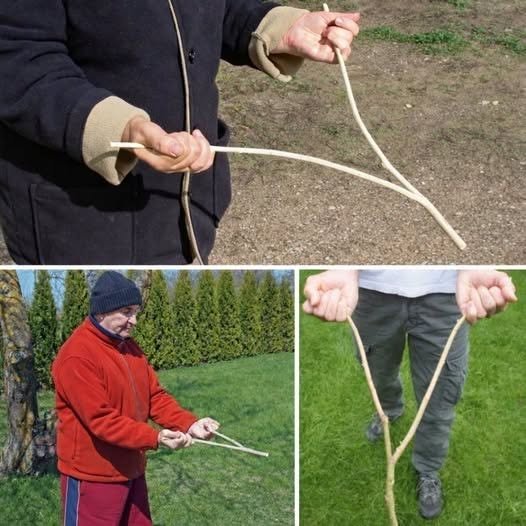
At first glance, this unusual antique tool looks like nothing more than a simple V-shaped tree branch. Yet it was once associated with a practice that people used for centuries: water dowsing. A person would hold the two ends of the forked branch in their hands while walking across an area of land, believing that movement of the branch could indicate underground water. Historical accounts describe dowsers using forked branches and later metal rods for this purpose. The viral mystery-object story featuring this exact type of tool identifies it as a traditional water-divining or dowsing rod.
The practice has been known by several names, including water divining, water finding, well witching, and doodlebugging. The basic idea was remarkably simple: the dowser would hold the forked portion of the branch with the stem pointing downward and walk around the land. When the rod supposedly moved or dipped, the dowser interpreted that movement as a sign of water below the surface. In some historical accounts, similar rods were also associated with searching for minerals. However, there is an important distinction between the historical use of the tool and scientific evidence: dowsing has not been established as a reliable scientific method for locating underground water.
That’s what makes this old object so fascinating. Something that looks like an ordinary branch could actually represent a centuries-old tradition that was once taken seriously by people searching for an essential resource. Today, groundwater professionals use geological information, hydrological surveys, test drilling, and other scientific methods rather than relying on a divining rod. So if you find one of these strange forked objects in an old property, barn, or workshop, don’t dismiss it immediately—it may be a fascinating piece of history. Disclaimer: This article is for general historical and educational purposes. The identification refers to the forked tool associated with traditional water dowsing, but individual antique objects can have different purposes. Dowsing should not be considered a scientifically proven method for locating groundwater, and important water-supply decisions should be based on qualified geological or hydrological assessment.
Leave a Reply