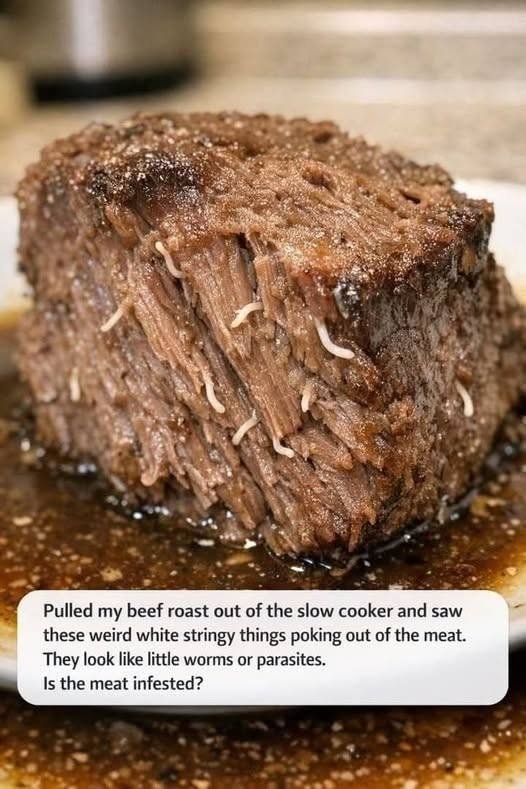
Finding strange white, string-like material sticking out of a beef roast can be alarming, especially when it resembles tiny worms. However, the appearance alone does not mean the meat is infested with parasites. A very common explanation is connective tissue, particularly collagen-rich fibers, sinew, or pieces of tendon that become more noticeable during slow cooking. Beef contains different types of connective tissue, and prolonged cooking causes collagen to break down into gelatin, which is one reason tougher cuts become tender in a slow cooker. Small strands of connective tissue can remain visible even after hours of cooking and may look surprisingly worm-like.
Another possibility is fat or connective tissue surrounding individual muscle fibers. When a roast is heated slowly, fat can render away while tougher structural tissues remain as pale strands. Their shape can change as the meat contracts, making them appear longer or more pronounced than they looked before cooking. Actual beef parasites are considerably less likely to present as several obvious white strings protruding from a properly cooked roast. Certain parasitic infections, such as Taenia saginata (beef tapeworm), involve microscopic or tissue-associated stages rather than typically appearing as long worms emerging from a cooked piece of beef. If something truly appears to be a separate organism, don’t assume what it is from appearance alone.
If you’re concerned, stop eating the meat until you’ve identified the material. Take a clear photograph showing the strands next to a ruler or coin, and if possible, keep the suspected material in a clean sealed container rather than throwing it away immediately. Check the original cut of beef, packaging, supplier information, and cooking temperature. Properly cooking beef to a safe internal temperature is important for reducing foodborne risks, but cooking should not be used as a substitute for identifying visibly abnormal material. If the meat has an unusual odor, color, texture, damaged packaging, or other signs of spoilage, discard it. For a genuine suspected parasite or foreign material, contacting the retailer, food-safety authority, or a qualified food professional is the safest approach. Disclaimer: This article provides general food-safety information and cannot identify the white material without seeing it. If the strands are actually moving or clearly appear to be independent organisms, do not consume the meat and seek professional identification. Always follow reliable food-safety guidance for beef preparation and storage.
Leave a Reply