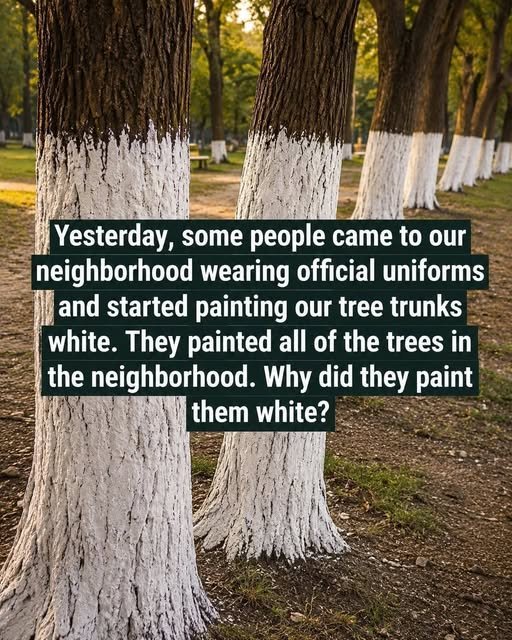
If you’ve ever traveled through rural areas and noticed tree trunks painted white, you may have wondered why someone would paint a perfectly healthy tree. In many places, the practice is used as a traditional form of tree protection. Whitewashing the lower trunk with a suitable lime-based coating can help reflect sunlight and reduce rapid temperature changes in the bark. This can be particularly useful for young or thin-barked trees that may be vulnerable to sunscald and temperature-related cracking. The bright surface reflects sunlight rather than absorbing as much heat, potentially reducing damage during periods of strong sun or sudden temperature fluctuations.
Tree painting can also have agricultural and pest-management purposes, depending on the region and the material being used. Historically, lime washes were sometimes applied to trunks as part of orchard management and sanitation practices. In some areas, whitewashing may also be used to make tree trunks more visible along roadsides or pathways, particularly at night. However, not every white-painted tree has the same explanation. Local customs, forestry practices, road-safety measures, and agricultural traditions can all influence why trees are painted. It’s therefore important not to assume that every white trunk is being treated for disease or insects.
The practice can look unusual, but when carried out appropriately, it can have a practical purpose rather than simply being decorative. The exact product matters, though: household wall paint or unsuitable chemicals should not automatically be applied to trees because some coatings can interfere with the bark or harm the tree. If you’re considering whitewashing a tree, first determine whether there is an actual horticultural reason to do so and use guidance appropriate for the species and local climate. Disclaimer: This article is for general educational and horticultural information only. Tree-whitewashing practices vary by region and purpose, and not every tree benefits from being painted. Always verify the appropriate treatment with a qualified arborist, forestry professional, or local agricultural extension service before applying anything to a tree.
Leave a Reply