Category: Uncategorized

  • Media Analysis: Deconstructing “Petty Revenge” Clickbait Narratives

    Media Analysis: Deconstructing “Petty Revenge” Clickbait Narratives

    The post features an image of a black Ford F-150 parked on a residential front lawn, tearing up deep tire ruts in the grass, paired with a dramatic first-person story about an elderly homeowner getting “ruthless revenge” on entitled neighbors.

    This format represents one of the most prolific types of social media engagement bait: the fabricated text-and-stock-photo revenge story.

    Legal and Practical Reality: Dealing with Illegal Lawn Parking

    In real-life scenarios involving property line disputes or unauthorized vehicles on private land, homeowners have simple, enforceable legal remedies without resorting to theatrical “revenge”:

    • Private Property Towing: Parking on someone else’s manicured lawn constitutes civil trespass and property damage. A homeowner can call local police or a commercial towing company to have an unauthorized vehicle impounded immediately at the vehicle owner’s expense.
    • Code Enforcement Violations: Most municipalities have strict code enforcement ordinances prohibiting vehicles from being parked on unpaved surfaces or front lawns, carrying daily fines for violators.
    • Civil Claims for Property Damage: Deep tire ruts require resodding, soil leveling, and landscaping work. Homeowners can file a claim in small claims court or through auto insurance to recover full restoration costs.

    Deconstructing the “ProRevenge” Story Formula

    This post relies on a standardized copywriting formula popular across Facebook pages, Reddit repost bots, and content farm websites:

    1. The Archetypal Villains: The narrative introduces exaggerated caricatures—an “entitled” couple with a “permanent sour expression” and a “constant scowl”—designed to make the audience feel immediate indignation.
    2. The Vulnerable Protagonist: Framing the victim as an elderly person who has lived in their home for “fifty years” plays on empathy and respect for seniors, sharpening the emotional contrast.
    3. The Cliffhanger Hook: Ending the text right before explaining the “ruthless revenge” forces curious readers to click on the link in the comments or bio to read “Part 2” on an ad-heavy website.
    4. Stolen / Out-of-Context Imagery: The photo itself is typically scraped from homeowner forums, insurance claims, or neighborhood complaint boards (such as Reddit’s r/mildlyinfuriating) and repurposed to act as “proof” for a completely fictional narrative.
    5. Algorithmic Engagement: Stories of petty justice or neighbor disputes generate thousands of rage-comments, shares, and advice replies, which social media algorithms reward with massive reach.
  • Cultural Significance vs. Social Media Paranoia: Elephant Statues at the Front Door

    Cultural Significance vs. Social Media Paranoia: Elephant Statues at the Front Door

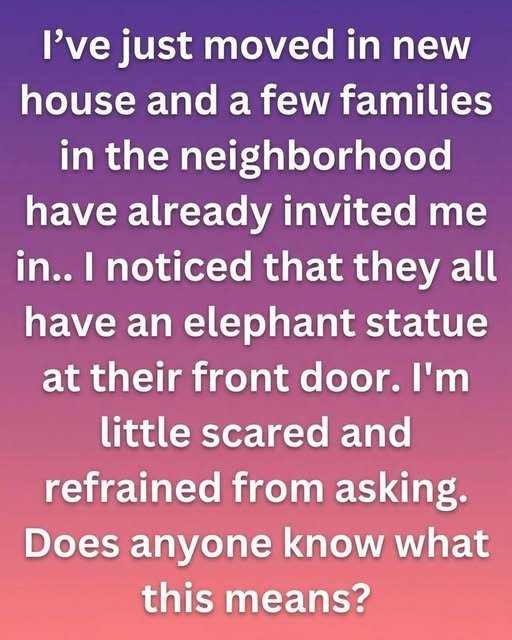
    The graphic displays a text-based story on a gradient background with the headline: “The Hidden Meaning Behind an Elephant Statue at the Front Door”. The post narrative claims: “I’ve just moved in new house and a few families in the neighborhood have already invited me in.. I noticed that they all have an elephant statue at their front door. I’m little scared and refrained from asking. Does anyone know what this means?”

    Despite the sensationalized framing implying a sinister neighborhood secret, placing an elephant statue near a doorway is a traditional, centuries-old practice rooted in Feng Shui, Vastu Shastra, and global cultural symbolism symbolizing protection, prosperity, and good fortune.

    The Real Cultural Meaning of Elephant Statues

    1. Feng Shui and Energy Flow (Chi):
      • In traditional Chinese Feng Shui, elephants are revered as symbols of power, wisdom, protection, and fertility.
      • Trunk Up vs. Trunk Down: An elephant with its trunk pointed upward is believed to absorb and attract good luck, wealth, and positive energy into the home. Placing one facing inward near the main entrance invites prosperity inside. An elephant with its trunk down is associated with grounding energy, longevity, and stability.
      • Protectors of the Home: Placing a pair of elephant statues outside or beside the front entrance serves as symbolic “guardians” to ward off negative energy and protect the household.
    2. Vastu Shastra and Hindu Symbolism:
      • In Indian Vastu Shastra and Hindu tradition, elephants are closely associated with Ganesha (the deity of new beginnings, wisdom, and the remover of obstacles) and Gaja Lakshmi (the goddess of wealth).
      • Displaying an elephant statue at the threshold welcomes success, stability, and spiritual blessing into a new home.
    3. General Interior Decor and Hospitality:
      • Beyond spiritual practices, elephant decor is widely popular globally simply as an aesthetic design element signifying strength, peace, and welcoming hospitality.

    Deconstructing the “Secret Neighborhood” Paranoia Clickbait

    This post relies on a classic engagement-farming template designed to turn harmless home decor into an artificial mystery:

    • Manufactured Anxiety: Expressing fear over a common household item (“I’m little scared and refrained from asking”) creates an artificial emotional hook.
    • Neighborhood “Subculture” Urban Legends: Clickbait creators frequently post fake “neighborhood warning” stories (e.g., claiming pineapples, specific porch light colors, or animal statues are “secret signals” for swingers or illicit groups) to provoke gossip.
    • Comment Section Traps: Asking “Does anyone know what this means?” guarantees thousands of replies from people eager to share genuine cultural facts, make jokes, or debate urban legends.
    • Algorithmic Boost & Traffic Routing: The flood of responses signals high user interest to platform algorithms. Pinned comments on these posts typically link to ad-saturated blog posts or monetization pages.
  • Mechanical Reality: Identifying the Vintage Kitchen Mincer

    Mechanical Reality: Identifying the Vintage Kitchen Mincer

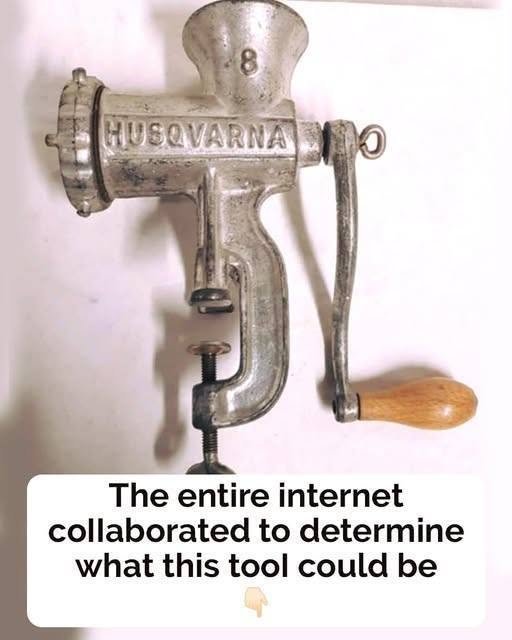
    The image shows a cast-metal, hand-cranked meat grinder (or mincer) made by the Swedish brand Husqvarna (specifically a Size 8 model) designed to clamp onto a countertop edge.

    The headline claims that “The entire internet collaborated to determine what this tool could be,” framing a ubiquitous, widely recognizable antique appliance as an unsolved mystery.

    Technical Anatomy & Historical Context

    • Identification: This is a classic manual meat mincer (Köttkvarn in Swedish). Husqvarna, though famous today for chainsaws and motorcycles, produced a vast array of cast-iron household goods—including sewing machines, stoves, and kitchen grinders—throughout the late 19th and 20th centuries.
    • How It Works:
      • Hopper: Food is fed into the top funnel (marked with size “8”).
      • Internal Augers (Feed Screw): Turning the wooden handle rotates a spiral worm gear inside that forces meat, lard, or vegetables toward the front.
      • Cutting Blade & Extrusion Plate: A rotating cross-blade chops the material against a perforated metal plate before extruding it through the front cap ring.
      • Table Clamp: The threaded screw at the base secures the heavy tool to a table or countertop to withstand the torque required for grinding.

    Deconstructing “Fake Mystery” Clickbait Mechanics

    This graphic exemplifies a common social media content-farming trope:

    1. Manufactured Ignorance: Claiming that a completely common, mass-produced vintage tool stumped “the entire internet” relies on extreme exaggeration to spark disbelief.
    2. Comment Influx as Engagement Fuel: Older generations who grew up using these tools, along with home cooks and antique collectors, immediately feel compelled to comment “It’s just a meat grinder!”
    3. Algorithmic Exploitation: The sudden surge of hundreds of users leaving obvious corrections signals high user activity to platform algorithms, pushing the image to thousands of additional feeds.
    4. Link Routing: Pinned comments or pointing-finger emojis below the post typically guide users to ad-heavy websites, affiliate product catalogs, or spam blog networks.
  • Design Mechanics: The Real Purpose of the Hole in Nail Clippers

    Design Mechanics: The Real Purpose of the Hole in Nail Clippers

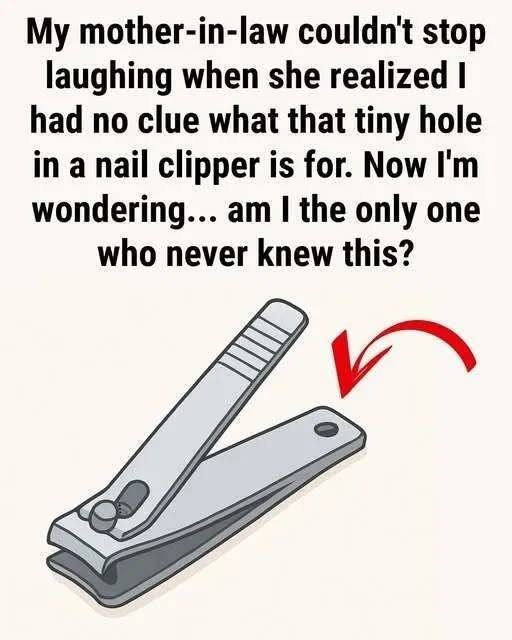
    The graphic displays a standard pair of fingernail clippers with a red arrow pointing to the small hole at the non-cutting base. The overlay headline presents a familiar social media narrative: “My mother-in-law couldn’t stop laughing when she realized I had no clue what that tiny hole in a nail clipper is for. Now I’m wondering… am I the only one who never knew this?”

    While clickbait posts attempt to frame this hole as a “hidden trick” or secret household hack, its actual functions are simple, practical manufacturing and storage features.

    What the Hole Is Actually For

    1. Keychain Attachment & Portability:
      • The primary user-facing purpose of the hole is to allow a small ball chain, keyring, or lanyard to pass through. This makes it easy to attach clippers to a toiletry bag, keyring, or travel kit so they do not get lost at the bottom of a bag.
    2. Assembly and Manufacturing Alignment:
      • During the industrial stamping and electroplating process, machines use these small holes to align, hold, and transport the metal base components along factory conveyor lines.
      • Hanging the raw metal pieces by this hole allows protective coatings (like nickel or chrome plating) to adhere evenly without leaving unplated grip marks.
    3. Retail Display and Storage:
      • In retail environments or home organization racks, the hole enables clippers to be hung individually on pegboard hooks or wire displays without requiring bulky blister packaging.

    Deconstructing the “Hidden Feature” Clickbait Formula

    This post uses a textbook combination of viral engagement tactics:

    • Relatable Household Object: Choosing an everyday item almost everyone owns guarantees maximum audience reach and familiarity.
    • The “Pinned Comment” Redirect: The caption “More details in the comments below” is a classic redirection mechanism. The poster pins a link leading to an ad-heavy website, a multi-page slideshow, or a affiliate store, monetizing the curiosity of scrollers looking for the “secret”.
    • Artificial Mockery / Family Drama: Framing the realization around a laughing mother-in-law creates an artificial emotional hook designed to make the reader feel out of the loop or validated.
    • Comment-Driven Algorithmic Reach: Prompting “am I the only one who never knew this?” encourages thousands of users to comment with their own guesses, boosting the post’s organic distribution across news feeds.
  • Horticultural Reality: Why Tree Trunks Are Painted White

    Horticultural Reality: Why Tree Trunks Are Painted White

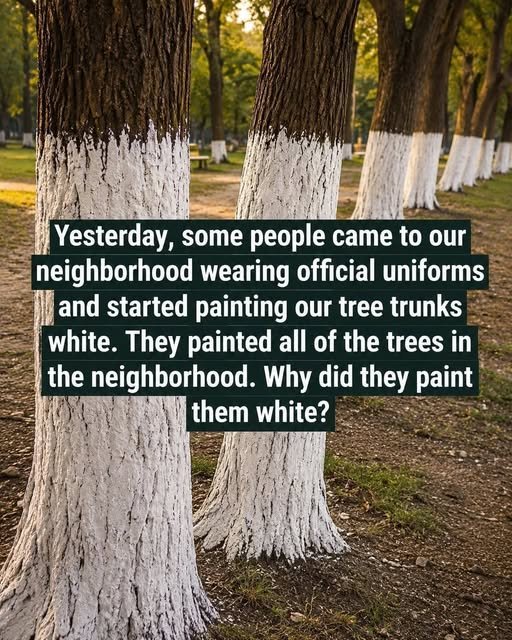
    The image shows a row of trees with their lower trunks painted bright white, accompanied by a story-like text overlay asking why municipal workers or crews paint trees in neighborhoods.

    While viral posts frame this as an unsettling mystery or secret municipal code, painting tree trunks white is a standard, centuries-old arboricultural technique known as tree whitewashing.

    Practical Reasons Trees Are Painted White

    1. Sunscald and Temperature Protection (Thermal Cracking):
      • Young or thin-barked trees can absorb excessive heat from direct sunlight on cold winter days or bright summer afternoons.
      • During winter, dark bark warms up under direct sunlight, causing dormant cells beneath the surface to reactivate. When temperatures drop rapidly after sunset, those active cells freeze and die, creating vertical cracks known as sunscald or frost cracks.
      • The white paint reflects sunlight, keeping the trunk at a stable temperature and preventing heat stress.
    2. Pest and Insect Deterrence:
      • Whitewash typically consists of a diluted water-based latex paint mixed with hydrated lime (calcium hydroxide).
      • This coating seals micro-fissures in the bark where boring insects, beetles, and moths like to lay eggs or overwinter. The lime creates an alkaline barrier that repels burrowing pests.
    3. Disease Control and Fungus Prevention:
      • The addition of lime acts as a mild fungicide, protecting the base of the trunk from fungal infections and moss accumulation, especially in high-humidity climates or irrigated parks.
    4. Road Safety and Visibility:
      • In urban planning and along rural roadways, painting the base of trees serves as a low-tech safety reflector, helping drivers spot roadside obstacles at night.

    How Whitewash Is Applied Safely

    • Water-Based Latex Only: Municipalities and orchardists use a 50/50 mix of water and standard water-based interior latex paint (or traditional whitewash lime).
    • Never Oil-Based: Oil-based or enamel paints are toxic to trees because they block the lenticels (small pores in the bark) and suffocate the live vascular tissue beneath.

    Deconstructing Everyday Curiosity Clickbait

    Posts framed like “Yesterday, some people came to our neighborhood… Why did they paint them white?” follow a familiar engagement format:

    1. Story-Based Suspense: Presenting a common landscaping practice as a sudden, mysterious event piques interest and invites scrollers to guess in the comments.
    2. Artificial Mystery: Leaving out simple agricultural terms like “whitewashing” keeps the audience scrolling through the comment section or clicking attached blog links to find the explanation.
    3. Algorithmic Boost: Comment sections quickly fill up with helpful answers, conspiracy theories, and anecdotes, which social media algorithms reward with elevated reach.
  • Culinary Science: Understanding Connective Tissue and Blood Vessels in Cooked Meat

    Culinary Science: Understanding Connective Tissue and Blood Vessels in Cooked Meat

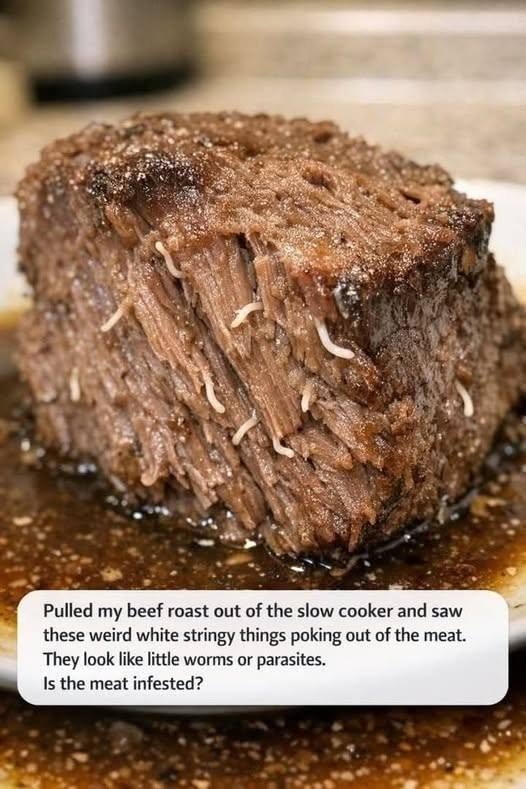
    The image shows a pot roast with small, white, tubular strings protruding from between the muscle fibers, paired with the panic-inducing question: “Is the meat infested?”

    The meat is not infested. What you are seeing are small, natural blood vessels, collagen strands, or nerve sheaths—a completely normal part of mammalian muscle anatomy that becomes visible after slow cooking.

    What Are These White Strings?

    • Blood Vessels (Arteries and Veins): Meat is muscle tissue, which requires a dense network of blood vessels to function. In life, these vascular tubes are flexible and dark, but extended cooking breaks down the surrounding proteins, causing these hollow collagenous tubes to shrink, firm up, and turn pale or white against the darker, rendered muscle fibers.
    • Intramuscular Connective Tissue: Cuts used for slow cooking (like chuck roast or brisket) are rich in collagen and connective tissue sheaths (perimysium) that wrap around muscle bundles. As the roast cooks and the muscle contracts, these tougher structural fibers do not dissolve instantly, causing them to squeeze out or poke through the tender meat fibers.
    • Heat Sterilization Realities: Parasites or worms found in raw meat (such as Trichinella or tapeworm cysts) are microscopic or look like small nodular cysts—they do not survive or remain intact as pristine white “worms” after hours in a slow cooker at temperatures well above $160^\circ\text{F}$ ($71^\circ\text{C}$).

    Deconstructing Food-Disgust Clickbait Mechanics

    This image is a widely circulated example of gross-out engagement bait designed to exploit food safety paranoia and disgusting visual triggers:

    1. Visceral Disgust Trigger: Featuring an image that mimics parasitic worms or maggots instantly triggers a strong disgust response, causing scrollers to pause out of shock.
    2. False Panic Formatting: Framing a standard culinary occurrence as a potential “infestation” encourages viewers to argue, reassure, or express disgust in the comment section.
    3. Virality via Debate: High volumes of comments asking “What is that?!” or wrongly identifying it as worms trick platform algorithms into pushing the image to millions of feeds, driving traffic to monetized pages or link trees.

    Your roast is completely safe to eat—those white tubes are simply a natural part of beef anatomy exposed by the braising process.

  • Medical Analysis: Diffuse Rash and Sensationalized Health Claims

    Medical Analysis: Diffuse Rash and Sensationalized Health Claims

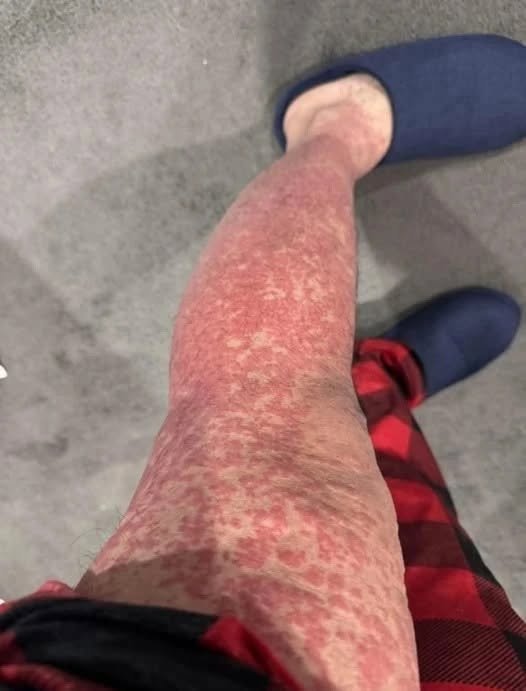
    The image shows a widespread, maculopapular red rash across a person’s lower leg, accompanied by an unfinished, ominous caption: “Here are the consequences of sleeping with…”.

    Leaving the phrase incomplete is a classic health-clickbait strategy designed to manufacture panic and exploit fears surrounding common sleep habits, pets, houseplants, or bedroom appliances. A severe, widespread skin reaction like this is a systemic medical issue, not the result of a vague “sleeping habit.”

    What Can Cause a Sudden Extensive Rash?

    A widespread rash covering large areas of the skin—often described as a maculopapular or confluent erythema—typically points to systemic triggers rather than simply sleeping next to a specific object:

    • Drug Eruption (Exanthem): An adverse allergic reaction to systemic medications (such as antibiotics, nonsteroidal anti-inflammatory drugs, or anticonvulsants) is one of the most common causes of a widespread, blotchy rash developing over a few days.
    • Viral or Bacterial Infections: Systemic infections (such as measles, rubella, mononucleosis, or viral exanthems) frequently present with extensive, generalized skin eruptions.
    • Contact Dermatitis (Severe/Systemic): While contact with an allergen (like a new laundry detergent, fabric softener, or plant) usually causes localized irritation, severe exposure can lead to extensive inflammation.
    • Autoimmune or Inflammatory Conditions: Conditions such as vasculitis, hives (urticaria), or acute flare-ups of inflammatory skin disorders can produce widespread lesions.

    Deconstructing the Incomplete Curiosity Trap

    Posts formatted with trailing headlines like “Here are the consequences of…” utilize precise engagement-farming mechanics:

    1. The Incomplete Hook: By omitting the subject (e.g., “sleeping with fan on”, “sleeping with pets”, or “sleeping with wet hair”), the post triggers an artificial curiosity gap, forcing users to click link trees or hunt through comments for answers.
    2. Shock Value Imagery: Using photos of real, severe medical conditions creates immediate anxiety, making viewers stop scrolling to verify if their own habits put them at risk.
    3. Monetization & Traffic Routing: Pinned comments on these graphics usually lead to ad-heavy blogs, affiliate product sites, or questionable health app downloads that stretch vague medical advice across dozens of pages.

    If anyone experiences a sudden, widespread, or rapidly spreading rash—especially if accompanied by a fever, pain, facial swelling, or difficulty breathing—they should seek evaluation from a healthcare professional or dermatologist rather than relying on social media posts.

  • Biological Fact Check: Pop-Culture Prop disguised as a “Local Spider”

    Biological Fact Check: Pop-Culture Prop disguised as a “Local Spider”

    The object in the photo is not a spider or any real arachnid—it is a life-sized prop of a Facehugger, the fictional creature from Ridley Scott’s iconic Alien franchise.

    This image is a recurring internet joke often shared with a deadpan caption to trick people or play along with sci-fi horror tropes.

    Identifying the “Creature”

    • Sci-Fi Origins: In the movie universe, the Facehugger is the second stage in the lifecycle of the Xenomorph. Its design features eight jointed, finger-like legs, a central fleshy sac, and a long, whip-like tail.
    • Visual Clues: Real spiders do not have long, muscular, tail-like appendages. The physical features visible in the photo—such as the human-finger-like legs and thick tail—are signature anatomical markers of prop models sold as movie memorabilia or Halloween decorations.

    Deconstructing the “Real Bug” Prank Format

    This type of viral image operates on a classic comedic setup:

    1. Deadpan Framing: Captions like “Normally I’m pretty good about local spiders…” treat an absurd or terrifying fictional creature as a mundane household pest, catching viewers off guard.
    2. Comment Reaction Bait: Posts like this trigger a mix of panic from people unfamiliar with the movie franchise, jokes from sci-fi fans, and rapid corrections.
    3. Algorithmic Engagement: High volumes of panicked or humorous comments boost the post’s visibility across social algorithms, frequently pushing it onto gardening, bug identification, and home advice groups.
  • Fact Check: The Real Story of the “Snow-White Hair” Baby

    Fact Check: The Real Story of the “Snow-White Hair” Baby

    The image features a dramatic clickbait text overlay (“The boy born with snow-white hair that amazed the world is all grown up…”). This is a well-known viral headline template designed to trick users into clicking through ad-heavy blogs or slideshow websites.

    The true story behind the photo is completely harmless, and there is no shocking transformation.

    The Origin of the Photo

    • Baby Bence (2015): The photo shows a real infant named Bence, who was born in Székesfehérvár, Hungary, in December 2015.
    • Viral Nickname: Hospital staff affectionately nicknamed him “Prince Charming” or “The Little Prince” due to his full head of striking, milk-white hair.
    • Medical Evaluation: Doctors thoroughly tested Bence to rule out genetic conditions or albinism. He was determined to be completely healthy. Medical experts concluded his unique hair was caused by a harmless, localized, and likely temporary pigment shortage (melanin shortage).

    Deconstructing the Clickbait Formula

    1. False Urgency & Curiosity Gap: Phrases like “You better sit down before seeing what he looks like today” rely on emotional exaggeration. The goal is to make viewers curious enough to click through endless ad pages expecting a radical or tragic reveal.
    2. Re-using Old Viral Photos: Content farms regularly recirculate Bence’s 2015 newborn photo, appending fake updates or exaggerated headlines every few years to generate passive ad revenue.
    3. Privacy of the Family: Bence’s family stepped back from the internet spotlight shortly after his birth story went viral in 2015/2016. As predicted by doctors at the time, temporary pigment shortages in infants typically resolve naturally, meaning his hair color likely darkened as he grew up.
  • Fact Check: The Buried School Bus Narrative

    Fact Check: The Buried School Bus Narrative

    The claim that “15 children disappeared on a field trip in 1986 and their school bus was found buried 39 years later” is completely false.

    This story is a fabricated piece of fictional creative writing paired with an AI-generated image. It is part of a growing trend of synthetic engagement bait designed to drive traffic and views across social platforms.

    Deconstructing the Story and Image

    • AI-Generated Artwork: A close inspection of the photo reveals telltale signs of AI generation. The safety vests on the construction workers blend unnaturally into their clothing, the treads on the excavator lack physical proportions, and the text alignment on the front of the bus is garbled.
    • Fiction & Content Farming: Stories using this exact headline (“15 children vanished in 1986…”) originated on AI storytelling channels, clickbait websites, and automated YouTube channels that publish fictional thrillers presented as “true crime” or “unsolved mysteries”.
    • Inspiration Source: This fictional trope heavily borrows elements from real historical events—most notably the 1976 Chowchilla bus kidnapping, where 26 children and a bus driver were kidnapped and hidden in a buried moving van before successfully escaping.

    Red Flags of AI-Generated Clickbait Stories

    1. Sensationalized Timelines: Headlines claiming exact long-term intervals (e.g., “39 years later…”, “18 years later…”) accompanied by dramatic discoveries are engineered to create an artificial curiosity gap.
    2. Lack of Specificity: Real missing person cases specify the name of the school, city, state, or law enforcement agency involved. Clickbait templates intentionally leave these out so the story feels generally believable anywhere.
    3. No Official Documentation: Major events involving the disappearance of multiple children would be heavily documented by law enforcement and major news archives, none of which record this event.