Blog

  • Patrick Mahomes Responds After Chiefs’ Narrow Loss to Tampa Bay

    Patrick Mahomes Responds After Chiefs’ Narrow Loss to Tampa Bay

    After the Kansas City Chiefs suffered a narrow 16–15 preseason defeat to the Tampa Bay Buccaneers, attention quickly turned to Patrick Mahomes and his reaction to the difficult night. The headline circulating online describes an emotional “moment speech,” but the verified reports tell a more measured story. Mahomes did not play in the game as he continues working his way back from a significant knee injury, and afterward he said he felt good and was increasingly confident in his athletic progress. He also made it clear that he wanted to play but respected head coach Andy Reid’s decision not to take unnecessary risks during the preseason.

    The narrow scoreline nevertheless gave Chiefs fans plenty to discuss. Kansas City has now opened the 2026 preseason with consecutive losses, and the team is trying to build momentum after missing the playoffs in 2025. Mahomes’ absence from the game made the result particularly difficult to evaluate because the Chiefs were testing other players and combinations rather than relying on their starting quarterback. Still, Mahomes’ response reflected an important part of leadership: supporting the team even when you cannot personally change the outcome. His comments emphasized preparation, continued improvement, and confidence in the team’s process rather than blaming teammates or coaches for the defeat.

    For NFL fans, that attitude is perhaps the most meaningful part of the story. Football careers are built over an entire season, not determined by one preseason score, and Mahomes’ focus remains on becoming fully healthy and ready for the regular season. The Chiefs have one more preseason game remaining, while Mahomes continues his recovery and preparation for Week 1. Disclaimer: The viral headline appears to embellish the nature of Mahomes’ postgame remarks; the available reports confirm the 16–15 preseason loss and his comments about wanting to play, but do not substantiate the exact “powerful moment speech” described in the caption. Details should be verified through official Chiefs/NFL coverage and reputable reporting before being shared as a direct quotation or confirmed event.


  • Farewell to a Legend — Terry Bradshaw, NFL Great and Fox Sports Analyst

    Farewell to a Legend — Terry Bradshaw, NFL Great and Fox Sports Analyst

    Terry Bradshaw is one of the most recognizable figures in American football, but despite the dramatic wording of viral posts suggesting a farewell, there is no credible indication that he has died or permanently left FOX Sports. In fact, FOX Sports officially announced its 2026 NFL lineup in August, naming Bradshaw as a co-host and analyst for FOX NFL Sunday. At 77, the Hall of Fame quarterback remains part of the network’s flagship NFL pregame coverage. Bradshaw’s legendary playing career began when the Pittsburgh Steelers selected him first overall in the 1970 NFL Draft. He went on to win four Super Bowls and two Super Bowl MVP awards, establishing himself as one of the defining quarterbacks of the 1970s.

    His second career in television became almost as famous as his football career. Bradshaw joined FOX when FOX NFL Sunday debuted in 1994 and has remained a central personality on the program for more than three decades. His energetic personality, humor, football knowledge, and sometimes unpredictable commentary helped make him one of sports television’s most recognizable analysts. Recent speculation about his retirement intensified because of his age and some difficult moments during previous broadcasts, but Bradshaw himself said in June 2026 that he had no plans to retire, explaining that he wanted to remain active. FOX’s subsequent 2026 lineup announcement further confirmed that he would return alongside Curt Menefee, Howie Long, Michael Strahan, and Rob Gronkowski.

    For fans who grew up watching Bradshaw throw touchdown passes for the Steelers or later became accustomed to seeing him on Sunday television, his story represents an extraordinary transition from NFL champion to broadcasting icon. A headline claiming “farewell” may therefore be referring to retirement rumors, a particular appearance, or simply using emotional language to attract attention rather than reporting his death. Until an official announcement says otherwise, readers should be cautious about sharing such claims. Disclaimer: This article is based on current publicly available reports and official FOX Sports information. As of the latest sources reviewed, Terry Bradshaw remains part of FOX’s 2026 NFL coverage and has not announced a permanent retirement. Viral headlines should always be checked against official statements and reputable news sources before being treated as fact.

  • Shock Announcement — Justice Says He’s Fed Up With…

    Shock Announcement — Justice Says He’s Fed Up With…

    A headline such as “Justice says he’s fed up with…” is designed to create immediate curiosity, especially when it involves a judge or justice who is believed to have reached a breaking point. Statements from members of the judiciary can attract significant public attention because judges are expected to make decisions based on law and evidence rather than public pressure or personal frustration. When a judicial figure publicly expresses concern about a recurring problem, it may signal broader issues involving court procedures, legal policy, government administration, or the demands placed on the justice system. However, dramatic headlines can sometimes leave out the surrounding circumstances that are essential for understanding what was actually said.

    The phrase “fed up” can also be misleading when removed from its original context. A judge may have criticized delays, excessive caseloads, inadequate resources, repeated legal arguments, or another specific issue without making the sweeping statement implied by the headline. Readers should look for the justice’s full name, the court involved, the date of the statement, and the original quotation before reaching conclusions. Legal reporting is particularly sensitive to context because a short excerpt can make a procedural comment sound like a much broader political or personal declaration. Reliable reporting should distinguish between what the justice actually said and how commentators interpreted it.

    A genuine judicial announcement can have important consequences, but the missing details matter. Without knowing which justice or what issue the headline refers to, it would be irresponsible to invent a specific explanation. If the complete headline, photograph, or source article is provided, the statement can be examined in context and explained more accurately. Disclaimer: This article is based only on the incomplete headline supplied and does not identify a particular justice, court, legal dispute, or statement. Any claims about judicial decisions, political positions, or legal developments should be verified through official court records and reputable news sources before being presented as fact.

  • These Are the Consequences of Sleeping With the…

    These Are the Consequences of Sleeping With the…

    The phrase “sleeping with the…” leaves out the most important part of the story, but headlines using this format often refer to a particular sleeping habit, object, pet, or person and then promise surprising consequences. Sleep is influenced by many factors, including posture, temperature, noise, light, allergies, stress, and the environment around you. A habit that feels comfortable for one person may cause discomfort for another. For example, sleeping in an awkward position can contribute to neck or back discomfort, while exposure to allergens in the bedroom may worsen congestion or irritation. That doesn’t mean every unusual bedtime habit is automatically harmful.

    Many viral posts exaggerate these effects by presenting a single habit as if it causes a guaranteed medical problem. In reality, health outcomes usually depend on individual circumstances. Persistent snoring, interrupted breathing, severe daytime sleepiness, repeated nighttime awakenings, or ongoing pain may be worth discussing with a healthcare professional, but a social-media headline alone cannot establish the cause. Likewise, claims that a specific sleeping position “damages your organs,” “causes disease,” or “detoxes your body” should be treated cautiously unless they are supported by credible scientific evidence.

    The safest approach is to find out exactly what the missing words refer to before drawing conclusions. If the original post includes a photograph or the full headline, that information may reveal whether it is discussing a sleeping position, a household item, a pet, or something else entirely. Disclaimer: The supplied headline is incomplete, so no specific consequence or health claim can be confirmed from it. This article is for general educational purposes and should not be used as medical advice. Any health-related claims should be verified through reputable medical sources and qualified healthcare professionals before being accepted as fact.

  • If Your Eggs Have a Green Ring Around the Yolk, It Means That…

    If Your Eggs Have a Green Ring Around the Yolk, It Means That…

    If you’ve ever peeled a hard-boiled egg and noticed a greenish or gray-green ring around the yolk, there’s usually no reason to panic. This discoloration most commonly happens when eggs are cooked for too long or at an excessively high temperature. During cooking, sulfur compounds from the egg white can react with iron in the yolk, creating ferrous sulfide, which produces the familiar greenish-gray color around the yolk. It may look unusual, but the ring itself does not automatically mean the egg has spoiled. The U.S. Department of Agriculture notes that this color change is harmless and results from the cooking process rather than dangerous contamination.

    The green ring is therefore more of a cooking clue than a warning sign. Eggs that are cooked rapidly and then cooled promptly are less likely to develop the discoloration. If you regularly see a pronounced green ring, reducing the cooking time or avoiding prolonged exposure to high heat may help. The ring can also be affected by the chemistry of the particular egg, so even eggs cooked in the same batch may not always look identical. Importantly, color alone isn’t a reliable way to determine whether an egg is safe to eat. Proper storage, handling, cooking, and freshness are much more important factors when it comes to food safety.

    So, the next time you crack open a hard-boiled egg and discover that strange green outline, don’t assume you’ve found a poisonous or rotten egg. In most cases, you’ve simply cooked it long enough for a natural chemical reaction to occur. However, if the egg has an unusual foul odor, slimy texture, cracked or contaminated shell, or has been stored improperly, it should be discarded regardless of whether the yolk has a green ring. Disclaimer: This article provides general food-safety information and does not assess the safety of a particular egg. When in doubt about an egg’s storage history or condition, follow official food-safety guidance and discard questionable food rather than taking unnecessary risks.

  • He Was Declared Cancer-Free Just Months Ago

    He Was Declared Cancer-Free Just Months Ago

    Being told that cancer is no longer detectable can be an extraordinary moment of relief for a patient and their loved ones. But the phrase “cancer-free” can mean different things depending on the cancer, treatment, and medical terminology being used. Doctors may instead use terms such as “no evidence of disease” or “complete remission,” meaning that current tests cannot find detectable cancer. This does not always guarantee that cancer can never return. Some cancers have a greater risk of recurrence than others, which is why follow-up appointments, scans, blood tests, and ongoing monitoring can remain an important part of care even after successful treatment.

    Cancer treatment and recovery can also be unpredictable. A person may receive surgery, chemotherapy, radiation, immunotherapy, targeted therapy, or a combination of treatments and experience an excellent initial response. In some cases, however, cancer can later return in the same area or appear elsewhere in the body. This is why oncologists often create individualized follow-up plans based on the original cancer type, stage, treatment received, and other risk factors. A recurrence does not necessarily mean treatment has failed, and depending on the circumstances, additional treatment options may be available. At the same time, a headline announcing that someone was recently cancer-free should not automatically be interpreted as proof that their cancer has returned simply because a later health event occurred.

    When a celebrity or public figure is involved, emotional headlines can spread extremely quickly, often leaving out important medical details. The most respectful approach is to rely on confirmed statements from the individual, family, representatives, or reputable medical reporting rather than social-media speculation. A person’s cancer history is private and can involve complicated medical circumstances that cannot be understood from a short headline. Disclaimer: The headline provided does not identify the person, cancer type, treatment, or subsequent event, so no specific medical conclusion can be confirmed. This article is for general educational purposes only and should not be used to diagnose, predict, or interpret an individual’s cancer status. Medical information should always be verified through qualified healthcare professionals and reliable sources.

  • The Photo Was Taken in the 1940s

    The Photo Was Taken in the 1940s

    A photograph from the 1940s can reveal far more than the people standing in front of the camera. Clothing, hairstyles, automobiles, buildings, shop signs, household objects, and even the way people posed can provide clues about the period in which the image was taken. The 1940s were a particularly fascinating decade because everyday life was shaped by World War II, rationing, changing technology, and major social changes. A seemingly ordinary family photograph may therefore contain small historical details that are easy to overlook today. Something as simple as a kitchen appliance, telephone, vehicle, or piece of furniture can help place the image more precisely within the decade.

    Photographs from this era can also be challenging to interpret because many objects that were completely familiar to people at the time are now obsolete. A strange household tool may have been essential equipment, while an unfamiliar uniform or badge might identify a particular occupation or organization. Cars and clothing can sometimes narrow the date considerably, but photographs should be examined carefully because older items often remained in use for many years. Context matters, too: the location, photographer’s studio markings, newspaper dates, handwritten notes on the back, and family records may provide stronger evidence than appearance alone.

    That’s what makes old photographs so fascinating—they preserve ordinary moments that have become historical evidence. A picture taken in the 1940s may seem simple at first, but examining the smallest details can reveal information about how people lived, worked, traveled, and dressed during an important period in history. If you share the actual photograph, I can examine the visible details and help identify the clothing, objects, vehicles, approximate date, and historical context. Disclaimer: This article provides general historical information. Without seeing the photograph itself, its exact location, date, people, and objects cannot be reliably identified. Any historical interpretation should be verified against reliable photographic archives, records, or other primary sources.

  • We’re Renting a House — What Is This Weird Shelf Next to the Kitchen Island For?

    We’re Renting a House — What Is This Weird Shelf Next to the Kitchen Island For?

    If you’ve ever moved into an unfamiliar house, you probably know the feeling: every room contains at least one feature that makes you wonder, “What was this actually designed for?” A strange shelf beside a kitchen island can be especially confusing because it may look too small for normal storage while still appearing intentionally built into the kitchen. In many homes, however, these little shelves are simply examples of using otherwise unused space. Depending on their dimensions and construction, they may have been designed for cookbooks, cutting boards, baking trays, serving dishes, spices, bottles, or small decorative items. Open shelving on kitchen islands is commonly used for displaying cookbooks and dishes while keeping frequently used items within easy reach.

    The shape is the biggest clue. If the shelf is tall and narrow with vertical dividers, it could be intended for baking sheets, cutting boards, pizza pans, or serving trays stored upright. If it’s shallow and around waist or countertop height, cookbooks, spices, small bowls, or frequently used kitchen items become more likely. Multiple bottle-sized compartments could indicate a wine or beverage rack. A deeper opening might have been intended for a small appliance or additional pantry storage. Look for scratches, stains, dividers, grooves, old brackets, or electrical outlets nearby—these details can reveal what was repeatedly stored there. The position next to the island also suggests that the original designer probably wanted whatever was stored there to remain conveniently accessible while cooking or entertaining.

    So before deciding that the shelf is completely useless, try the “test and measure” method: measure its width, depth, and height, then see whether a cookbook, cutting board, baking tray, spice jar, or serving platter fits naturally. If something fits perfectly and can be removed easily, you may have solved the mystery. And if you send a clear photo of the shelf—including the whole kitchen island and a close-up of the shelf—I can give you a much more specific identification. Disclaimer: The exact purpose cannot be confirmed from the description alone because kitchen-island shelves vary considerably between homes and designs. The possibilities above are based on common kitchen-storage uses and should not be treated as a definitive identification without seeing the actual feature.

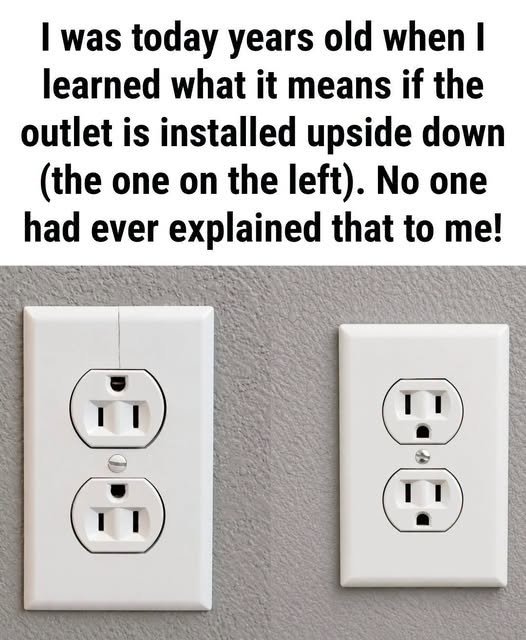
  • No One Had Ever Explained That to Me

    No One Had Ever Explained That to Me

    There are countless everyday things we encounter without ever stopping to ask why they work the way they do. From small features on household objects to traditions passed down through generations, many practical details were once common knowledge but gradually disappeared from everyday conversation. Sometimes we only discover the explanation when someone finally points it out in a viral post. That moment can be surprisingly satisfying because something that seemed completely ordinary suddenly makes sense. It also reminds us how much useful knowledge can be hidden in the design of objects and routines we encounter every day.

    Part of the reason these discoveries feel so fascinating is that modern life often hides the process behind convenience. We use appliances, tools, packaging, clothing, and household products without knowing how they were originally designed or why certain features exist. Older generations may have learned these details naturally from parents, grandparents, or hands-on experience, while younger people may never have had a reason to learn them. As technology changes, some explanations become even less obvious because the original purpose of a feature may disappear while the feature itself remains.

    That is why seemingly simple discoveries can become surprisingly memorable. Once you understand the reason behind something, you may start noticing it everywhere. The next time you encounter an unfamiliar object or an unusual design detail, taking a moment to investigate it can reveal a piece of practical history that would otherwise remain unnoticed. Disclaimer: This article is a general reflection on everyday discoveries and does not identify a particular object, practice, or claim because the original context was not provided. Any specific explanation should be verified through reliable sources before being presented as factual.

  • What Are These Small Glass Tubes Found Under a Bathroom Cabinet?

    What Are These Small Glass Tubes Found Under a Bathroom Cabinet?

    If the objects are about 5 cm long, very thin, made entirely of glass, sealed at both ends, and filled with liquid, one of the strongest possibilities is that they are vintage perfume ampoules or fragrance samples. Similar glass perfume tubes were sold as small, portable, often single-use fragrance containers. People could snap open the ends and apply a small amount of perfume to the skin. Collectors have reported finding very similar tubes from older homes, sometimes with differently colored ends representing different scents. The fact that they were discovered beneath an old bathroom cabinet also fits with the possibility that they were forgotten personal-care items from a previous generation.

    However, don’t open or break them just to find out. Sealed glass ampoules can also be used for medicines, chemicals, laboratory materials, and other substances, so an unidentified liquid should not be touched, smelled, or deliberately released. Their exact identity depends heavily on details such as the color of the liquid, whether the ends have colored caps or blobs, whether anything is printed along the glass, and the shape of the sealed ends. If they resemble the vintage perfume tubes described in similar discoveries, perfume is a very plausible explanation—but it cannot be confirmed from the description alone.

    The best clue would be a photograph. Take clear pictures of the tubes from several angles, including close-ups of both ends and any markings, and place one beside a ruler or coin for scale. If the liquid looks unusual, or if the tubes are damaged or leaking, keep them intact and avoid direct contact until they can be identified safely. Disclaimer: This identification is based only on the description provided and cannot be confirmed without seeing the objects. Vintage perfume ampoules are a plausible explanation, but medical or chemical ampoules are also possible. Do not break, taste, or intentionally open unidentified glass containers; verify their identity through photographs, reliable references, or an appropriate professional before handling them further.