Blog

  • You Definitely Know Who He Is

    You Definitely Know Who He Is

    There are certain people whose faces, voices, or performances become so familiar that even hearing a vague description can make you think, “Of course, I know him.” They may be famous actors, musicians, athletes, television personalities, or public figures whose work has become part of popular culture. Sometimes, however, a viral post deliberately avoids revealing the person’s name, using mystery and curiosity to encourage people to open the article or search the comments. That approach can make an ordinary celebrity story feel like a major revelation, even when the person is simply someone audiences have encountered many times over the years.

    The phrase “You definitely know who he is” is particularly effective because it invites readers to test their own memory. You might recognize the face immediately but struggle to remember the name, or remember a famous role without knowing much about the person behind it. This happens frequently with performers whose work spans several decades. Their appearances may have changed over time, while their most famous roles remain frozen in viewers’ memories. A current photograph can therefore create a surprising contrast between the person people remember and the individual they see today.

    But without the accompanying photograph or additional identifying information, there is no reliable way to determine who “he” refers to. Guessing could easily attach the story to the wrong person, especially when similar celebrity headlines circulate online. The most useful clues would be his name, profession, a recognizable role, the original photograph, or the source of the post. Disclaimer: This article is based only on the headline provided and does not identify the individual being referenced. Any specific identification or claims about his career, age, health, or personal life should be verified through reliable sources before being presented as fact.


  • Fans Are Devastated

    Fans Are Devastated

    Fans are devastated whenever news breaks that a beloved performer, athlete, musician, or public figure has passed away or experienced a serious personal setback. For people who have followed someone’s career for years, the connection can feel surprisingly personal. A favorite song, movie, television character, or memorable performance may be linked to important moments in their own lives. When that familiar figure is suddenly in the headlines for heartbreaking reasons, social media can quickly fill with messages of sadness, tributes, photographs, and memories. The emotional response shows just how powerful the relationship between public figures and their audiences can become over time.

    However, emotional headlines can sometimes spread before all the facts are confirmed. Phrases such as “fans are devastated,” “the world is mourning,” or “heartbreaking news” are frequently used to attract attention, even when the original story provides very little verified information. Before accepting such a headline, readers should look for the person’s full name, the original announcement, the date of the event, and reporting from reputable sources. This is especially important when a story concerns someone’s death, health, family, or other sensitive personal circumstances. A viral post should never be treated as proof simply because thousands of people have shared it.

    Ultimately, the most respectful response is to remember the person’s work and treat unconfirmed information carefully. Fans can share genuine memories and condolences without repeating rumors or dramatic claims that may later prove inaccurate. If the story is confirmed, the person’s career, achievements, and impact can provide a meaningful way to remember them. Disclaimer: The phrase “Fans are devastated” does not identify a specific person, event, or reason for the reaction, so no particular claim can be confirmed from the headline alone. Any information about a celebrity’s death, illness, or personal circumstances should be verified through reliable news organizations, official statements, or other trustworthy sources before being shared as fact.

  • This Photo Broke My Brain — Once You See It, There’s No Going Back

    This Photo Broke My Brain — Once You See It, There’s No Going Back

    Some photographs seem completely ordinary at first glance, yet something about them feels strangely wrong. You look at the scene, scan every corner, and still can’t understand what you’re supposed to notice. Then, suddenly, your eyes catch one tiny detail—and the entire image seems to change. This is the magic behind optical illusions and visual perception puzzles. Our brains don’t simply record everything in front of us like a camera; instead, they constantly interpret shapes, patterns, depth, lighting, and familiar objects to construct a meaningful picture. When an image deliberately uses shadows, perspective, camouflage, or unusual positioning, the brain can initially make an incorrect assumption.

    The reason these images can feel so frustrating is that our attention is selective. We naturally focus on the most prominent objects and familiar patterns while ignoring details that seem unimportant. An illusion can exploit this tendency by hiding an unexpected shape in plain sight or arranging objects so that one element blends into another. Once someone points out the hidden feature, however, your brain has new information to work with. The previously overlooked detail suddenly becomes obvious, which creates that famous “I can’t unsee it” feeling. It isn’t that the image physically changed—the interpretation in your brain did.

    That’s also why these puzzles can be surprisingly satisfying. They challenge your visual attention and encourage you to slow down and examine what you normally overlook. Try looking at the image from a different distance, covering part of it, or tracing the major shapes with your eyes rather than immediately searching for the answer. If the photograph is being shared as a viral puzzle, remember that the promised “hidden secret” may simply be a visual trick rather than anything mysterious or supernatural. Disclaimer: This article discusses visual-perception puzzles in general. The specific photograph referenced in the caption was not provided, so its hidden feature cannot be identified or verified from the text alone. Any claims about what appears in the image should be confirmed by examining the original photograph.

  • Body Language Expert Offers a New Take on Donald Trump’s Viral World Cup Moment

    Body Language Expert Offers a New Take on Donald Trump’s Viral World Cup Moment

    A widely shared video from the recent World Cup celebrations has sparked plenty of online discussion after U.S. President Donald Trump remained on the stage during Spain’s trophy presentation, creating an unusual scene alongside the Spanish players and officials. The moment quickly attracted attention because trophy ceremonies are carefully organized, and viewers were left wondering why Trump appeared reluctant to leave while the celebration continued around him. Social media users offered everything from humorous interpretations to serious political commentary, but body-language analysis requires caution. Facial expressions, posture, gestures, and positioning can provide clues about how someone may be feeling, but they cannot reliably reveal a person’s private thoughts or intentions without additional context.

    A body-language expert commenting on the footage offered an alternative interpretation of the viral moment, suggesting that what looked awkward to viewers may not necessarily have represented hostility, arrogance, or an attempt to dominate the ceremony. Context is especially important in staged public events, where participants may receive instructions from organizers, photographers, security personnel, or other officials that aren’t visible in the broadcast. A person remaining on a stage can therefore have a straightforward logistical explanation rather than a psychological one. This is one reason professional body-language analysis generally works best when multiple behaviors are considered alongside the circumstances instead of treating a single gesture as definitive evidence of a person’s emotions.

    The incident nevertheless demonstrates how quickly a few seconds of unusual footage can become a major viral story. Once a clip is separated from its original context, viewers may interpret the same behavior in completely different ways depending on their existing opinions of the person involved. Body language can be interesting to analyze, but it should not be treated as a mind-reading technique or a substitute for verified information. The most reliable explanation would come from official organizers or people directly involved in the ceremony. Disclaimer: This article is for general informational purposes and does not establish what Donald Trump was thinking or why he remained on the stage. Body-language interpretations are inherently subjective and should not be presented as definitive evidence of someone’s intentions, emotions, or personality. Always verify viral-event claims through reliable reporting and official sources.

  • Seen in a Berlin Bar Bathroom — What Is This Thing?

    Seen in a Berlin Bar Bathroom — What Is This Thing?

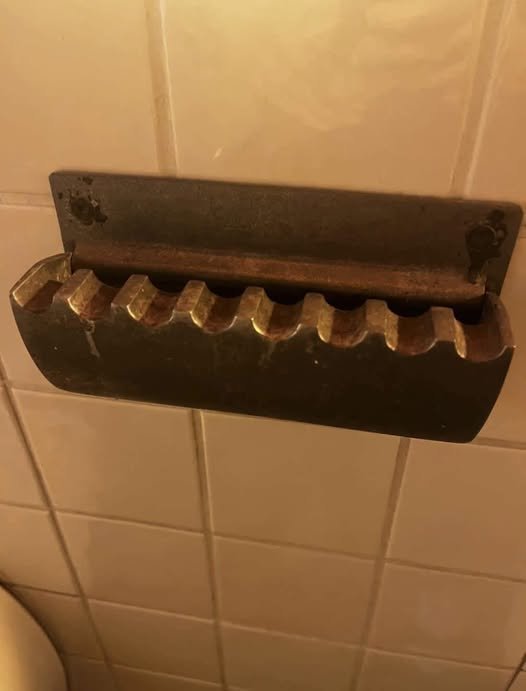
    Finding an unfamiliar object in a bar bathroom can make even the most ordinary visit feel like a little mystery. Bathrooms in older European buildings, restaurants, and bars sometimes contain specialized fixtures or pieces of hardware that aren’t immediately recognizable to modern visitors. An unusual metal fitting could be connected to plumbing, ventilation, cleaning equipment, accessibility features, or an older sanitary installation. Berlin in particular has many buildings with historic interiors and renovations layered over decades, so a fixture may look completely unfamiliar while still serving a very practical purpose.

    The location itself provides an important clue. If the object is mounted near a sink, toilet, wall, floor, or doorway, its position can help narrow down what it was designed to do. A fitting near a sink may relate to water or drainage, while something close to the floor could be associated with cleaning or plumbing. A metal bracket near a toilet might have once supported an accessory that is no longer present. Some older bathroom fixtures were also designed for maintenance rather than everyday use, meaning they could remain in place even after their original function became obsolete.

    The exact object, however, cannot be identified reliably from the caption alone. A clear photograph would make a huge difference—ideally showing the entire bathroom fixture as well as close-ups of screws, openings, pipes, labels, or other details. A photograph from several angles can often reveal whether something is a functional fixture, an old plumbing component, or simply a decorative element. Until the image is available, confidently naming the object would only be guesswork. Disclaimer: This article is based solely on the provided caption and does not establish what the object actually is. Any identification should be verified using photographs, reliable references, building-history information, or a qualified plumber/restoration specialist before being treated as fact.

  • Cleaning Out Grandma’s House and Found This — What the Heck Is It?

    Cleaning Out Grandma’s House and Found This — What the Heck Is It?

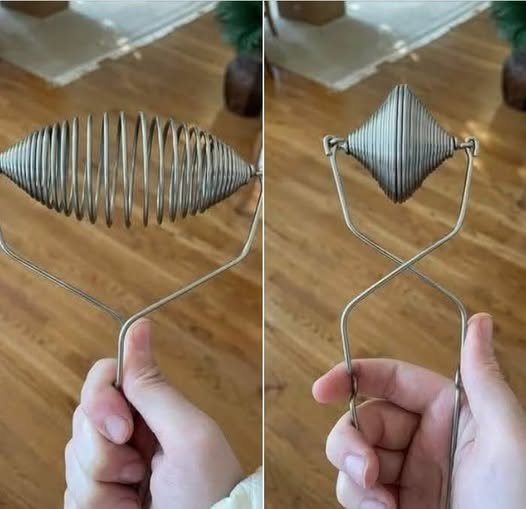
    Cleaning out a grandmother’s longtime home can feel like opening a time capsule. Behind cupboards, inside drawers, and tucked away in forgotten boxes, families often discover objects that were once completely ordinary but are now almost impossible to recognize. Older generations used many specialized household tools and appliances that have been replaced by modern conveniences, so an unfamiliar metal or wooden object may have had a very practical purpose. Kitchen gadgets, sewing accessories, repair tools, gardening equipment, and household hardware can all look mysterious when separated from the environment where they were originally used. The object’s material, weight, shape, and moving parts are often the first clues to its identity.

    Before throwing an unfamiliar item away, examine it carefully. Look for manufacturer names, stamped numbers, patent marks, hinges, screws, blades, grooves, handles, or holes. These small details can be surprisingly useful when identifying vintage objects. If it came from a kitchen, for example, its shape may suggest whether it was designed for cutting, opening, grinding, measuring, serving, or preparing food. If it was found near sewing supplies, workshop equipment, or gardening tools, the possibilities become completely different. The location where an object was discovered can therefore be almost as important as the object itself.

    The best way to solve a mystery like this is to take several clear photographs: one showing the entire object, close-ups of unusual parts or markings, and another photograph with a coin or ruler for scale. If the object has moving pieces, showing how they open or close can provide another valuable clue. Without seeing the actual item, however, it would be impossible to give a reliable identification from the caption alone. Disclaimer: This article is for general informational and educational purposes. The object cannot be identified confidently without photographs and physical details, so any specific identification would be speculation. Verify vintage-object identifications through reliable references, manufacturer records, museums, or experienced collectors before using an unfamiliar item.

  • These Are the Consequences of Sleeping With…

    These Are the Consequences of Sleeping With…

    The phrase “sleeping with…” can mean very different things depending on the missing context, which is why sensational headlines can easily create confusion. If the intended topic is a sleeping position, sleeping beside a particular object, sharing a bed with a pet, or another habit, the possible effects can vary considerably. Sleep itself is essential for physical and mental health, and factors such as comfort, temperature, noise, allergies, stress, and sleep duration can all influence how well a person rests. A dramatic headline should therefore not be interpreted as evidence that a particular sleeping habit is automatically harmful.

    For example, sleeping in an uncomfortable position for long periods can contribute to neck, shoulder, or back discomfort, while an unsuitable pillow or mattress may affect spinal comfort. People with allergies may also experience symptoms when sleeping around dust, pet dander, or other allergens. On the other hand, some popular claims about specific sleeping positions or bedtime habits exaggerate relatively minor effects or present them as guaranteed medical consequences. Individual circumstances matter, and a habit that causes discomfort for one person may have little effect on another. Persistent pain, breathing problems, severe snoring, or significant daytime sleepiness are better reasons to discuss sleep quality with a healthcare professional.

    The key is to identify exactly what the original headline means by “sleeping with…” before drawing conclusions. Without the missing words or an accompanying image, it would be impossible to responsibly identify the claimed consequences. Rather than assuming the worst, look for the complete context and check whether the claim is supported by reputable medical or sleep-health sources. Disclaimer: This article is for general educational purposes only. The provided headline is incomplete and does not identify the sleeping habit being discussed, so no specific health consequence can be confirmed. Always verify health-related claims through reliable medical sources or a qualified healthcare professional before treating them as factual.

  • If You Find a Dryer Sheet in There, Leave It Be

    If You Find a Dryer Sheet in There, Leave It Be

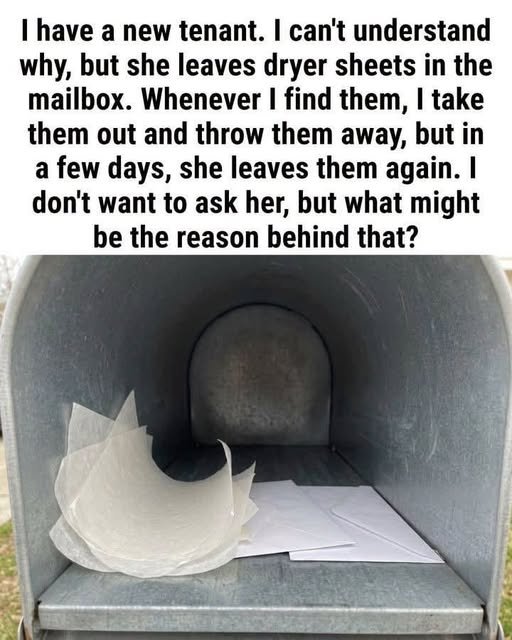
    A simple dryer sheet can sometimes be found in places where you might not expect it, and the advice to “leave it be” often comes from a surprisingly practical household trick. Used dryer sheets retain some of their fragrance even after a laundry cycle, which is why people sometimes repurpose them around the home. They may be placed inside drawers, closets, luggage, shoes, or other enclosed spaces to help maintain a fresher smell. Some people also use them for light dusting because the material can pick up certain particles from surfaces. However, these are household uses rather than guaranteed solutions for odors, pests, or cleaning problems.

    One reason dryer sheets have become popular in household hacks is that they are convenient and inexpensive. Their fragrance can help make enclosed areas smell fresher, while the fabric-like sheet can be useful for wiping certain surfaces. But it is important not to assume that a dryer sheet is harmless everywhere. Keep them away from small children and pets, particularly if they might chew or swallow them. Dryer sheets are designed as laundry products, not food or pet products, and their ingredients can cause problems if ingested. You should also avoid using them on surfaces where chemical residues could be transferred to food or sensitive materials unless the manufacturer specifically recommends it.

    So if someone tells you to leave a dryer sheet in a particular place, the idea may simply be related to freshening an enclosed area or taking advantage of the sheet after its original laundry use. The exact reason depends on where it was found and what problem someone was trying to solve. If the post refers to a specific location—such as a drawer, suitcase, air vent, or shoe—knowing that detail would make it much easier to explain the intended household trick. Disclaimer: This article provides general household information and does not establish that dryer sheets are effective for every suggested use. Follow the product manufacturer’s instructions, keep dryer sheets away from children and animals, and verify specific household claims through reliable sources before relying on them.

  • No, These Aren’t Christmas Decorations — So What Are They?

    No, These Aren’t Christmas Decorations — So What Are They?

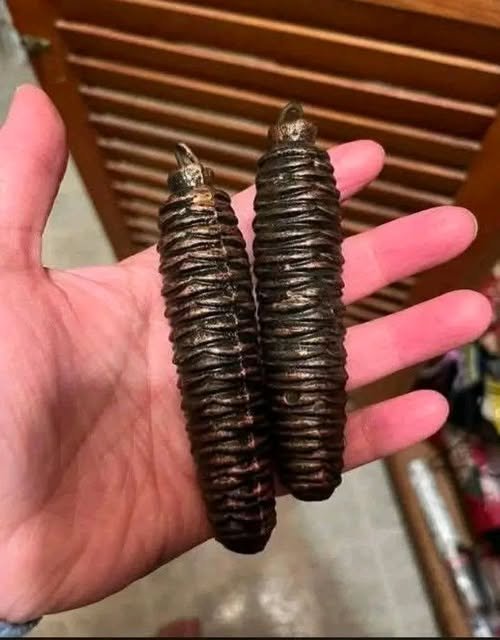
    At first glance, unusual objects discovered in an old family home can easily be mistaken for decorations, especially when they have unusual shapes, colors, or hooks that make them look like something intended to be displayed. But if these objects are solid, unusually heavy, and clearly too heavy for a Christmas tree, they may have had a practical purpose rather than a decorative one. Older homes often contain objects that were used for cooking, sewing, repairing, gardening, storage, or other everyday tasks that are no longer familiar to younger generations. Because many vintage household tools were made from cast iron, brass, steel, or other dense materials, they can be surprisingly heavy compared with modern plastic alternatives.

    One clue is the combination of shape, weight, and any attachment point. A heavy object with a loop or hook might have been designed to hang from a wall, tool rack, curtain fixture, or piece of furniture rather than from a tree. Other possibilities include old weights, hardware, door or window accessories, sewing equipment, or specialized kitchen tools. If several identical objects were discovered together, that is another valuable clue because sets of matching pieces were often made for a specific household function. Marks, numbers, manufacturer’s names, holes, grooves, hinges, threads, or worn areas can reveal how an object was handled and what it was designed to do.

    The most reliable way to solve this particular mystery is to examine the objects closely rather than guessing from the description. A photograph showing the entire collection, along with one object next to a ruler or coin for scale, would be especially helpful. Close-ups of any markings or unusual features could make identification much easier. Without seeing the objects themselves, claiming that they are a particular antique tool or household item would only be speculation. Disclaimer: The objects cannot be reliably identified from the caption alone because their photograph and physical details were not provided. Any suggested identification should be verified through clear images, measurements, markings, reliable antique references, or a qualified collector before being presented as fact.