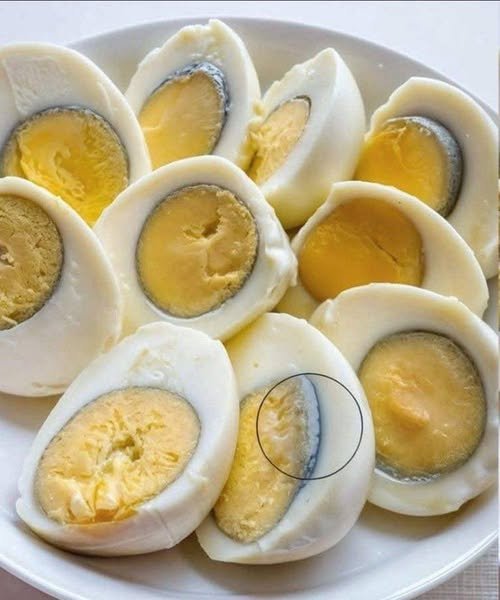
If you’ve ever peeled a hard-boiled egg and noticed a greenish or gray-green ring around the yolk, there’s usually no reason to panic. This discoloration most commonly happens when eggs are cooked for too long or at an excessively high temperature. During cooking, sulfur compounds from the egg white can react with iron in the yolk, creating ferrous sulfide, which produces the familiar greenish-gray color around the yolk. It may look unusual, but the ring itself does not automatically mean the egg has spoiled. The U.S. Department of Agriculture notes that this color change is harmless and results from the cooking process rather than dangerous contamination.
The green ring is therefore more of a cooking clue than a warning sign. Eggs that are cooked rapidly and then cooled promptly are less likely to develop the discoloration. If you regularly see a pronounced green ring, reducing the cooking time or avoiding prolonged exposure to high heat may help. The ring can also be affected by the chemistry of the particular egg, so even eggs cooked in the same batch may not always look identical. Importantly, color alone isn’t a reliable way to determine whether an egg is safe to eat. Proper storage, handling, cooking, and freshness are much more important factors when it comes to food safety.
So, the next time you crack open a hard-boiled egg and discover that strange green outline, don’t assume you’ve found a poisonous or rotten egg. In most cases, you’ve simply cooked it long enough for a natural chemical reaction to occur. However, if the egg has an unusual foul odor, slimy texture, cracked or contaminated shell, or has been stored improperly, it should be discarded regardless of whether the yolk has a green ring. Disclaimer: This article provides general food-safety information and does not assess the safety of a particular egg. When in doubt about an egg’s storage history or condition, follow official food-safety guidance and discard questionable food rather than taking unnecessary risks.
Leave a Reply