Blog

  • Why Do Smart Travelers Throw a Water Bottle Under the Hotel Bed?

    Why Do Smart Travelers Throw a Water Bottle Under the Hotel Bed?

    It may sound strange, but the water-bottle-under-the-bed trick is sometimes discussed as a simple way to check a hotel room before settling in. The basic idea is to gently roll an empty or partially filled bottle underneath the bed from one side. If the bottle rolls straight through and comes out on the other side, you can quickly see whether the space is clear. If it stops unexpectedly, it may encourage you to inspect the area with a flashlight rather than reaching underneath blindly. Travelers sometimes use this technique because hotel beds can have dark, hard-to-see spaces underneath them. However, there is no official evidence that putting a bottle under a hotel bed is a guaranteed safety test, and it should not be presented as a foolproof method for detecting hidden people, pests, or other hazards.

    A more practical hotel-room inspection involves checking the room systematically after arrival. Look behind curtains, around the bathroom, inside wardrobes, and near unusual gaps or spaces where you would reasonably expect to find maintenance equipment or personal belongings. Check that doors and windows close securely, verify that the room’s smoke detector appears intact, and make sure emergency exits are clearly understood. For travelers concerned about cleanliness, inspect bedding and bathroom surfaces and contact hotel staff if something appears unsanitary. If you are worried about hidden cameras or privacy, focus on unusual or unexplained electronic devices and objects rather than relying on viral “hacks.” Hotels vary significantly in design, so a method that works in one room may be meaningless in another. A simple flashlight can often be more useful than a bottle when checking dark spaces.

    The water-bottle trick can therefore be viewed as a quick curiosity-driven inspection technique rather than a guaranteed security measure. The best hotel safety habits are straightforward: choose reputable accommodation, keep valuables secured, lock the room when leaving, familiarize yourself with emergency exits, and report anything genuinely suspicious to hotel management or appropriate authorities. Avoid touching unknown objects or entering unsafe spaces just to perform an internet hack. Most hotel stays are routine, and there is no reason to become unnecessarily fearful because of viral travel advice. Disclaimer: This article is for general educational and informational purposes only. The water-bottle technique is not an officially validated hotel-security test and cannot guarantee that a room is completely safe, private, or free of hazards. Online travel claims may be exaggerated, incomplete, or unauthenticated, so always use practical safety precautions and verify important information through reliable sources.


  • 11 Things You Should Know Before Eating Sunflower Seeds

    11 Things You Should Know Before Eating Sunflower Seeds

    Sunflower seeds can be a nutrient-dense addition to a balanced diet, providing protein, fiber, healthy unsaturated fats, vitamin E, magnesium, and other minerals. But there are a few things worth knowing before making them a daily snack. 1) They are calorie-dense, so portions matter. 2) Their fiber can support digestive health, but suddenly eating large amounts may cause bloating or discomfort. 3) Unsalted or lightly salted varieties are generally preferable because heavily salted seeds can contribute significant sodium. 4) They provide vitamin E, an antioxidant nutrient important for normal immune function and protection of cells. 5) They also contain magnesium, which contributes to normal muscle and nerve function. 6) Shelled seeds are convenient, but eating the shells is not recommended because they are difficult to digest and can potentially cause intestinal blockage if consumed in significant quantities. 7) People with seed allergies should avoid sunflower seeds and seek medical advice about suitable alternatives. (clevelandclinic.org)

    There are also several practical considerations. 8) Check the package for added salt, sugar, or flavorings, especially when choosing roasted varieties. 9) Store sunflower seeds properly because their healthy fats can become rancid over time; keeping them in a cool, dry place—and refrigerating them for longer storage—can help preserve quality. 10) People taking certain medications or following a medically restricted diet should consider the overall nutritional content of their meals rather than assuming that a “healthy” seed is suitable in unlimited amounts. Sunflower seeds also contain phosphorus and potassium, which may be relevant for some people with chronic kidney disease whose healthcare team has recommended limits on these nutrients. (niddk.nih.gov) 11) Sunflower seeds should complement—not replace—a varied diet containing vegetables, fruits, whole grains, legumes, and appropriate protein sources. A small handful can be a convenient topping for oatmeal, salads, yogurt, or homemade meals, but larger portions can add calories quickly.

    Overall, sunflower seeds can be a smart snack when eaten in reasonable portions, particularly when you choose plain or lightly salted versions. Their combination of healthy fats, protein, fiber, vitamin E, and minerals makes them nutritionally valuable, but they are not a miracle food and eating more is not necessarily better. If you have a seed allergy, digestive disorder, kidney disease, or another condition requiring dietary restrictions, your individual needs may be different. Disclaimer: This article is for general educational and informational purposes only and does not constitute medical diagnosis, treatment, or personalized nutritional advice. Nutritional needs vary from person to person, and claims about specific foods may be exaggerated, incomplete, or unauthenticated. Always verify important health information through reliable sources and consult a qualified healthcare professional if you have a medical condition, food allergy, or concerns about changing your diet.

  • Doctors Warn: These 4 Bathroom Signs May Appear Before Colon Cancer

    Doctors Warn: These 4 Bathroom Signs May Appear Before Colon Cancer

    Your bathroom habits can sometimes provide useful clues about changes happening in your digestive system. Blood in the stool, persistent changes in bowel habits, a feeling that your bowel has not completely emptied, and unusually narrow or differently shaped stools are among the symptoms that can occur with colon or bowel cancer. The National Cancer Institute lists blood in the stool and changes such as diarrhea, constipation, incomplete emptying, or narrower stools among possible signs of colon cancer. Importantly, these symptoms are not specific to cancer. Hemorrhoids, infections, inflammatory bowel conditions, dietary changes, and other problems can produce similar symptoms, so noticing one does not mean that cancer is present.

    The first sign, blood in or on the stool, should not automatically be dismissed as hemorrhoids, particularly when it is recurring. Blood may appear bright red, dark red, or make stool look very dark depending on where bleeding occurs. The second is a persistent change in your normal bathroom routine, such as unexplained constipation, diarrhea, or needing to go more or less frequently than usual. The third is repeatedly feeling that you still need to use the bathroom even after passing stool. The fourth is a noticeable change in stool shape or consistency that continues rather than occurring occasionally. NHS guidance also identifies abdominal discomfort, bloating, unexplained weight loss, and persistent tiredness as possible bowel-cancer symptoms. These symptoms deserve attention especially when they are unusual for you and continue for several weeks.

    The most important message is don’t panic, but don’t ignore persistent changes either. Most people experiencing these symptoms will not necessarily have colon cancer, and medical evaluation is the only reliable way to determine the cause. A healthcare professional may review your symptoms and medical history, perform an examination, request a stool test or blood test, and—when appropriate—recommend further testing such as a colonoscopy. If you notice black or dark-red stool, bloody diarrhea, substantial bleeding, or persistent unexplained bowel changes, seek medical advice promptly. Early evaluation can help identify the actual cause and, when cancer is present, may improve the opportunity for earlier treatment. Disclaimer: This article is for general educational and informational purposes only and does not constitute medical diagnosis, treatment, or personalized health advice. These symptoms can have many causes and do not prove the presence of colon cancer. Some information online may be exaggerated, misleading, or unauthenticated, so always verify important health claims through reliable medical sources and consult a qualified healthcare professional about persistent or concerning symptoms.

  • White Mulberry: The Underrated Tree Packed with Powerful Health Benefits

    White Mulberry: The Underrated Tree Packed with Powerful Health Benefits

    White mulberry (Morus alba) is an often-overlooked fruit tree that has been used as a food and traditional wellness ingredient for centuries. Its berries and leaves contain a variety of nutrients and bioactive plant compounds, including flavonoids, anthocyanins, phenolic compounds, and other antioxidants. Research has explored white mulberry for its potential effects on blood glucose, cholesterol, inflammation, and cardiovascular health. (nccih.nih.gov) The fruit itself contains vitamins, minerals, and naturally occurring plant compounds that may contribute to a nutritious diet. (pubmed.ncbi.nlm.nih.gov) These characteristics help explain why researchers continue to investigate this traditional plant as a possible functional food. However, promising laboratory and early human findings should not be confused with proof that white mulberry can treat or cure major diseases.

    One of the most studied areas is blood-sugar regulation. Some clinical studies have found that white mulberry leaf preparations may reduce the rise in blood glucose after consuming carbohydrates, potentially because certain compounds in the leaves can interfere with carbohydrate digestion. (pubmed.ncbi.nlm.nih.gov) Researchers have also investigated possible antioxidant and cardiovascular benefits, although the strength of evidence varies depending on the preparation and health outcome being studied. Importantly, the National Center for Complementary and Integrative Health states that research on white mulberry remains limited, with some studies showing potential blood-glucose benefits while others have found no meaningful effect. (nccih.nih.gov) White mulberry leaf supplements can also cause digestive symptoms such as bloating, gas, constipation, or loose stools, and they may increase the risk of low blood sugar when combined with diabetes medication. (nccih.nih.gov)

    The most sensible way to view white mulberry is as a nutritious traditional food with interesting research potential—not a miracle cure. Enjoying the ripe fruit as part of a varied diet may provide useful plant nutrients, while concentrated leaf extracts should be treated more cautiously because supplement doses and formulations can differ substantially. There is also insufficient reliable information about the safety of white mulberry berries in medicinal quantities. (nccih.nih.gov) If you take diabetes medication, use other prescription medicines, or are considering a concentrated mulberry supplement, discussing it with a qualified healthcare professional is a sensible precaution. Disclaimer: This article is for general educational and informational purposes only and does not constitute medical diagnosis, treatment, or personalized nutritional advice. White mulberry has promising nutritional and research findings, but evidence is still limited for many claimed health benefits. Some online claims may be exaggerated, misleading, or unauthenticated, so important health information should always be verified through reliable medical sources and a qualified healthcare professional.

  • Getting Bruises for No Clear Reason? Here’s What Your Body May Be Trying to Tell You

    Getting Bruises for No Clear Reason? Here’s What Your Body May Be Trying to Tell You

    Finding a bruise and having no memory of hitting anything can be confusing, but occasional unexplained bruising does not automatically mean something is seriously wrong. Bruises occur when tiny blood vessels beneath the skin break and leak blood into surrounding tissue. As people age, thinner skin and the loss of some protective fatty tissue can make bruising easier, sometimes after a minor bump that was barely noticed. Certain medicines can also increase bruising, including aspirin, anticoagulants, some anti-inflammatory medicines, antiplatelet drugs, and corticosteroids. Some dietary supplements may contribute as well. This is why a new pattern of bruising should be considered in the context of medications, age, recent injuries, and overall health rather than immediately assuming the worst.

    However, frequent, unusually large, painful, or suddenly appearing bruises deserve attention, especially when there is no obvious injury. Easy bruising can occasionally be associated with problems involving platelets or blood-clotting proteins. Warning signs become more important when bruising occurs alongside other bleeding, such as frequent nosebleeds, bleeding gums, unusually heavy menstrual bleeding, blood in the urine or stool, or tiny red-purple spots on the skin called petechiae. A healthcare professional may review your medications and supplements, examine the bruises, and order blood tests such as a platelet count or clotting tests when appropriate. Importantly, do not stop prescribed blood-thinning medication on your own simply because you are bruising; discuss the problem with your doctor or pharmacist first.

    The best approach is to watch for patterns rather than panic over a single bruise. Most ordinary bruises gradually fade as the body reabsorbs the trapped blood. Applying a wrapped ice pack for short periods during the first day or two and elevating the affected area can help with swelling and discomfort. Make an appointment with a healthcare professional if bruises become frequent, large, painful, suddenly more common, or appear repeatedly without explanation. If bleeding will not stop with normal first aid, seek immediate medical attention. Disclaimer: This article is for general educational and informational purposes only and does not constitute medical diagnosis, treatment, or personalized health advice. Unexplained bruising has many possible causes, and bruising alone cannot diagnose a serious illness. Some information online may be exaggerated, incomplete, or unauthenticated, so always verify important health claims through reliable medical sources and consult a qualified healthcare professional.

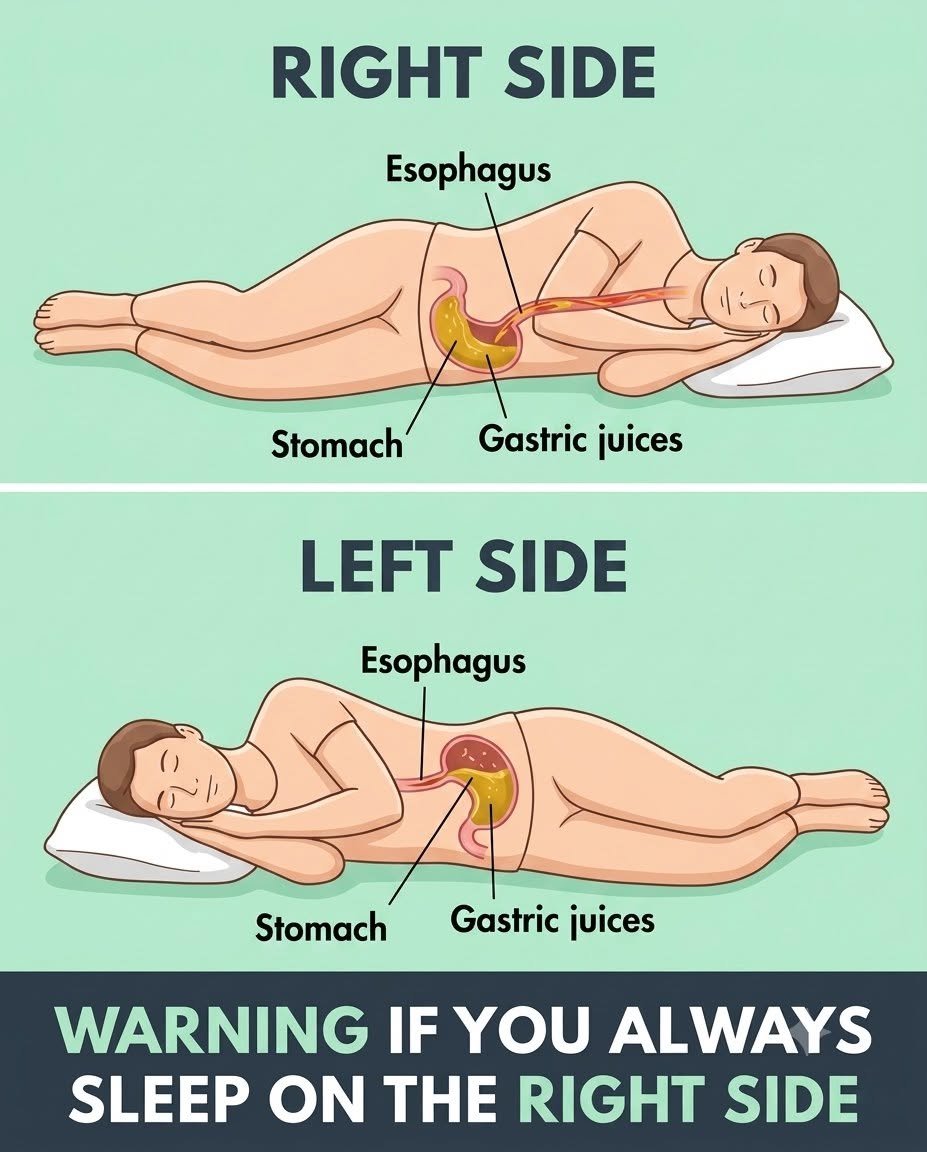
  • Sleeping on Your Right Side Every Night? Here’s What It Could Mean for Your Body

    Sleeping on Your Right Side Every Night? Here’s What It Could Mean for Your Body

    Sleeping on your right side is not inherently unhealthy, and for many people it is simply a comfortable and perfectly normal sleeping position. However, body position can influence certain conditions, particularly acid reflux and nighttime heartburn. Research has found that people with gastroesophageal reflux disease (GERD) may experience more nighttime acid exposure when sleeping on the right side compared with the left. In one study, acid exposure and clearance were significantly better when participants slept on their left side. This may be related to the position of the stomach and esophagus, which can make it easier for stomach contents to move upward when lying on the right side. For people without reflux symptoms, however, there is no strong reason to believe that routinely sleeping on the right side is automatically harmful.

    If you frequently experience heartburn, sour-tasting fluid in the mouth, chest discomfort after meals, nighttime coughing, or disrupted sleep, your sleeping position may be worth considering. Clinical guidelines for GERD recommend left-side sleeping as one lifestyle strategy for people experiencing nighttime reflux. A systematic review also found that left-side sleeping was associated with reduced nighttime acid exposure and faster acid clearance compared with right-side or back sleeping. This does not mean everyone needs to force themselves to sleep on the left. Comfort matters, and sleep quality is also important. Some people may naturally change positions throughout the night, while others may find that a pillow supporting the knees or torso makes side sleeping more comfortable. During pregnancy, sleeping on either side is generally acceptable, although healthcare guidance may recommend side sleeping later in pregnancy rather than lying flat on the back.

    The key takeaway is that right-side sleeping is not a disease or a guaranteed health risk. If you sleep comfortably, wake refreshed, and have no persistent symptoms, there may be no reason to change your position simply because of an online claim. But if you regularly suffer from nighttime reflux, experimenting with left-side sleeping may help reduce symptoms. Avoiding large meals close to bedtime and elevating the head of the bed can also be useful for people with nighttime reflux. If you experience frequent heartburn, unexplained chest pain, difficulty swallowing, persistent vomiting, or unexplained weight loss, seek medical evaluation rather than assuming your sleeping position is responsible. Disclaimer: This article is for general educational and informational purposes only and does not constitute medical diagnosis, treatment, or personalized health advice. Right-side sleeping is not inherently dangerous, and individual responses vary. Some online claims about sleep positions may be exaggerated or unauthenticated, so important health information should be verified through reliable medical sources and a qualified healthcare professional.

  • Watermelon Is Healthy, but It May Not Be the Best Choice for Everyone

    Watermelon Is Healthy, but It May Not Be the Best Choice for Everyone

    Watermelon is a refreshing fruit with a high water content and provides nutrients such as vitamin C, vitamin A, and beneficial plant compounds, making it a healthy option for many people. However, “healthy” does not mean that every food is ideal for every individual. Watermelon contains naturally occurring carbohydrates, so people managing diabetes may need to consider portion size and how it fits into their overall meal plan. The American Diabetes Association includes watermelon among fruit choices and notes that fruit contains carbohydrates that should be accounted for in a diabetes eating plan. For most people, a reasonable serving of whole watermelon can be part of a balanced diet, especially when it replaces less nutritious desserts or sugary snacks.

    People with certain kidney conditions may also need individualized advice about watermelon. Interestingly, watermelon is considered a relatively lower-potassium fruit compared with several other fruits, but people with advanced kidney disease may have dietary restrictions that depend on their blood potassium levels and kidney function. This means it would be inaccurate to label watermelon as universally “bad” for people with kidney problems. The same principle applies to diabetes: eating watermelon does not automatically make blood sugar unhealthy, but eating very large portions can provide a substantial amount of carbohydrate. Whole fruit is generally preferable to drinking large amounts of fruit juice because the portion and fiber content differ. People who experience digestive discomfort after eating large quantities may also benefit from smaller portions rather than eliminating the fruit completely.

    The best approach is portion awareness rather than fear. Enjoy watermelon as part of a varied diet that includes vegetables, protein, whole grains, legumes, nuts, and other fruits. If you have diabetes, chronic kidney disease, or another condition requiring dietary restrictions, your ideal serving may depend on your individual treatment plan and laboratory results. NIDDK emphasizes that people with kidney disease may benefit from working with a healthcare professional or dietitian to develop an appropriate meal plan. Watermelon can be a nutritious choice for many people, but no single fruit is essential for everyone. Disclaimer: This article is for general educational and informational purposes only and does not constitute medical diagnosis, treatment, or personalized nutritional advice. Individual dietary needs vary, and online claims about foods may be exaggerated, incomplete, or unauthenticated. Always verify important nutrition information through reliable medical sources and consult a qualified healthcare professional before making significant dietary changes.

  • Looking to Boost Your Fiber Intake? Discover 7 Foods That Pack More Fiber Than Corn

    Looking to Boost Your Fiber Intake? Discover 7 Foods That Pack More Fiber Than Corn

    If you are trying to increase your daily fiber intake, corn is certainly a useful choice—but it is far from the only option. Fiber supports normal digestion, helps promote fullness, and can contribute to healthy cholesterol and blood-sugar levels. Seven foods that can provide impressive amounts of fiber include lentils, chickpeas, beans, chia seeds, raspberries, pears, and artichokes. According to U.S. dietary guidance, a half-cup of cooked lentils provides about 7.8 grams of fiber, while the same amount of chickpeas provides around 8.1 grams. Chia seeds are another concentrated option, with approximately 4.1 grams of fiber in just one tablespoon. These foods can make it easier to build satisfying meals without relying on highly processed fiber products.

    Beans and legumes are particularly valuable because they combine fiber with plant-based protein and other nutrients. Navy beans, for example, provide around 9.6 grams of fiber per half-cup, while split peas provide about 8.1 grams. Among fruits, raspberries are an excellent choice, supplying about 4 grams of fiber in half a cup, while a medium pear provides roughly 5.5 grams. Artichokes are another standout, providing approximately 7.2 grams of fiber per half-cup of cooked hearts. Fiber works in different ways depending on its type: some forms help add bulk to stool and support regular bowel movements, while soluble fiber can help slow digestion and contribute to healthy cholesterol levels.

    The smartest way to increase fiber is to add it gradually and choose a variety of foods rather than suddenly consuming very large amounts. Try adding lentils to soups, chickpeas to salads, berries to oatmeal, chia seeds to yogurt, or pears as a snack. Drinking adequate fluids is also important as you increase fiber, particularly if your previous intake was low. A varied diet containing vegetables, fruits, whole grains, legumes, nuts, and seeds can provide different types of fiber and other valuable nutrients. Disclaimer: This article is for general educational and informational purposes only and does not constitute medical diagnosis, treatment, or personalized nutritional advice. Fiber requirements and tolerance vary between individuals, and some online nutrition claims may be exaggerated or unauthenticated. Always verify important health information through reliable sources and consult a qualified healthcare professional if you have a digestive condition or are making significant dietary changes.

  • If Cancer Is Developing in Your Body, These 7 Morning Signs Could Be Worth Checking

    If Cancer Is Developing in Your Body, These 7 Morning Signs Could Be Worth Checking

    Certain changes you notice in the morning may deserve attention, but they should not automatically be interpreted as signs of cancer. Cancer symptoms vary greatly depending on the type and location of the disease, and many symptoms are much more commonly caused by infections, stress, medications, sleep problems, or other health conditions. Seven changes worth discussing with a healthcare professional when they are persistent or unexplained include unusual fatigue that does not improve with rest, unexplained weight loss or reduced appetite, recurring morning nausea or vomiting, persistent pain, unusual lumps or swelling, unexplained fever or night sweats, and unusual bleeding or changes in bowel or bladder habits. The National Cancer Institute lists persistent fatigue, appetite changes, nausea and vomiting, unexplained fever or night sweats, lumps, unexplained weight changes, and bowel or bladder changes among possible cancer symptoms.

    One important distinction is persistence. Feeling tired after a poor night’s sleep is normal, but fatigue that continues despite adequate rest may warrant investigation. Similarly, occasional nausea or a temporary change in appetite is usually not enough to indicate cancer, but recurring or unexplained symptoms should be discussed with a doctor. Unexplained weight loss, a new lump, persistent cough, blood in the urine or stool, a sore that does not heal, or ongoing changes in bowel habits are examples of symptoms that medical organizations recommend having evaluated. Some cancers can produce few or no symptoms in their early stages, which is why appropriate screening based on age and individual risk factors remains important. There is also no single morning checklist that can determine whether cancer is developing. Diagnosis requires professional assessment and, when appropriate, tests such as blood work, imaging, or biopsy.

    The safest approach is to pay attention to changes without becoming frightened by them. If a symptom is unusual for you, persists for several weeks, becomes progressively worse, or occurs alongside other concerning changes, arrange an appointment with a qualified healthcare professional. The American Cancer Society emphasizes that most symptoms that can occur with cancer are actually more likely to have another cause, but persistent or worsening changes should still be evaluated. Early medical evaluation can help identify the actual cause and, when cancer is present, may allow appropriate treatment to begin sooner. Disclaimer: This article is for general educational and informational purposes only and does not constitute medical diagnosis, treatment, or personalized medical advice. The seven morning signs described above are not proof of cancer and can occur with many non-cancerous conditions. Some online health claims may be exaggerated, misleading, or unauthenticated, so important information should always be verified through reliable medical sources and a qualified healthcare professional.

  • Warning for Seniors: This Sleep Posture Might Be Linked to Higher Stroke Risk

    Warning for Seniors: This Sleep Posture Might Be Linked to Higher Stroke Risk

    For older adults, sleeping flat on the back (the supine position) deserves some attention—not because it directly causes a stroke, but because this position can worsen obstructive sleep apnea (OSA) in many people. The American Heart Association reports that sleep apnea is often substantially worse when people sleep on their backs compared with their sides, and OSA itself is associated with high blood pressure and increased stroke risk. During OSA episodes, the upper airway repeatedly narrows or closes, causing breathing interruptions and fluctuations in oxygen and blood pressure. Over time, untreated sleep apnea can place additional stress on the cardiovascular system. However, it would be misleading to say that simply sleeping on your back directly causes a stroke. The concern is mainly relevant to people whose sleep apnea becomes worse in that position.

    Some clues that back-sleeping may be contributing to a sleep-breathing problem include loud or persistent snoring, repeated pauses in breathing noticed by a partner, waking up choking or gasping, morning headaches, excessive daytime sleepiness, difficulty concentrating, or waking repeatedly during the night. Research has found that changing from a supine position to a side position can reduce the severity of positional sleep apnea in appropriate patients. This does not mean every senior should force themselves to sleep on one particular side. Individual comfort, existing medical conditions, mobility, shoulder or hip problems, and other factors all matter. In fact, research on positioning after an actual acute stroke is more complicated, and medical positioning should be individualized rather than based on general internet advice.

    The most important takeaway is to pay attention to breathing during sleep rather than becoming frightened by your normal sleeping posture. If you or your partner notice loud snoring, repeated breathing pauses, nighttime gasping, or significant daytime sleepiness, speak with a healthcare professional about possible sleep apnea. A sleep evaluation may help determine whether treatment is needed. For people with positional OSA, side sleeping may reduce breathing interruptions, but treatment should be individualized. Disclaimer: This article is for general educational and informational purposes only and does not constitute medical diagnosis, treatment, or personalized health advice. Sleeping on your back has not been proven to directly cause stroke, and sleep position affects people differently. Some online health claims may be exaggerated or unauthenticated, so important information should be verified through reliable medical sources and a qualified healthcare professional.