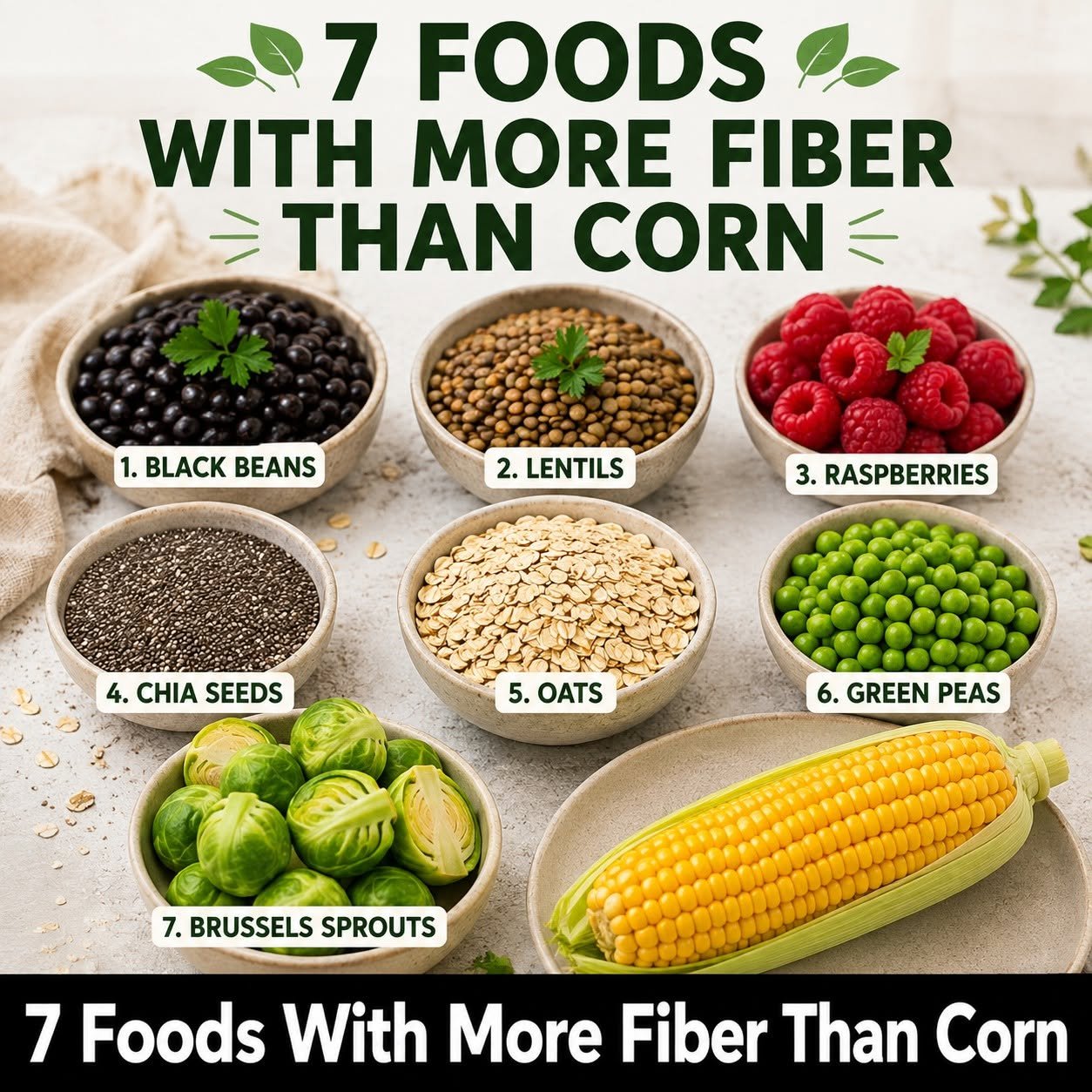
If you are trying to increase your daily fiber intake, corn is certainly a useful choice—but it is far from the only option. Fiber supports normal digestion, helps promote fullness, and can contribute to healthy cholesterol and blood-sugar levels. Seven foods that can provide impressive amounts of fiber include lentils, chickpeas, beans, chia seeds, raspberries, pears, and artichokes. According to U.S. dietary guidance, a half-cup of cooked lentils provides about 7.8 grams of fiber, while the same amount of chickpeas provides around 8.1 grams. Chia seeds are another concentrated option, with approximately 4.1 grams of fiber in just one tablespoon. These foods can make it easier to build satisfying meals without relying on highly processed fiber products.
Beans and legumes are particularly valuable because they combine fiber with plant-based protein and other nutrients. Navy beans, for example, provide around 9.6 grams of fiber per half-cup, while split peas provide about 8.1 grams. Among fruits, raspberries are an excellent choice, supplying about 4 grams of fiber in half a cup, while a medium pear provides roughly 5.5 grams. Artichokes are another standout, providing approximately 7.2 grams of fiber per half-cup of cooked hearts. Fiber works in different ways depending on its type: some forms help add bulk to stool and support regular bowel movements, while soluble fiber can help slow digestion and contribute to healthy cholesterol levels.
The smartest way to increase fiber is to add it gradually and choose a variety of foods rather than suddenly consuming very large amounts. Try adding lentils to soups, chickpeas to salads, berries to oatmeal, chia seeds to yogurt, or pears as a snack. Drinking adequate fluids is also important as you increase fiber, particularly if your previous intake was low. A varied diet containing vegetables, fruits, whole grains, legumes, nuts, and seeds can provide different types of fiber and other valuable nutrients. Disclaimer: This article is for general educational and informational purposes only and does not constitute medical diagnosis, treatment, or personalized nutritional advice. Fiber requirements and tolerance vary between individuals, and some online nutrition claims may be exaggerated or unauthenticated. Always verify important health information through reliable sources and consult a qualified healthcare professional if you have a digestive condition or are making significant dietary changes.
Leave a Reply