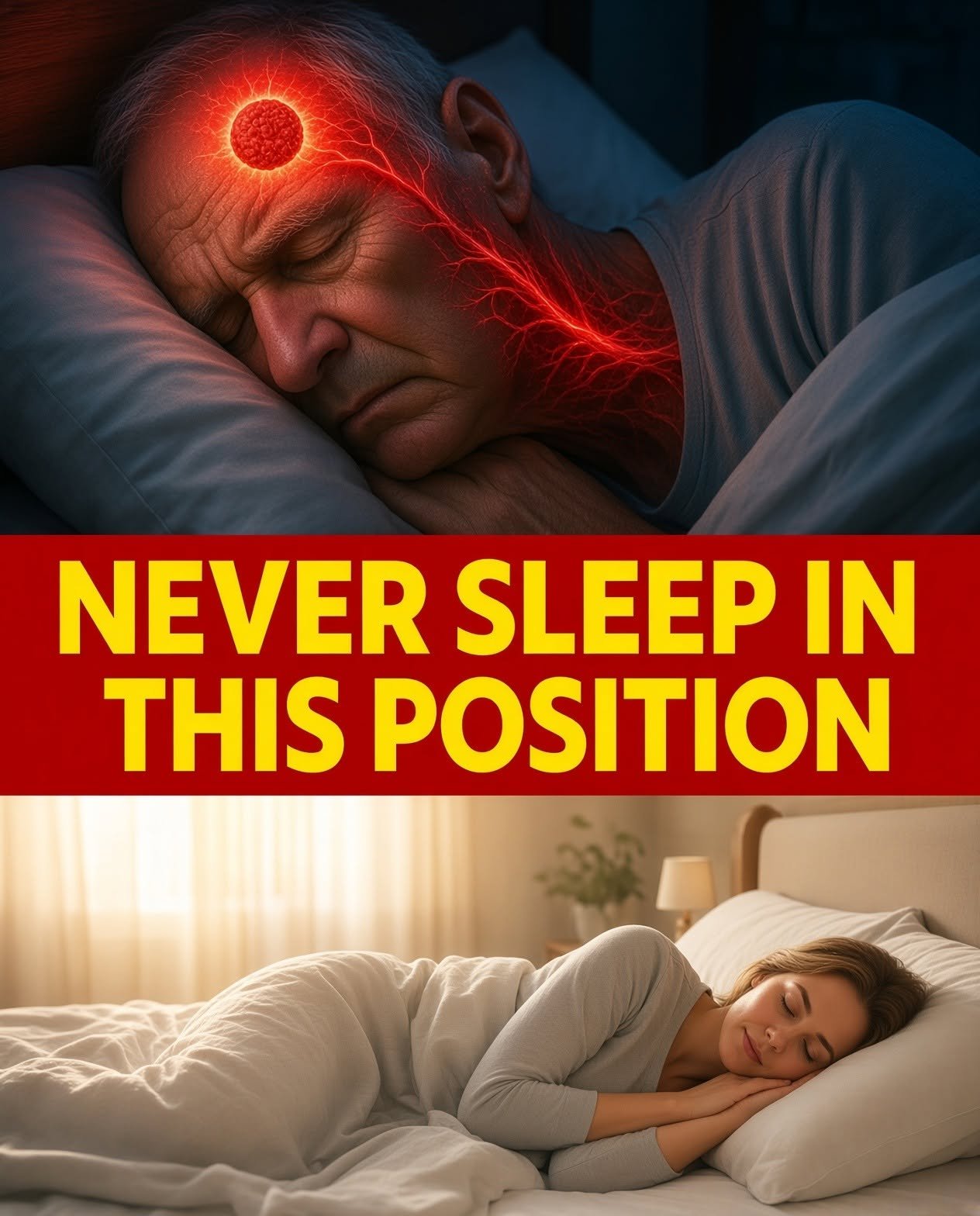
For older adults, sleeping flat on the back (the supine position) deserves some attention—not because it directly causes a stroke, but because this position can worsen obstructive sleep apnea (OSA) in many people. The American Heart Association reports that sleep apnea is often substantially worse when people sleep on their backs compared with their sides, and OSA itself is associated with high blood pressure and increased stroke risk. During OSA episodes, the upper airway repeatedly narrows or closes, causing breathing interruptions and fluctuations in oxygen and blood pressure. Over time, untreated sleep apnea can place additional stress on the cardiovascular system. However, it would be misleading to say that simply sleeping on your back directly causes a stroke. The concern is mainly relevant to people whose sleep apnea becomes worse in that position.
Some clues that back-sleeping may be contributing to a sleep-breathing problem include loud or persistent snoring, repeated pauses in breathing noticed by a partner, waking up choking or gasping, morning headaches, excessive daytime sleepiness, difficulty concentrating, or waking repeatedly during the night. Research has found that changing from a supine position to a side position can reduce the severity of positional sleep apnea in appropriate patients. This does not mean every senior should force themselves to sleep on one particular side. Individual comfort, existing medical conditions, mobility, shoulder or hip problems, and other factors all matter. In fact, research on positioning after an actual acute stroke is more complicated, and medical positioning should be individualized rather than based on general internet advice.
The most important takeaway is to pay attention to breathing during sleep rather than becoming frightened by your normal sleeping posture. If you or your partner notice loud snoring, repeated breathing pauses, nighttime gasping, or significant daytime sleepiness, speak with a healthcare professional about possible sleep apnea. A sleep evaluation may help determine whether treatment is needed. For people with positional OSA, side sleeping may reduce breathing interruptions, but treatment should be individualized. Disclaimer: This article is for general educational and informational purposes only and does not constitute medical diagnosis, treatment, or personalized health advice. Sleeping on your back has not been proven to directly cause stroke, and sleep position affects people differently. Some online health claims may be exaggerated or unauthenticated, so important information should be verified through reliable medical sources and a qualified healthcare professional.
Leave a Reply