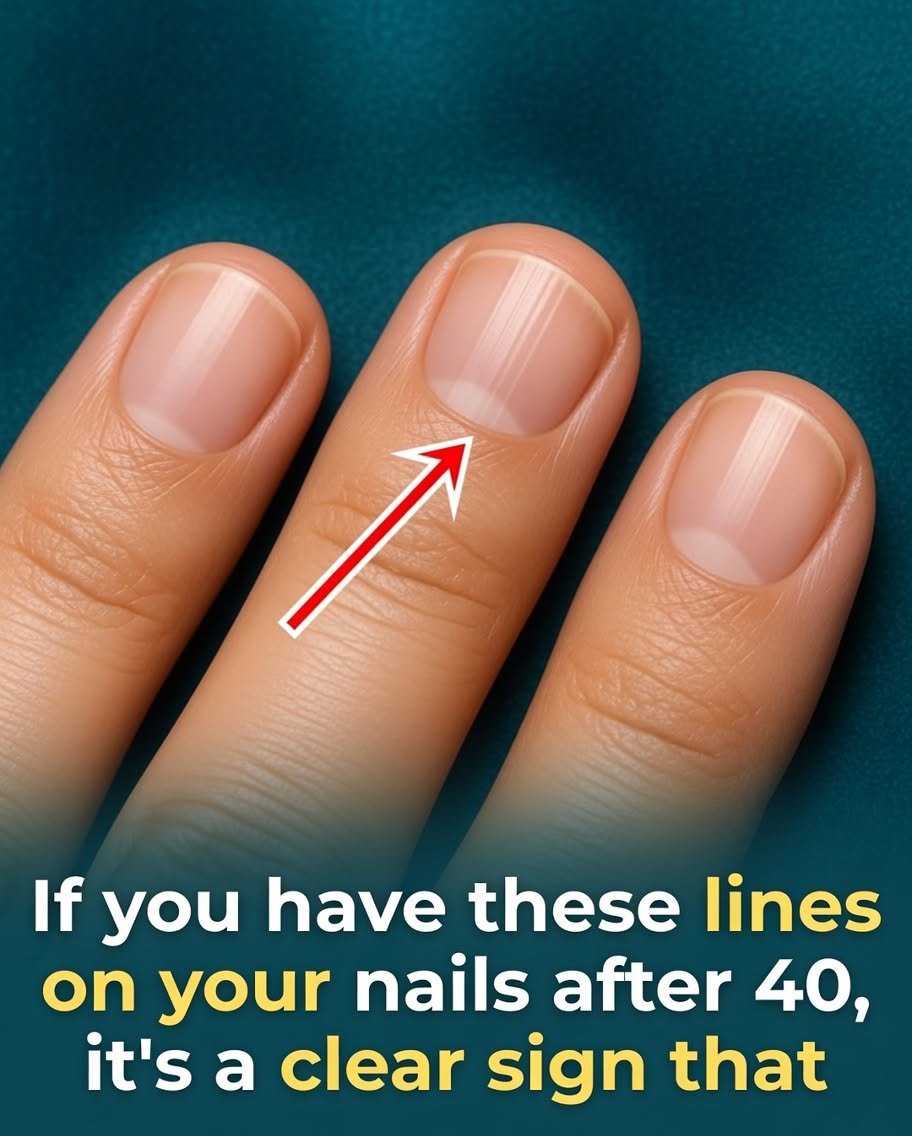
Your fingernails can sometimes provide clues about your overall health, although nail changes rarely point to one specific disease. As people get older, ordinary changes such as brittle nails, slower growth, and vertical ridges can become more common and are often harmless. However, several unusual changes deserve attention. A new dark brown or black streak beneath a nail, especially on a single finger or toe, should be examined by a dermatologist because, although rare, it can be a sign of melanoma. (aad.org) Another potential warning sign is nail clubbing, in which the fingertips become enlarged and the nails curve downward. Clubbing can be associated with certain lung, heart, liver, and gastrointestinal conditions. (medlineplus.gov) These changes do not mean that a serious disease is definitely present, but they are worth professional evaluation.
A third change to watch for is deep horizontal grooves or depressions, known as Beau’s lines. They can appear when nail growth is temporarily interrupted by illness, injury, severe stress, nutritional problems, or certain medical treatments. (aad.org) Fourth, nails that become unusually pale, blue, yellow, thickened, or separated from the nail bed may have several possible causes, including anemia, infections, circulation or oxygen problems, liver or kidney disease, medication effects, or skin conditions. (medlineplus.gov) Fifth, spoon-shaped nails, where the center curves inward and the edges rise, can sometimes be associated with iron-deficiency anemia. (medlineplus.gov) The important point is that nail appearance alone cannot diagnose these conditions; similar changes can occur from injuries, manicures, fungal infections, normal aging, or nutritional factors.
After 40, it is reasonable to pay attention to changes in your nails, but there is no need to become alarmed by every ridge or color variation. The American Academy of Dermatology recommends having new or changing nail abnormalities assessed, particularly dark streaks, nail lifting, unusual curvature, persistent discoloration, or changes around the nail. (aad.org) Take a clear photograph when you first notice a change so you can monitor whether it is growing out or becoming more pronounced, and mention persistent abnormalities during a medical appointment. Disclaimer: This article is for general educational and informational purposes only and does not constitute medical advice, diagnosis, or treatment. Nail changes have many possible causes and do not automatically indicate serious disease or cancer. Always verify health information through reliable medical sources and consult a qualified healthcare professional or dermatologist about new, persistent, or worsening nail abnormalities.
Leave a Reply