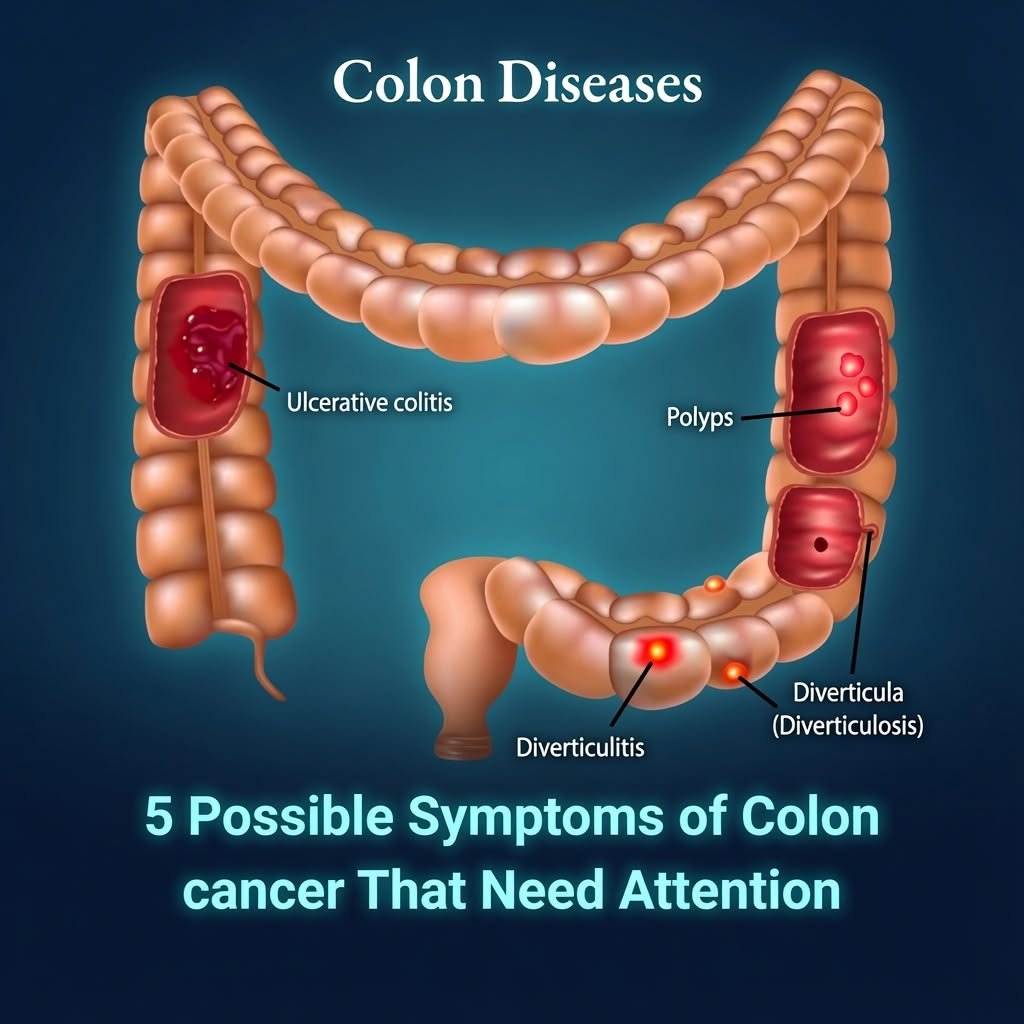
Colon cancer does not always cause obvious symptoms in its early stages, which makes awareness and appropriate screening especially important. Five warning signs worth knowing are blood in or on the stool, persistent changes in bowel habits, ongoing abdominal discomfort, unexplained weight loss, and unusual fatigue or weakness. Changes in bowel habits can include persistent diarrhea or constipation, stools becoming narrower or different in appearance, or a feeling that the bowel has not completely emptied. (cancer.gov) Blood in the stool may appear bright red or very dark, and although hemorrhoids and other non-cancerous conditions can also cause bleeding, unexplained or recurring blood should be medically evaluated. (cdc.gov) These symptoms do not automatically mean someone has cancer, but persistent or unusual changes should not simply be dismissed.
Abdominal symptoms can include cramping, bloating, gas pains, fullness, or discomfort that does not go away. Unexplained weight loss is another important warning sign, particularly when it occurs without changes to diet or exercise. Fatigue can sometimes develop because colorectal cancer causes slow blood loss, potentially contributing to iron-deficiency anemia. Research examining younger adults with colorectal cancer has also identified abdominal pain, rectal bleeding, diarrhea, and iron-deficiency anemia as symptoms that can appear before diagnosis. (cancer.gov) However, these symptoms are not unique to colon cancer and may occur with infections, inflammatory bowel disease, hemorrhoids, dietary problems, or other gastrointestinal conditions. The key is to seek professional evaluation when symptoms persist, worsen, or represent a significant change from your normal pattern.
Perhaps the most important point is not to wait for symptoms before discussing screening. Colorectal cancer can develop without symptoms, while screening can detect precancerous polyps that can sometimes be removed before they become cancer. The CDC recommends that adults at average risk begin colorectal cancer screening at age 45, while people with a family history, inflammatory bowel disease, certain inherited conditions, or other increased risks may need earlier or more frequent screening. (cdc.gov) If you notice persistent rectal bleeding, major bowel changes, unexplained weight loss, ongoing abdominal pain, or unexplained fatigue, arrange a medical evaluation rather than trying to diagnose the cause yourself. Disclaimer: This article is for general educational and informational purposes only and does not constitute medical advice, diagnosis, or treatment. These warning signs can have many causes and do not prove the presence of colon cancer. Always verify cancer-related information through reliable medical sources and consult a qualified healthcare professional about persistent or concerning symptoms.
Leave a Reply