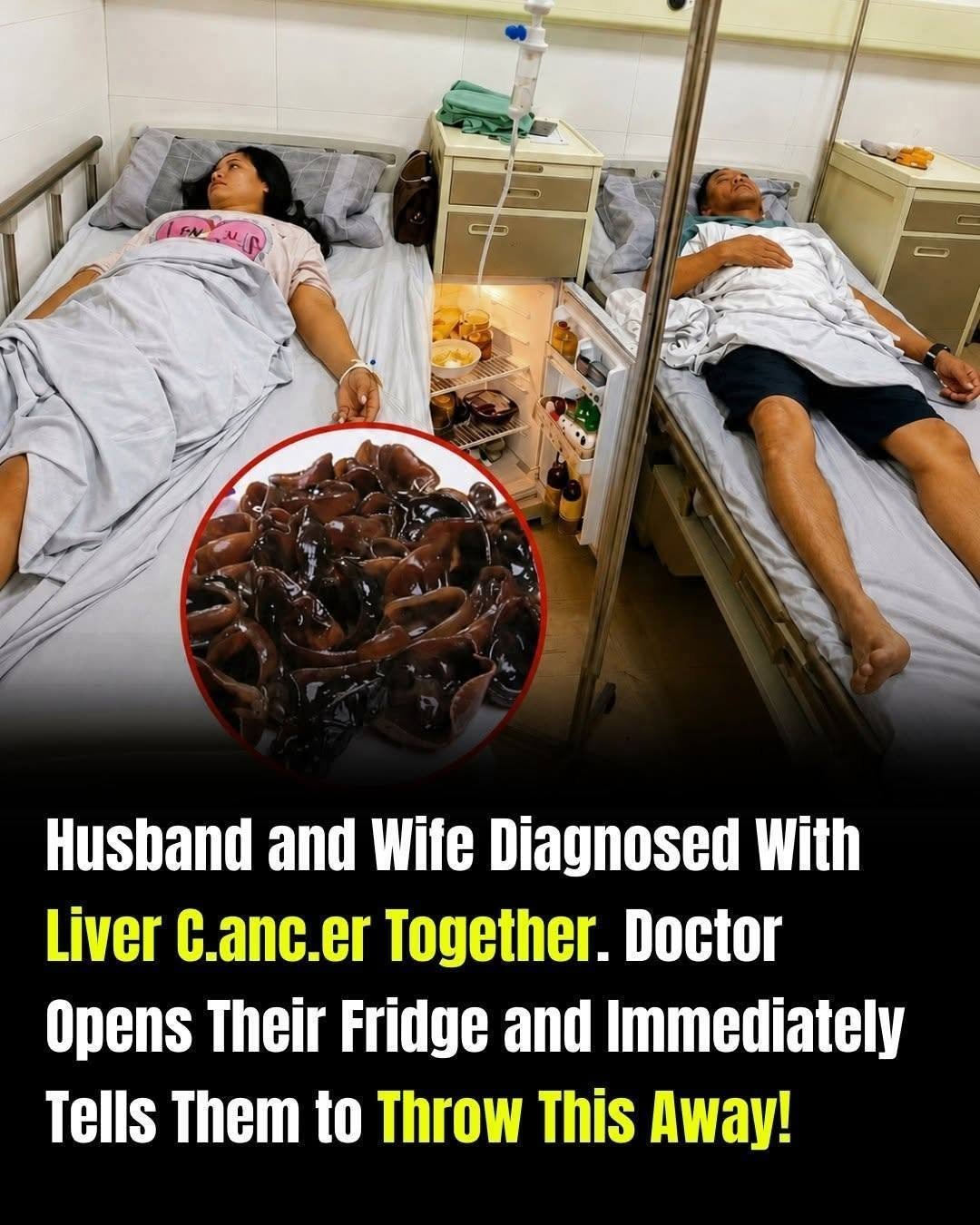
Digital media platforms frequently feature composite graphics showing hospitalized individuals alongside sensationalized headlines—such as claiming that a married couple was simultaneously diagnosed with liver cancer after a doctor inspected their refrigerator. These viral posts systematically utilize evasive spelling (e.g., “C.anc.er”) to bypass automated content filters while exploiting domestic health anxieties, provoking shock, and driving rapid online comment sharing.
JPG
From a clinical toxicology and environmental oncology perspective, primary liver malignancies—such as hepatocellular carcinoma (HCC)—develop through chronic, multi-year processes primarily driven by viral hepatitis (HBV/HCV), heavy alcohol consumption, metabolic dysfunction-associated steatohepatitis (MASH), or prolonged dietary exposure to potent, naturally occurring carcinogens like aflatoxins. While improper storage of rehydrated fungi (such as wood ear mushrooms, Auricularia auricula-judae) can lead to severe acute bacterial food poisoning caused by Pseudomonas cocovenenans (which produces lethal, liver-damaging bongkrekic acid), acute food contamination does not cause immediate, simultaneous cancer in two individuals. Content-farming networks routinely distort genuine food hygiene precautions regarding prolonged soaking of dried ingredients into dramatic, instantaneous cancer narratives to maximize digital engagement metrics and ad revenue.
JPG+ 2
Maintaining food safety and liver health requires practicing proper refrigeration, limiting the soaking time of dried mushrooms to short intervals under cold conditions, discarding food exhibiting mold or off-odors, and adhering to routine clinical screenings for chronic liver conditions. Oncological risk reduction relies on evidence-based lifestyle modifications and formal medical evaluations rather than sensationalized online clickbait. If you experience acute symptoms of foodborne illness—such as severe abdominal pain, vomiting, or jaundice—or have concerns regarding liver function, consulting a licensed physician or gastroenterologist provides safe, accurate care.
JPG+ 2
Leave a Reply