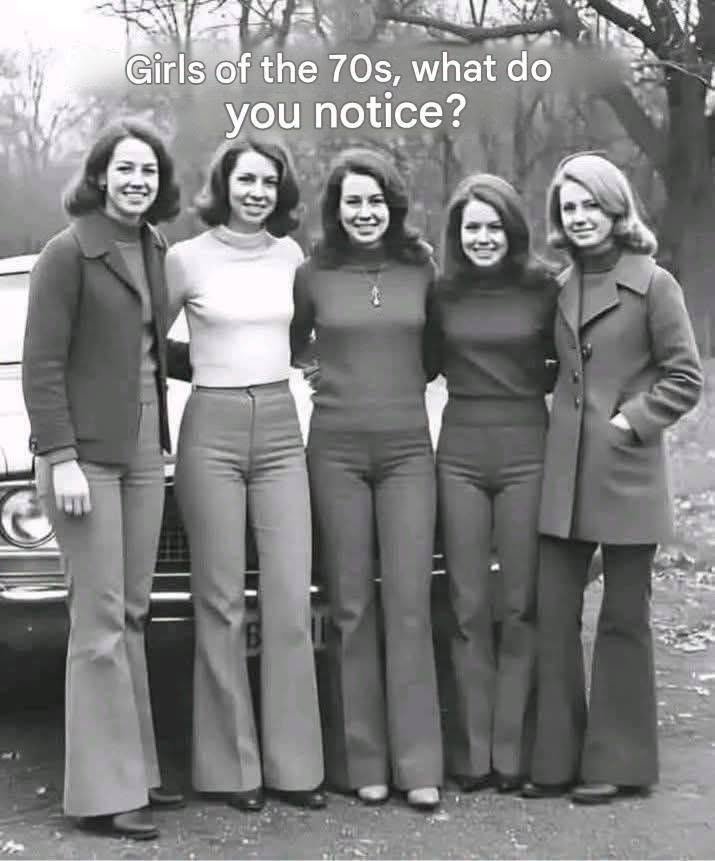
Digital media platforms frequently feature monochrome group portraits purporting to showcase authentic fashion from past decades—such as a 1970s snapshot asking viewers to identify specific nostalgic details. These viral posts rely on artificial visual puzzles, synthetic aesthetic tropes, and open-ended engagement questions to provoke nostalgic curiosity, debate, and rapid online comment sharing rather than presenting genuine archival photography.
JPG+ 1
From a digital forensics and media analysis perspective, the image presented is not an authentic 1970s photograph, but rather a synthetic composition generated by artificial intelligence. Generative image models frequently produce smooth, uncanny structural patterns when attempting to replicate historical photography, leading to visible digital artifacts such as homogenized facial features, distorted foreground structures, blurred text or license plate geometry, and unnatural hand or clothing seam renderings. Content-farming networks systematically manufacture these pseudo-historical images to exploit online nostalgia algorithms, driving massive audience engagement, follower counts, and ad revenue.
JPG+ 2
Evaluating historical imagery effectively requires looking beyond surface-level aesthetics (such as bell-bottom pants or hairstyle tropes) to inspect structural consistency, cross-reference verified archival collections, and recognize patterns of modern AI image generation. Understanding how synthetic media recreates historical styles helps maintain a critical perspective on modern digital media trends. If you are seeking authentic mid-to-late 20th-century fashion history or verified photographic documentation, consulting accredited library archives, museum collections, and historical societies provides reliable context.
JPG+ 2
Leave a Reply