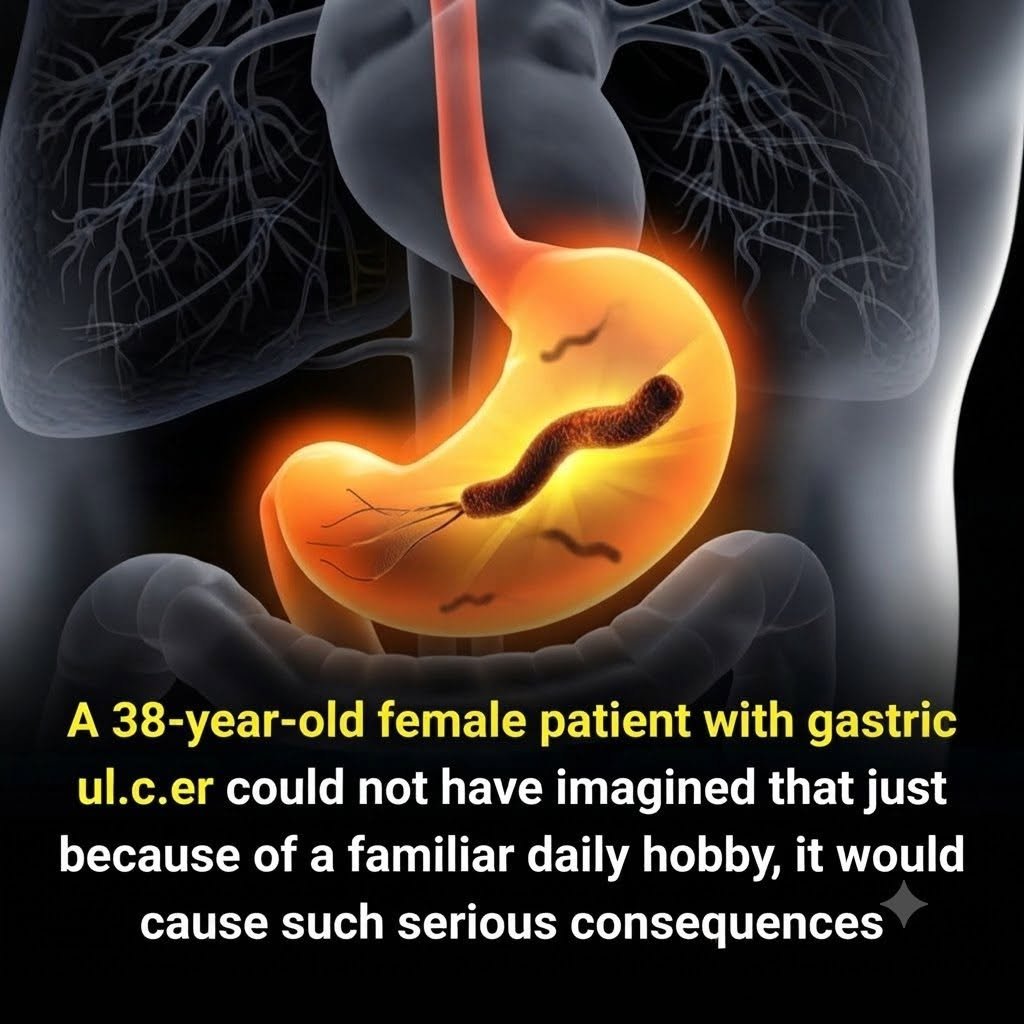
Digital media platforms frequently feature stock anatomical renderings of glowing digestive organs paired with sensationalized, incomplete headlines—such as claiming that a 38-year-old female patient’s gastric ulcer was caused by a mysterious “familiar daily hobby”. These viral graphics systematically utilize deliberate spelling evasions (e.g., “ul.c.er”) to bypass automated content moderation algorithms while exploiting health anxieties, provoking curiosity, and driving rapid online comment sharing rather than providing objective, evidence-based gastroenterological education.
From a clinical gastroenterology and pathology perspective, peptic ulcer disease—including gastric and duodenal ulcers—is primarily caused by specific physiological disruption rather than general lifestyle habits or arbitrary hobbies. The vast majority of gastric ulcers are caused by chronic infection with Helicobacter pylori bacteria (depicted in the stylized rendering within the stomach lining) or long-term usage of nonsteroidal anti-inflammatory drugs (NSAIDs) like ibuprofen, naproxen, or aspirin, which erode the protective mucosal layer. While lifestyle factors such as tobacco use, excessive alcohol consumption, extreme physical stress, or dietary irritants can exacerbate gastric symptoms and delay healing, they do not independently generate ulcerative lesions in the absence of mucosal vulnerability or infection. Content-farming networks routinely reframe fundamental clinical pathology into mysterious, localized “secret habit” clickbait to maximize digital engagement metrics, click-through rates, and advertising revenue.
Managing stomach ulcers and gastrointestinal health requires targeted medical therapy aimed at eradicating underlying causes, such as combination antibiotic regimens for H. pylori or acid-suppressive therapies (proton pump inhibitors) to allow mucosal healing. Lifestyle adjustments—including avoiding NSAID overuse, quitting smoking, reducing alcohol intake, and managing stress—serve as supportive measures alongside primary clinical interventions. Diagnostic confirmation of peptic ulcer disease relies on verified clinical standards, such as urea breath tests, stool antigen tests, or upper endoscopy (EGD) under specialist supervision. If you experience persistent epigastric pain, nausea, bloating, dark tarry stools, or unexplained digestive discomfort, consulting a licensed physician or gastroenterologist provides safe, evidence-based evaluation.
Leave a Reply