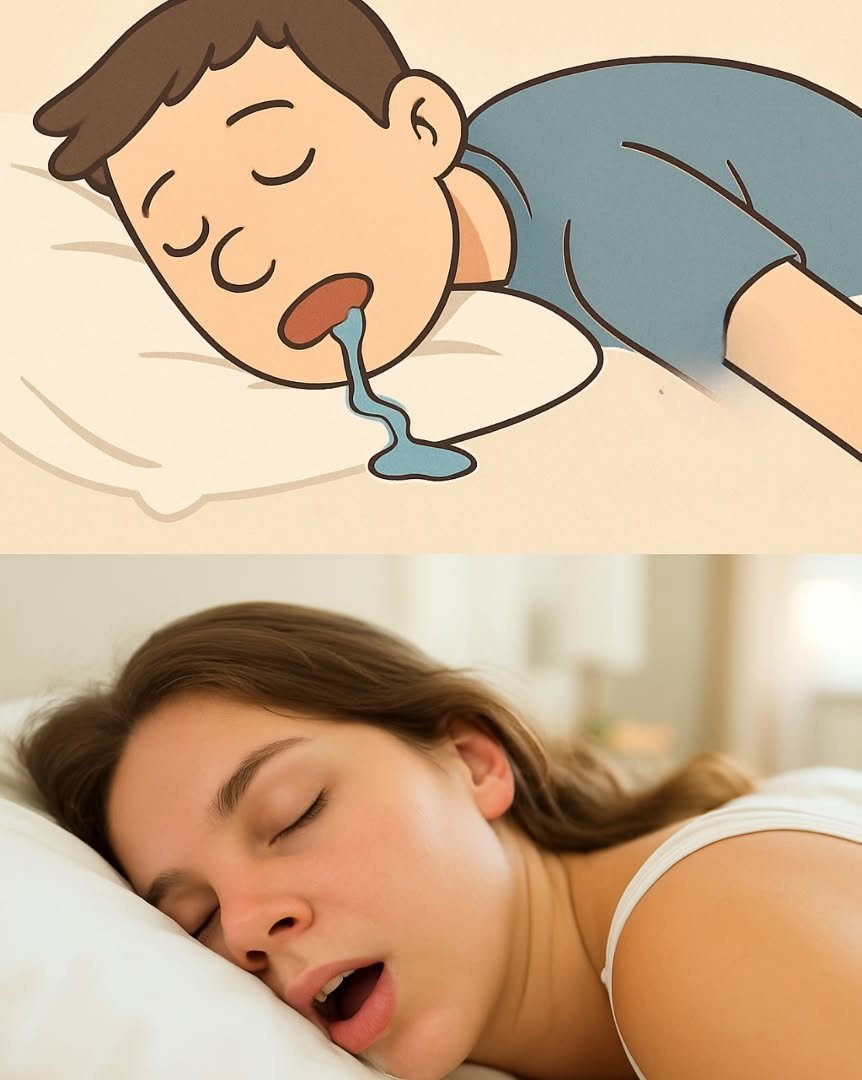
Digital media platforms frequently feature stock illustrations or photographic composites of individuals sleeping with open mouths and drooling—paired with incomplete, dramatic headlines like “If you drool while you sleep, it’s a sign that your brain…”. These viral posts rely on censorial truncation, curiosity-driven hooks, and exaggerated neurological warnings to provoke health anxiety, encourage comment section speculation, and drive rapid social media sharing and ad-monetized click-through rates rather than providing evidence-based medical or sleep physiology education.
From a somnological and neuromuscular perspective, nocturnal sialorrhea (sleep drooling) is a common, benign physiological event primarily determined by mechanical factors and sleep architecture rather than underlying brain pathology. During Rapid Eye Movement (REM) sleep, the brain induces peripheral muscle atonia—a natural state of muscular relaxation that includes the facial muscles and swallowing reflexes. When combined with sleeping positions like side or stomach sleeping, gravity simply allows excess saliva produced by the salivary glands to escape through a relaxed, open mouth. While severe, chronic sialorrhea in awake adults can occasionally associate with neurological conditions affecting swallowing coordination (dysphagia) or upper airway resistance (such as obstructive sleep apnea or nasal congestion), framing routine sleep drooling as a sudden indicator of brain dysfunction is scientifically baseless. Content-farming networks systematically take normal human physiological occurrences, frame them as sinister brain warnings, and deploy cliffhanger captions to maximize user engagement metrics and web ad revenue.
Managing nocturnal drooling effectively relies on simple postural adjustments and basic airway hygiene rather than succumbing to sensationalized health claims. Sleeping on one’s back, addressing seasonal nasal allergies or sinus congestion to encourage nasal breathing, and maintaining adequate hydration typically resolve or reduce nighttime saliva pooling. Understanding how clickbait algorithms exploit everyday bodily functions helps consumers navigate online medical information with critical discernment. For verified evaluation regarding chronic swallowing difficulties, severe airway obstruction, or underlying sleep disorders, consulting a board-certified sleep specialist, otolaryngologist (ENT), or neurologist provides authoritative, scientifically grounded care.
Leave a Reply