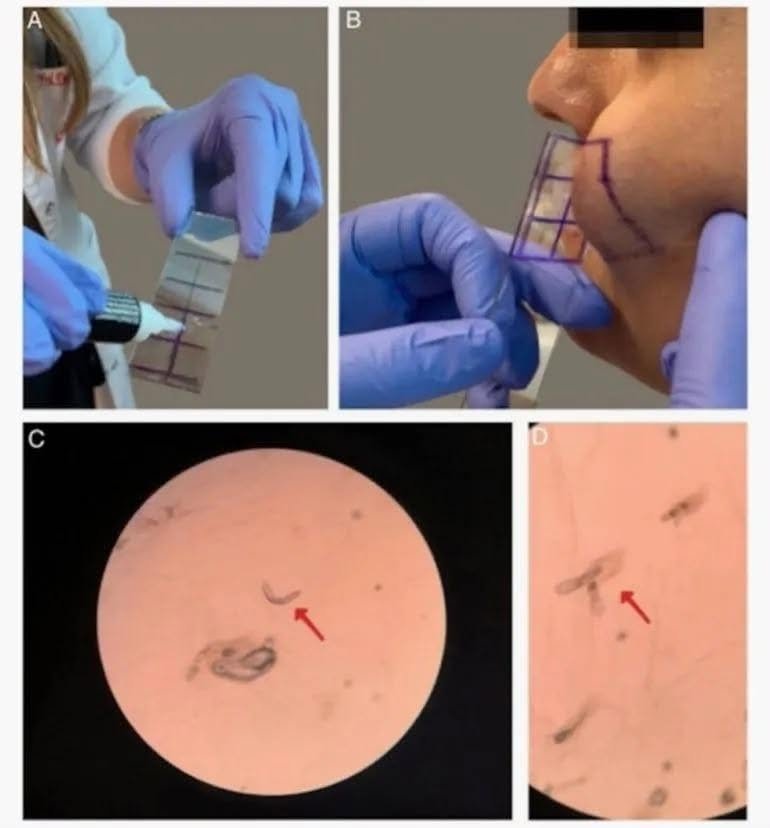
Digital media platforms frequently feature clinical diagnostic panels—such as a healthcare provider applying transparent adhesive tape to a patient’s perianal region alongside microscopic slides displaying ova—paired with incomplete, sensationalized headlines like “These are the consequences of sleeping with a…”. These viral posts rely on censorial truncation, visceral disgust triggers, and open-ended health warnings to provoke immediate panic, incite speculative comment section debates, and maximize social media sharing and ad-monetized click-through rates rather than providing accurate medical or parasitological education.
From a clinical parasitology and infectious disease perspective, the multi-panel image depicts the standard medical procedure known as the “Graham tape test” (or cellulose tape test), used definitively to diagnose Enterobius vermicularis (pinworm) infections. Pinworms are small, parasitic nematodes that inhabit the human gastrointestinal tract; at night, female worms migrate to the perianal area to deposit microscopic, asymmetrical, crescent-shaped eggs (highlighted under microscopy in panels C and D). While pinworm transmission occurs through the ingestion or inhalation of microscopic eggs via contaminated bedding, clothing, or unwashed hands—causing localized perianal pruritus (itching) and sleep disruption—it is a benign, highly treatable condition that does not cause permanent injury or systemic necrosis. Content-farming networks systematically harvest genuine clinical diagnostic figures from medical literature, strip them of context, and attach ominous cliffhanger headlines purely to exploit public health anxiety and inflate digital ad revenue.
Managing household hygiene and treating parasitic infections relies on evidence-based medical diagnostics and standard pharmacological care rather than succumbing to viral internet panic. Pinworm infestations are easily eradicated with over-the-counter or prescription anthelmintic medications (such as pyrantel pamoate, mebendazole, or albendazole), combined with laundering bed linens in hot water and practicing thorough handwashing hygiene. Understanding how content farms weaponize routine clinical procedures helps consumers evaluate online health content with critical media literacy. For verified evaluation, parasite testing, or targeted medical treatment regarding household infections, consulting a board-certified primary care physician, pediatrician, or infectious disease specialist provides authoritative, scientifically grounded care.
Leave a Reply