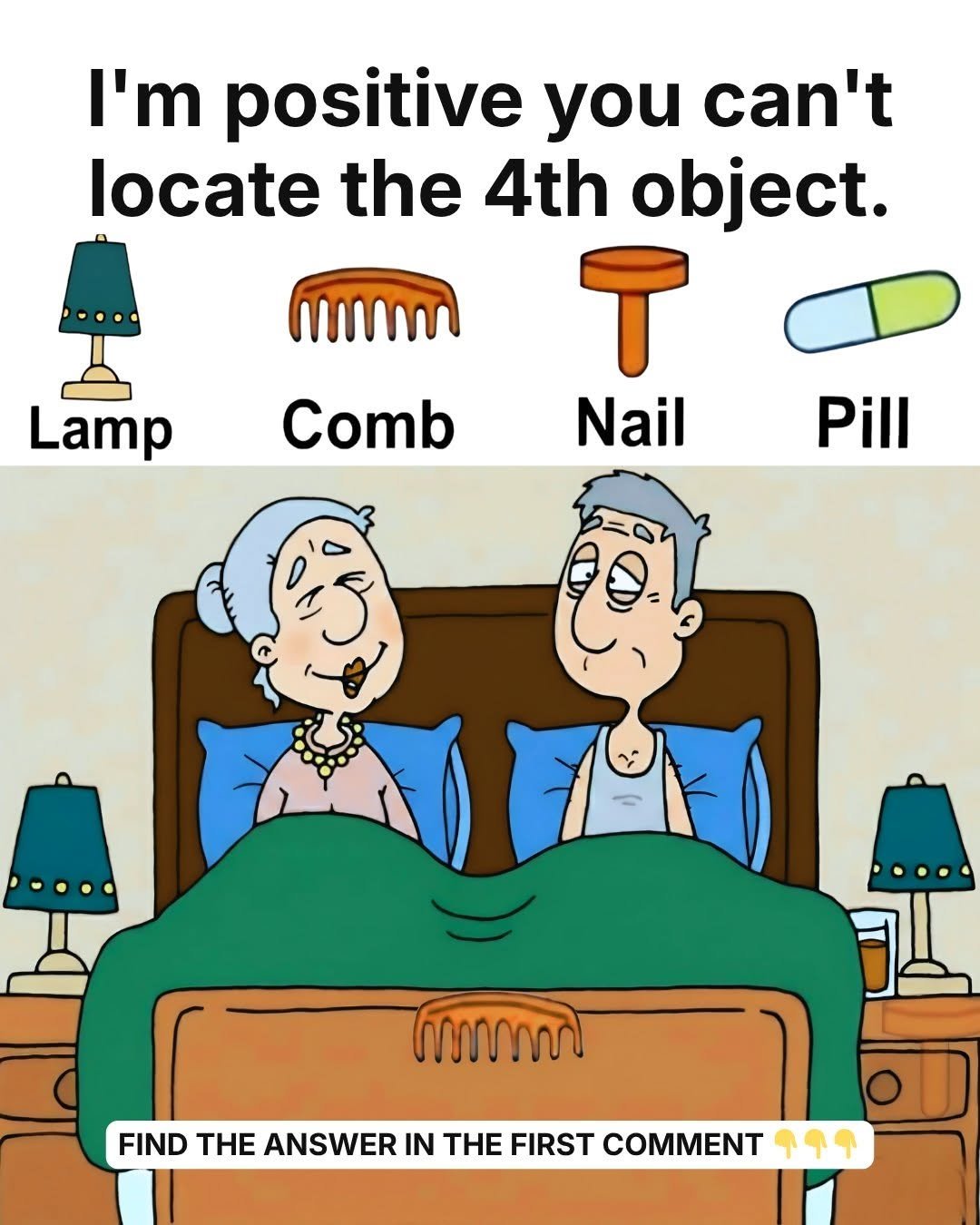
Digital media platforms frequently feature illustrated cartoon puzzles—such as an elderly couple in bed accompanied by icons of a lamp, comb, nail, and pill—paired with challenge captions claiming most people cannot find the fourth hidden object. These viral posts rely on gamified curiosity hooks, artificial scarcity challenges, and hidden comment-bait tactics (such as “find the answer in the first comment”) to manipulate platform algorithms, maximize user engagement, and drive ad-monetized traffic rather than providing genuine cognitive entertainment.
From a visual psychology and digital media perspective, these interactive puzzles are engineered specifically to exploit user behavior. Three of the objects are easily visible in standard positions (the lamps on the nightstands and the comb draped across the footboard), while the fourth object—typically the pill or nail—is cleverly disguised within the cartoon’s line art, shading, or anatomy (such as the pill shape formed by the man’s fingers or facial lines). Content-farming networks systematically deploy these visual puzzles to force users into expanding comment sections, typing replies, or clicking external links to find the “secret” answer, thereby artificially inflating algorithmic visibility and ad revenue.
Evaluating viral social media challenges effectively involves recognizing engagement-bait mechanics designed to harvest comments and shares rather than engaging with organic puzzles. Understanding how content farms weaponize curiosity helps foster critical media literacy across digital feeds. For genuine cognitive puzzles, brain training exercises, or logic games, consulting established puzzle publications, dedicated logic platforms, or reputable mobile application stores provides safe and transparent entertainment.
Leave a Reply