Blog

  • Shocking Statement About Pfizer — What the Evidence Actually Shows

    Shocking Statement About Pfizer — What the Evidence Actually Shows

    Headlines describing a “shocking statement about Pfizer” can quickly attract attention, especially when they involve COVID-19 vaccines. But the exact claim matters. Pfizer continues to publish updates about its COVID-19 vaccine, and in July 2026 the company and BioNTech announced that the European Commission authorized their updated 2026–2027 vaccine formula targeting the XFG variant. At the same time, official safety information does acknowledge known risks. Pfizer’s current medical information states that myocarditis and pericarditis have been observed following mRNA COVID-19 vaccination, with the highest observed risk in males aged 12–24. The U.S. FDA has likewise required updated labeling concerning these risks.

    It is therefore important to distinguish between a genuine safety warning and a sensational interpretation. Acknowledging a potential adverse effect does not mean that every vaccinated person will experience it, nor does it establish that a vaccine causes every health problem attributed to it online. Likewise, a company’s statement about efficacy or safety should be considered alongside independent regulatory assessments and published evidence. Some viral claims about Pfizer have also distorted a 2022 European Parliament exchange involving Pfizer executive Janine Small, falsely suggesting that Pfizer had admitted hiding the fact that its vaccine had not been tested for transmission prevention. Contemporary fact-checking noted that preventing transmission had not been established before authorization and that this was not a revelation that Pfizer had secretly lied.

    The biggest lesson is that “shocking” does not automatically mean “hidden truth.” Before sharing a dramatic Pfizer headline, look for the original statement, its date, the exact wording, and independent confirmation from regulators or reputable medical sources. Pfizer’s own 2026 updates show that the company remains actively developing and updating COVID-19 vaccines, while official safety information continues to document specific risks that should be taken seriously. Disclaimer: This article provides general educational information and does not constitute medical advice or a recommendation for or against vaccination. The phrase “shocking statement” does not identify a specific statement, so claims circulating with that headline should be checked against the original source and independent medical evidence before being treated as fact.


  • Millions Remember Him From Classic ’80s Movies, But Few Knew About His Private Battle

    Millions Remember Him From Classic ’80s Movies, But Few Knew About His Private Battle

    For millions of movie fans, actors from the 1980s remain connected to some of the most memorable films and television performances of that era. Their faces became familiar through classic comedies, dramas, action movies, and family films, creating memories that audiences still revisit decades later. Yet the public image of a successful performer often tells only part of the story. Behind the cameras, celebrities can experience personal challenges, career changes, family difficulties, aging, and other private struggles that audiences may never see. When an actor’s appearance changes dramatically over the years, photographs can make the transformation seem especially remarkable, but physical changes alone do not reveal what a person has experienced or why those changes occurred.

    The phrase “private battle” is frequently used in viral celebrity stories because it creates curiosity about what happened away from the spotlight. However, such wording can refer to many different circumstances, and it should not automatically be interpreted as a medical diagnosis or personal crisis. Actors may step away from Hollywood for numerous reasons, including choosing a quieter lifestyle, pursuing other professional interests, spending more time with family, or simply deciding that they no longer want constant public attention. Likewise, changes in weight, hair, clothing, or overall appearance can happen naturally with age and changing circumstances. Unless the person has publicly discussed a particular struggle, it is inappropriate to speculate about their health or private life based solely on photographs.

    What makes these stories interesting is the opportunity to look beyond a celebrity’s most famous roles and explore the person behind the public image. Seeing how someone has changed over several decades can be a reminder that even the most recognizable stars continue living ordinary lives after the cameras stop rolling. Their careers may evolve, their priorities may change, and their appearance may naturally transform with time. Before sharing a dramatic claim about a celebrity’s “secret battle,” however, it is worth checking whether the story comes from the actor themselves, their representatives, or reputable reporting. Disclaimer: The provided headline does not identify the actor or specify what “private battle” or “transformation” refers to, so these details cannot be independently confirmed from the caption alone. Any claims concerning a person’s health, private life, or personal circumstances should be verified through reliable sources and should not be inferred from photographs or social-media posts.

  • With Deep Sadness, the Entertainment World Mourns the Loss of a True Fan Favorite

    With Deep Sadness, the Entertainment World Mourns the Loss of a True Fan Favorite

    With deep sadness, the entertainment world can be left mourning the loss of a performer whose work touched audiences far beyond the screen. When a beloved actor, musician, or television personality passes away, fans often remember more than the roles they played. They remember the characters that made them laugh, the performances that stayed with them, and the moments that became part of their own memories. News of a celebrity death can spread incredibly quickly across social media, often bringing an outpouring of condolences from viewers and colleagues who admired the person’s talent. Yet behind every headline is a family and circle of loved ones experiencing a deeply personal loss, which is why such news deserves sensitivity and respect.

    A successful entertainment career can leave a lasting cultural footprint. A memorable performance can continue reaching new generations through television reruns, streaming services, films, interviews, and archived performances. Fans may revisit an actor’s most recognizable roles or share favorite scenes as a way of remembering the person. Colleagues may also reflect on their professionalism, generosity, creativity, or influence behind the scenes. These tributes demonstrate how entertainment can create connections between performers and audiences who may never have met personally. At the same time, it is important to avoid repeating unconfirmed details about a person’s death simply because they appear in a viral post. Early reports can contain mistakes, and official information may take time to become available.

    Ultimately, the most meaningful tribute is often to remember the work and legacy that made the person special to their audience. Whether someone was famous for one unforgettable role or enjoyed a decades-long career, their contribution can remain part of popular culture long after their final performance. Fans may continue watching their work, sharing memories, and introducing their favorite performances to others. Disclaimer: The provided caption does not identify the entertainer or provide independently verified details about the reported death. This article therefore does not confirm a specific person’s passing, cause of death, age, or circumstances. Always verify celebrity-death reports through reputable news organizations, official family or representative statements, and other reliable sources before sharing them as fact.

  • A Tragic End — The Story Behind the Headline

    A Tragic End — The Story Behind the Headline

    The words “tragic end” immediately create a sense of loss, but behind every such headline is a human story that deserves to be treated with care and respect. Whether the event involves a public figure, an unexpected accident, a family tragedy, or another heartbreaking circumstance, sensational headlines can sometimes reveal only a small part of what actually happened. Readers may feel shocked or emotional before they even know the full context. This is why it is important to distinguish between confirmed information and dramatic claims circulating online, especially when a story involves someone’s death or personal circumstances.

    Tragic events can affect families, friends, communities, and fans in ways that extend far beyond the initial news report. When discussing such stories, responsible reporting should focus on verified facts rather than speculation or exaggerated details. Information about a person’s death, including the circumstances or cause, should come from reliable sources such as official statements, reputable news organizations, or appropriate authorities. Social-media posts can spread rapidly, but speed does not guarantee accuracy. In some cases, early reports are incomplete and later information can significantly change the understanding of what happened.

    A tragic ending can also remind us how unpredictable life can be and why compassion matters when discussing sensitive events. Instead of focusing only on shocking details, it is often more meaningful to remember a person’s life, achievements, relationships, and the people affected by their loss. Disclaimer: This article is for general informational purposes only. The phrase “tragic end” does not identify a specific person or event, so no particular circumstances can be confirmed from the caption alone. Any claims about a death, cause, or personal details should be verified through reliable sources before being shared as factual information.

  • It’s Surprisingly Something That’s Long Been Debated

    It’s Surprisingly Something That’s Long Been Debated

    Some of the most fascinating questions are the ones that have been debated for generations. What may appear to be a simple observation can sometimes lead to arguments among historians, scientists, experts, and ordinary people who see the evidence differently. Over time, new discoveries can challenge old assumptions, while improved technology can provide information that previous generations simply didn’t have. This is why certain topics remain interesting long after they first became controversial. A debate that lasts for decades often reflects how complicated the underlying question really is, rather than meaning that nobody has an answer.

    The internet has made these long-running debates even more popular. A single photograph, unusual discovery, historical object, or scientific claim can suddenly bring an old question back into public discussion. People may share theories, compare evidence, and point out details that others overlooked. However, popularity should not be confused with proof. A claim repeated thousands of times can still be inaccurate, while a less exciting explanation may have considerably stronger evidence behind it. Looking at original sources, expert analysis, historical records, and scientific research is often the best way to understand why a particular question has remained controversial.

    Perhaps that’s what makes these mysteries so captivating: the answer isn’t always as obvious as it first appears. Sometimes the evidence eventually settles the debate; other times, reasonable questions remain because important information is missing. Before accepting a dramatic explanation, it is worth asking where the claim originated and whether independent evidence supports it. Curiosity is valuable, but careful verification makes the discovery even more meaningful. Disclaimer: This article is for general educational and informational purposes. The specific debate referenced by the caption was not identified, so no particular claim can be confirmed from the wording alone. Always verify historical, scientific, or factual claims through reliable sources before treating them as established information.

  • I Lifted the Mattress and Found This — Does Anyone Know What It Is?

    I Lifted the Mattress and Found This — Does Anyone Know What It Is?

    Coming home exhausted, lying down, and then suddenly hearing a strange noise beneath your mattress would be enough to make almost anyone freeze. When something unexpected is discovered underneath a bed, the imagination can immediately jump to the most frightening possibilities. However, there are plenty of ordinary explanations for unexplained sounds around a bed. Loose bed-frame joints, worn springs, friction between wooden slats, or movement between the mattress and its foundation can all produce squeaks, clicks, creaks, or popping sounds. Sleep Foundation notes that the source of unwanted bed noises can be the mattress, box spring, or frame, with loose joints and friction being common causes.

    The mystery becomes much more interesting when the object underneath the mattress doesn’t look familiar. An unusual piece of hardware, an old household item, a toy, or even something accidentally trapped between the mattress and frame can look completely unrecognizable without context. If the object appears to be an insect, animal, electrical component, sharp item, or anything potentially hazardous, don’t touch it with your bare hands. Turn on the lights, keep children and pets away, and photograph it from several angles. If the noise continues, remove the mattress carefully and test the frame and foundation separately; isolating each part is a standard way to determine where a bed noise originates.

    So what was actually underneath the mattress? Without the photograph, there isn’t enough evidence to identify it accurately. That’s what makes these viral “mystery object” stories so fascinating—one small detail can completely change the answer. A clear image showing the object next to a ruler or coin for scale, along with its shape, markings, material, and exact location beneath the bed, would make identification much more reliable. Until then, claims that it was a dangerous animal, hidden device, or rare object would simply be speculation. Disclaimer: This article is based on the story provided and does not establish what the discovered object actually was. The identification should be verified from the original photograph and, where necessary, a qualified expert or reliable reference source before being presented as fact.

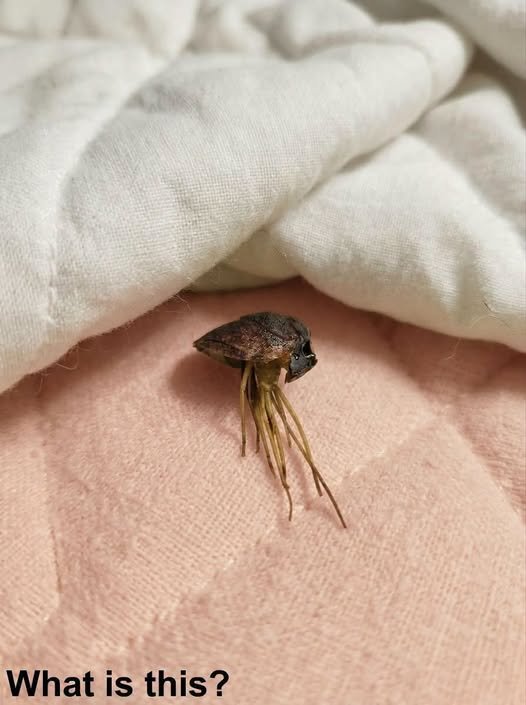
  • I Came Home Tired, Lifted the Blanket, and Found This

    I Came Home Tired, Lifted the Blanket, and Found This

    Imagine coming home after a long, exhausting day and finally getting ready to rest, only to lift your blanket and discover something completely unexpected underneath. That is exactly the kind of moment that can leave anyone staring in confusion. Finding an unfamiliar object, insect, animal, or strange-looking item in your bed can be startling, especially when you have absolutely no idea how it got there. Online posts featuring mysterious discoveries like this often attract thousands of guesses because people immediately begin searching for an explanation. Sometimes the answer is surprisingly ordinary: an object may have fallen from clothing, been carried in accidentally, or been moved by a pet. Other situations can involve insects or small animals seeking warmth, darkness, or shelter. Without seeing the actual photograph, however, there is no reliable way to determine what was underneath the blanket.

    The most important thing is not to touch an unfamiliar object with your bare hands, particularly if it could be an insect, spider, snake, sharp object, or something potentially contaminated. Turn on the lights and carefully inspect the area from a safe distance. If it appears to be an animal or insect, keep children and pets away and, if possible, take a clear photograph before attempting to remove it. A close-up image showing its size, shape, color, legs, wings, markings, and surrounding environment can make identification much easier. If you suspect a venomous or dangerous animal, don’t try to capture or handle it yourself. The fact that similar mysterious “under the blanket” stories circulate online does not mean every unusual discovery has a frightening explanation; some viral accounts are simply anecdotes without enough evidence to establish exactly what happened.

    The real mystery here is what was actually found. Was it a strange household object, an unexpected insect, or something else entirely? A photograph would be essential before making a confident identification. If this is being shared as a viral “guess what it is” post, remember that dramatic wording can create suspense without providing enough information to verify the claim. Sometimes the most interesting part is not the strange object itself but discovering the perfectly ordinary explanation behind it. Disclaimer: This article is based only on the provided caption and does not identify the object because the original photograph was not included. Any specific identification would be speculation without seeing the image. Always verify unusual claims through reliable sources and seek professional assistance if an unfamiliar animal or potentially hazardous object is discovered in your home.

  • The “Mystery” Object in the Photo: A Charcoal Box Iron

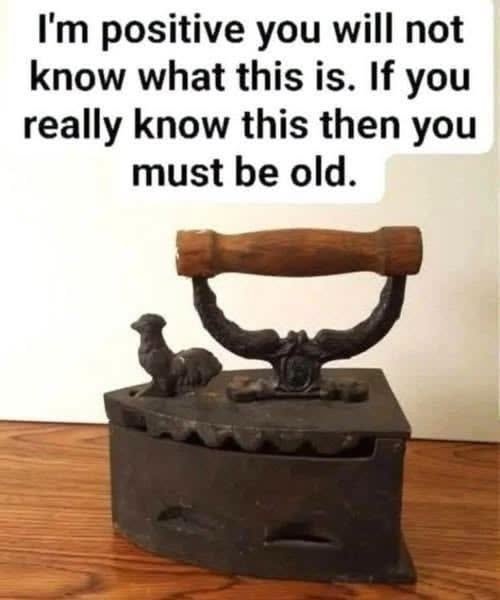
    The “Mystery” Object in the Photo: A Charcoal Box Iron

    That strange old metal object is actually a charcoal box iron, also known as a coal iron or ironing box. Long before electric irons became common, people needed a way to create and maintain enough heat to remove wrinkles from clothing and household fabrics. Instead of plugging into an electrical outlet, this ingenious device had a hollow chamber inside its heavy metal body where hot charcoal or burning embers were placed. The heat from the charcoal warmed the iron’s base, which could then be pressed across clothing to smooth wrinkles. Historical museum collections document charcoal irons as important household tools, with some examples dating back centuries.

    The design was surprisingly practical. A hinged lid allowed the user to put charcoal inside or add more fuel, while openings provided airflow so the embers could continue burning. Many models also included ventilation holes or a chimney-like funnel to help direct smoke and fumes away from the fabric and the person using the iron. The wooden handle served an equally important purpose: it helped protect the user’s hand from the intense heat generated by the metal body. Compared with traditional solid “sad irons,” which had to be repeatedly heated on a stove or fire, the charcoal box iron could carry its own heat source and remain hot for longer periods.

    Today, a charcoal iron can look more like an antique tool or mysterious piece of machinery than something that once belonged in an ordinary household. But it represents an important stage in the evolution of everyday technology. Before electricity brought convenient temperature-controlled appliances into homes, ironing required fire, charcoal, heavy metal, patience, and considerable skill. Museums and historical collections preserve these objects because they show how ordinary household tasks were performed in earlier generations. So if you ever discover one in an old cupboard, shed, or grandmother’s belongings, don’t mistake it for a random piece of metal—it may be a fascinating reminder of how people once turned glowing charcoal into a practical household appliance. Disclaimer: This article is for general historical and educational information. The exact age, origin, and model of a particular charcoal iron should be verified from its markings, construction, provenance, or a qualified antiques specialist before making specific claims about it.

  • Does Anyone Have a Clue What These Are? Found in My Grandmother’s Crockery Cupboard

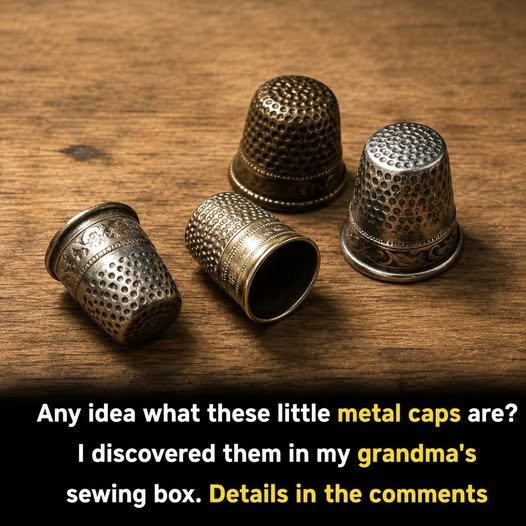
    Does Anyone Have a Clue What These Are? Found in My Grandmother’s Crockery Cupboard

    Finding an unfamiliar object tucked away in a grandmother’s old crockery cupboard can instantly turn an ordinary piece of household storage into a fascinating little mystery. Older kitchens often contained specialized utensils and serving accessories that are no longer commonly used today, especially items designed for particular foods, drinks, or traditional methods of preparation. A strange-looking metal piece might have been connected to a teapot, serving dish, bottle, cooking vessel, or another item that has since disappeared. Older households also commonly kept objects for years because they were durable, sentimental, or simply “might be useful someday.” That means an unusual item found among cups, plates, and bowls does not necessarily have a mysterious origin—it may simply be an old kitchen tool whose purpose has been forgotten.

    The challenge is that appearance alone can be misleading. Small holes, hooks, handles, grooves, clips, or unusual shapes can provide important clues about how an object was originally used. For example, an item designed to hold something may have marks from repeated contact, while a utensil intended for serving may have a distinctive grip or shape. Its material can also help establish its age and purpose. Vintage household collections can contain everything from old tea accessories and serving implements to decorative pieces that were stored alongside crockery. Historical references on household objects show that older kitchens included many specialized implements whose names and uses have gradually disappeared from everyday vocabulary.

    So before throwing anything away, take a clear photograph from several angles and include something for scale, such as a coin or ruler. Close-up photographs of any markings, stamps, hinges, threads, holes, or engraved numbers can be especially helpful. If the object has a known family history, information about where your grandmother lived and approximately when she acquired it may also narrow down the possibilities. Without seeing the actual objects, however, it would be impossible to identify them reliably from the caption alone. Disclaimer: This article is based on the provided social-media-style caption and does not establish what the objects actually are. Their identification should be confirmed from clear photographs, physical characteristics, historical references, or a qualified collector before any specific claim is treated as fact.

  • Want to See the Rest? Take a Look at the Full Story

    Want to See the Rest? Take a Look at the Full Story

    Spot-the-difference puzzles are a fun way to test your observation skills and attention to detail. At first glance, the two pictures in this challenge look almost exactly the same, making the hidden change difficult to notice. The images show an adult holding a baby, with similar poses, colors, and facial expressions. However, one small detail has been changed. If you look closely at the baby, particularly around the legs and feet, you can spot the difference.

    The challenge becomes interesting because our eyes often focus on the overall picture instead of examining every tiny detail. When two images look nearly identical, the brain can automatically assume that objects, shapes, and positions are the same. This can make a small change surprisingly difficult to notice. In this puzzle, the difference is connected to the baby’s leg and foot, which can easily be missed during a quick glance. A useful strategy for solving puzzles like this is to compare the pictures systematically. Instead of looking randomly from one side to another, divide the images into sections and examine each area carefully. Start with the baby’s head and face, then move down toward the body, arms, legs, and feet. After that, compare the adult’s hair, face, clothing, hands, and arms. Looking at one specific feature at a time can make subtle differences much easier to identify. It is also helpful to take a short break if you become stuck because returning to the image with fresh attention may help you notice something you previously overlooked.

    The main purpose of this puzzle is entertainment, but it also demonstrates how careful observation can reveal details that are easy to miss. The difference may seem obvious once it has been pointed out, yet finding it independently can require patience and concentration. Although the image claims that only people with an “extraordinary IQ” can find the answer immediately, that statement should not be taken literally. Solving a spot-the-difference puzzle quickly does not provide a reliable measurement of intelligence. People may perform differently depending on their attention, experience with visual puzzles, familiarity with similar images, and how much time they spend searching. The important part is enjoying the challenge and training yourself to look carefully rather than rushing toward an answer. Whether you find the difference within seconds or need several minutes, successfully identifying the changed detail can still be satisfying. So, take another look at both pictures, compare every small feature, and see whether you can discover the hidden difference before someone gives you the answer.

    Disclaimer: This puzzle is created for entertainment purposes only. The claim about having an “extraordinary IQ” is a playful statement and should not be considered a scientifically accurate intelligence test. Puzzle-solving speed can vary for many reasons, including attention, experience, visual perception, and the amount of time spent examining the image.