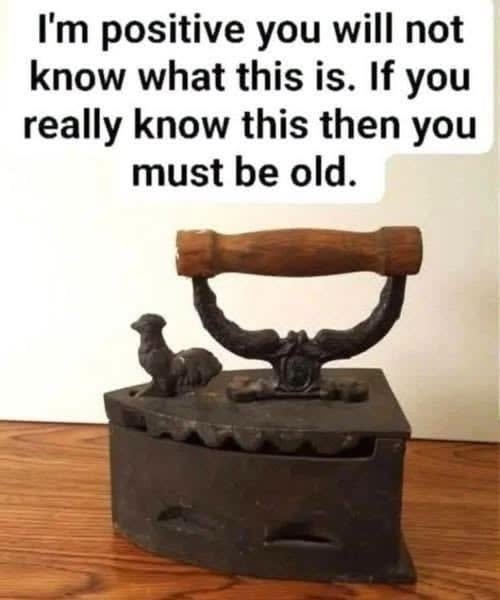
That strange old metal object is actually a charcoal box iron, also known as a coal iron or ironing box. Long before electric irons became common, people needed a way to create and maintain enough heat to remove wrinkles from clothing and household fabrics. Instead of plugging into an electrical outlet, this ingenious device had a hollow chamber inside its heavy metal body where hot charcoal or burning embers were placed. The heat from the charcoal warmed the iron’s base, which could then be pressed across clothing to smooth wrinkles. Historical museum collections document charcoal irons as important household tools, with some examples dating back centuries.
The design was surprisingly practical. A hinged lid allowed the user to put charcoal inside or add more fuel, while openings provided airflow so the embers could continue burning. Many models also included ventilation holes or a chimney-like funnel to help direct smoke and fumes away from the fabric and the person using the iron. The wooden handle served an equally important purpose: it helped protect the user’s hand from the intense heat generated by the metal body. Compared with traditional solid “sad irons,” which had to be repeatedly heated on a stove or fire, the charcoal box iron could carry its own heat source and remain hot for longer periods.
Today, a charcoal iron can look more like an antique tool or mysterious piece of machinery than something that once belonged in an ordinary household. But it represents an important stage in the evolution of everyday technology. Before electricity brought convenient temperature-controlled appliances into homes, ironing required fire, charcoal, heavy metal, patience, and considerable skill. Museums and historical collections preserve these objects because they show how ordinary household tasks were performed in earlier generations. So if you ever discover one in an old cupboard, shed, or grandmother’s belongings, don’t mistake it for a random piece of metal—it may be a fascinating reminder of how people once turned glowing charcoal into a practical household appliance. Disclaimer: This article is for general historical and educational information. The exact age, origin, and model of a particular charcoal iron should be verified from its markings, construction, provenance, or a qualified antiques specialist before making specific claims about it.
Leave a Reply