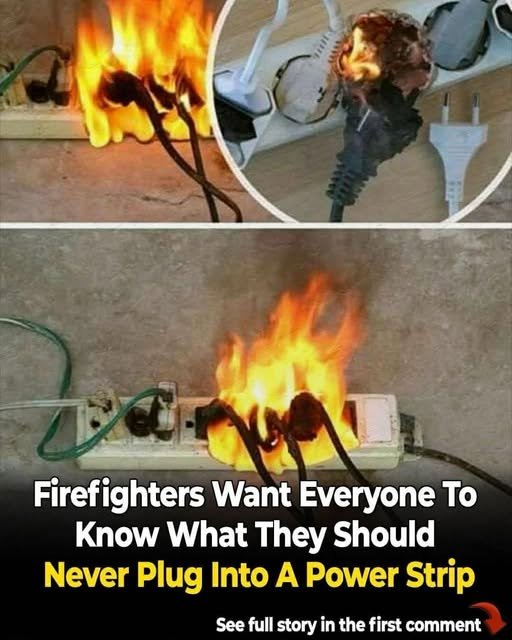
Power strips are convenient for powering multiple devices, but using them incorrectly can create serious electrical and fire hazards. The image highlights a potentially dangerous situation involving an overloaded or damaged power strip. One of the most important safety rules is to avoid connecting high-wattage appliances to ordinary power strips unless the strip is specifically rated for that load. Understanding electrical ratings, warning signs, and safe usage can help protect your home, appliances, and family.
High-power appliances such as space heaters, electric heaters, air conditioners, microwaves, and some kitchen appliances can draw substantial amounts of electricity. Plugging several high-demand devices into the same power strip can exceed its rated capacity, potentially causing overheating, melted components, or an electrical fire. It is also important to avoid “daisy-chaining” power strips by plugging one strip into another, because this can increase the electrical load and create additional points of failure. Never use a power strip that has frayed wires, burn marks, melted plastic, loose connections, unusual odors, or visible damage. Extension cords and power strips should also be kept away from water, excessive heat, and areas where they can be crushed or damaged. Consumers should check the product’s maximum amperage or wattage rating and compare it with the requirements of the connected equipment. For appliances that draw significant power, a properly installed wall outlet is generally preferable to a basic power strip. If a breaker repeatedly trips or an outlet becomes unusually warm, stop using it and have the electrical system inspected by a qualified professional.
Smart electrical safety is ultimately about understanding that a power strip does not increase the amount of electricity a household circuit can safely provide. It simply allows multiple devices to share an existing electrical connection. Choosing certified products, following manufacturer instructions, keeping connections visible and accessible, and avoiding excessive loads can reduce unnecessary risk. Surge-protected power strips can provide additional protection for certain electronics from voltage surges, but they should not be confused with devices designed to safely handle high-powered appliances. Most importantly, never ignore heat, smoke, sparks, burning smells, or discoloration around an outlet or power strip. If an electrical fire occurs, do not attempt to handle it with water; leave the area and contact emergency services. A small amount of attention to electrical safety and risk management can prevent expensive property damage and potentially life-threatening incidents.
Leave a Reply