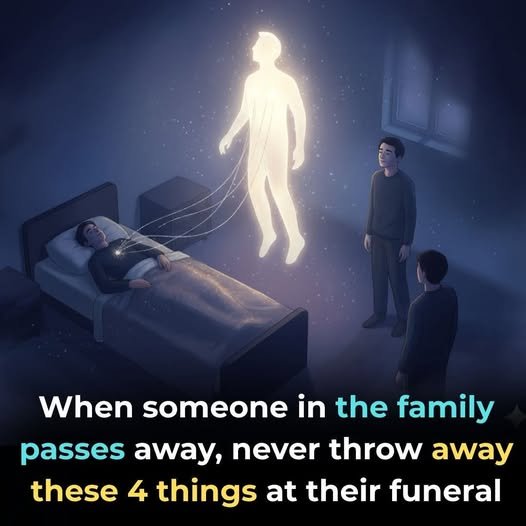
Losing a loved one is an emotional experience, and the belongings they leave behind can carry deep sentimental value. While the viral image suggests that there are four specific things families should never throw away at a funeral, there is no universal rule requiring everyone to preserve particular objects. Instead, families may choose to carefully keep meaningful items that help preserve memories and important personal history. Thoughtful decisions made during a difficult time can prevent valuable keepsakes from being discarded too quickly.
Four categories of items are often worth considering before anything is thrown away: family photographs, handwritten letters or documents, meaningful clothing, and personal mementos. Photographs can preserve important family memories and may become increasingly valuable to future generations. Letters, certificates, diaries, or other documents can provide historical information about a person’s life and family background, so they should be reviewed before disposal. A favorite piece of clothing, watch, book, or other everyday possession may also hold strong sentimental significance for relatives. However, keeping something does not mean that every belonging must be preserved permanently. Families can discuss which possessions have genuine emotional, historical, or practical value and respectfully donate, recycle, or otherwise dispose of items that no one needs. Important financial, legal, identification, or property-related documents should receive particular attention because they may be needed for estate administration or other legitimate matters. If family members disagree about valuable possessions, documenting ownership and seeking appropriate professional advice can help prevent unnecessary disputes. Most importantly, decisions should be made calmly rather than under pressure immediately after a loss.
The idea that certain objects must be kept because they supposedly carry supernatural consequences is not something that should be presented as established fact. Memory, family heritage, and personal significance are sufficient reasons for preserving meaningful belongings, without relying on unverified claims or frightening predictions. A practical approach is to create a small collection of important photographs, letters, documents, and keepsakes, while allowing family members to choose items that genuinely matter to them. This can transform the process of sorting belongings into an opportunity to preserve family history and celebrate the person’s life. When handling an estate, valuable assets or important paperwork should be managed according to applicable laws and, when necessary, with qualified professional guidance.
Leave a Reply