Author: Mohsin king

  • Deconstructing Rodent Cache Engagement-Bait

    Deconstructing Rodent Cache Engagement-Bait

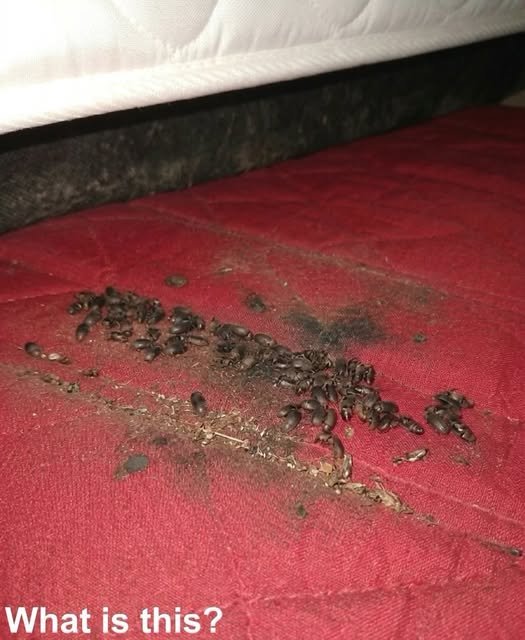
    The image reveals a pile of small, dark seeds and rodent droppings nestled along the tear of a red box spring base. Paired with the story about hearing noises and lifting the mattress in fear, this post represents a shock-driven social media clickbait template designed to exploit common fears of pest infestations to generate viral engagement.

    Anatomy of the Object & Strategy

    • Identification: The image displays a rodent seed cache (typically stored by mice or rats). Rodents gather seeds, birdseed, or grain from around a house and hoard them in secluded, protected spaces like inside a box spring or under a mattress. Dark rodent droppings are clearly visible mixed among the seeds.
    • The Suspense Narrative: The dramatic backstory (“I came home tired… heard a strange noise… froze in place”) is engineered to build suspense and mirror a horror movie setup before showing the “reveal.”
    • The “What Is This?” Engagement Trap: Presenting an alarming situation alongside a direct question prompts hundreds of viewers to jump into the comments section to identify the pest, express disgust, or share horrified reactions.
    • Algorithmic Monetization: High comment volume and frequent shares signal to social media algorithms that the image is generating intense emotional engagement. Page administrators use this boosted reach to farm followers, build viral pages, and direct traffic to monetized external websites.

  • Deconstructing Curiosity-Bait: The “Alien Bed Bug” Sprouting Seed

    Deconstructing Curiosity-Bait: The “Alien Bed Bug” Sprouting Seed

    The image depicts a strange, organic-looking entity resting on a bed blanket, accompanied by a caption presenting it as an unidentified creature or bug found in a home. This graphic represents a classic synthetic query clickbait template engineered to trigger visceral reactions—specifically disgust and fear—to drive social media engagement.

    Anatomy of the Object & Strategy

    • Identification: The object featured is not a spider, parasite, or alien organism. It is a dried botanical seed husk or nut cap that has begun sprouting roots (such as a germinating nut, acorn cap, or water chestnut hull). The dark, shield-like outer shell resembles a bug’s carapace, while the emerging pale root shoots mimic insect or jellyfish legs.
    • The Suspense Narrative: The accompanying text relies on a manufactured “scare” story (“I came home tired… lifted the blanket… no idea what it is”). By framing a piece of dried plant matter as a mysterious bed-dwelling pest, the post creates an immediate reaction of disgust and panic in the viewer.
    • The “What Is This?” Trap: Presenting an ambiguous, uncanny object with a direct question prompts hundreds of users to jump into the comments section to offer guesses, express horror, or debate whether it is a parasite, a spider, or a fake object.
    • Algorithmic Monetization: High comment volume and rapid shares signal to platform algorithms that the image is generating intense curiosity. Page administrators exploit this artificial reach to grow viral pages, farm followers, and redirect user traffic to ad-heavy landing pages or monetized websites.
  • Deconstructing Nostalgia Clickbait: The Charcoal Box Iron Trap

    Deconstructing Nostalgia Clickbait: The Charcoal Box Iron Trap

    The image displays a vintage heavy cast-iron clothes iron with a hinged wooden-handled lid and a rooster-shaped latch, overlaid with text claiming, “I’m positive you will not know what this is. If you really know this then you must be old.” This graphic represents a classic nostalgia-based age-verification clickbait template designed to exploit common historical artifacts to farm social media engagement.

    Anatomy of the Object & Strategy

    • Identification: The item featured is a classic charcoal box iron (also known as a charcoal iron). Before rural electrification, these hollow irons were filled with glowing hot charcoal embers inside the base chamber. The side vents provided oxygen flow to keep the coals burning, while the wooden handle protected the user’s hand from the intense heat. The small rooster detail on the front acts as a latch to lock the top lid in place.
    • The “Age Gate” Provocation: Framing a recognizable historical tool with “If you really know this then you must be old” is a direct appeal to ego, memory, and generation-based pride. It intentionally provokes older social media users into proving their age and experience by identifying the object.
    • The Comment Section Trap: Because millions of people instantly recognize or remember relatives using charcoal irons, thousands of users comment to name the tool, share personal anecdotes, or challenge the assertion that knowing what it is makes them “old.”
    • Algorithmic Monetization: High comment volume and active sharing signal to platform algorithms that the post is generating intense engagement. Page administrators use this inflated reach to grow content farms, gather followers, and monetize traffic by steering users toward ad-heavy websites.
  • Deconstructing Parenting Clickbait: The Head Louse Disgust Trap

    Deconstructing Parenting Clickbait: The Head Louse Disgust Trap

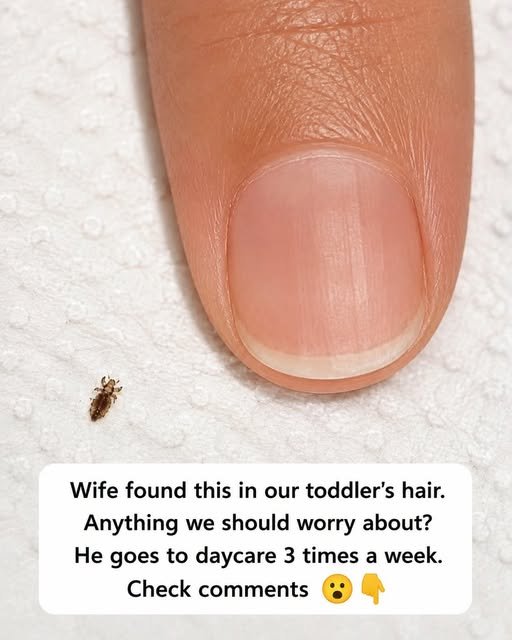
    The image depicts a human thumb resting next to a tiny, wingless insect (a head louse) on paper towel, accompanied by text reading, “Wife found this in our toddler’s hair. Anything we should worry about? He goes to daycare 3 times a week. Check comments.” This graphic represents a classic gross-out engagement template designed to trigger parental anxiety and visceral reactions to manipulate social media algorithms.

    Anatomy of the Specimen & Clickbait Strategy

    • Identification: The insect featured next to the thumb is an adult head louse (Pediculus humanus capitis). These tiny, wingless parasitic insects live on the human scalp and feed on blood. While highly contagious through direct hair-to-hair contact, head lice are a extremely common childhood nuisance rather than a dangerous medical emergency, as they do not transmit diseases.
    • The Manufactured Concern Trap: Asking “Anything we should worry about?” when presenting a glaringly obvious image of a louse is a deliberate tactic. Pretending not to recognize an extremely common parasite—especially when mentioning a daycare setting—triggers experienced parents to immediately comment out of urgency, disgust, or a desire to offer advice.
    • The “Check Comments” Funnel: Directing users to “Check comments” with a pointing-down emoji is a standardized call-to-action used by automated content farms. The page administrators use this funnel to hide referral links, drive users to ad-heavy blogs, or push affiliate links for lice-treatment products.
    • Algorithmic Manipulation: High-contrast images of pests paired with anxiety-inducing parenting scenarios yield massive engagement. When hundreds of users reply to identify the insect, warn the poster, or share daycare horror stories, the platform algorithm registers a massive spike in user activity, artificially pushing the post into millions of feeds.
  • Deconstructing Everyday Object Clickbait: The Sewing Thimble Trap

    Deconstructing Everyday Object Clickbait: The Sewing Thimble Trap

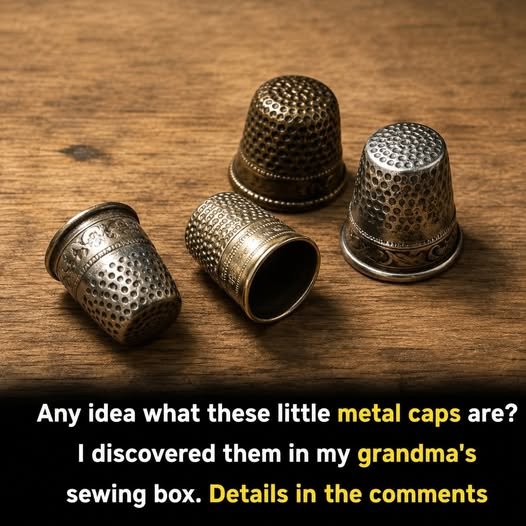
    The image displays four antique metal sewing thimbles sitting on a wooden surface, accompanied by text asking, “Any idea what these little metal caps are? I discovered them in my grandma’s sewing box.” This graphic represents a classic synthetic query clickbait template designed to exploit obvious household items to drive digital interaction and platform reach.

    Anatomy of the Object & Strategy

    • Identification: The items shown are ordinary metal thimbles, an ancient and universally known tailoring tool designed to fit over a fingertip. Their pitted surface (dimples) prevents needle eyes from slipping when pushing thick thread through tough fabrics.
    • The Contradictory Prompt Trap: Notice the disparity between the user’s prompt (“found in my grandmother’s crockery cupboard”) and the text embedded in the image itself (“discovered them in my grandma’s sewing box”). This mismatch highlights how content networks recycle generic stock images of common objects while appending varied, fake origin stories.
    • The False Ignorance Mechanism: Pretending not to know the identity of an ubiquitous tool—especially when the image text explicitly mentions a “sewing box”—is a calculated tactic. It triggers the viewer’s impulse to correct the poster, leading hundreds of users to type “It’s a thimble!” into the comments.
    • Monetization Drive: High comment volume and rapid user engagement signal to social media algorithms that the post is generating high interest. This artificially inflates the post’s visibility, enabling page administrators to farm followers, monetize ad impressions, and direct traffic to monetized landing pages.
  • Deconstructing Celebrity Death Clickbait: David Bradley

    Deconstructing Celebrity Death Clickbait: David Bradley

    The image shows acclaimed British actor David Bradley, overlaid with the years “1936–2026.” This is an engagement-baiting hoax graphic designed to trick fans into believing a well-known actor has passed away.

    The Reality Behind the Graphic

    • Fabricated Birth Year: The graphic claims a birth year of 1936, but David Bradley was born on April 17, 1942 in York, England.
    • Death Hoax: David Bradley is alive. Content farms regularly add fake birth/death years to images of living older actors to provoke panic and shock.
    • Celebrated Career: Bradley is widely recognized for his roles as caretaker Argus Filch in the Harry Potter franchise, Lord Walder Frey in Game of Thrones, the First Doctor in Doctor Who, and Abraham Setrakian in The Strain.
    • The Algorithmic Strategy: Content creators post sensationalized headlines (“With Heavy Hearts…”) paired with misleading memorial images to drive panicked searches, comments, and shares, boosting platform engagement for monetization.
  • Deconstructing Puzzle Clickbait: The “Spot the Difference” Engagement Trap

    Deconstructing Puzzle Clickbait: The “Spot the Difference” Engagement Trap

    This image displays two side-by-side illustrations of a father holding a baby, overlaid with text asserting, “There’s only ONE DIFFERENCE… CAN YOU FIND IT? ONLY PEOPLE WITH AN EXTRAORDINARY IQ CAN SPOT IT ON THE FIRST TRY!” This is an engagement-baiting optical puzzle template engineered to exploit vanity and frustration to manipulate platform algorithms.

    The Reality Behind the Graphic

    • The Non-Existent Difference: In many variations of these templates—including this exact vector graphic—the two side-by-side illustrations are digitally duplicated pixel-for-pixel identical. There is frequently no actual difference between the left and right sides.
    • Ego-Baiting & Vanity Framing: Framing a simple visual task as a measure of “extraordinary IQ” leverages flattery and competitiveness. Viewers are tricked into staring at identical graphics for extended periods, trying to prove their intelligence.
    • The Comment Section Trap: Because users cannot find a difference, they flock to the comments section to ask for the answer, argue over non-existent details (e.g., “the hair,” “the shirt sleeve”), or call out the image as a trick.
    • Algorithmic Manipulation: Social media algorithms interpret long image dwell times and heavy comment section debate as proof of high-value, engaging content. This artificially boosts the post into broader user feeds, allowing the host page to farm views, gain followers, and drive traffic to monetized links.
  • Deconstructing Curiosity Clickbait: The “7 Kilo Baby of 1983” Trap

    Deconstructing Curiosity Clickbait: The “7 Kilo Baby of 1983” Trap

    The image depicts a large infant in a sailor outfit alongside text claiming, “In 1983, a giant baby weighing 7 kilograms shocked the world. You’ll never guess what he looks like today, at 40 years old.” This graphic represents a classic curiosity-gap engagement template designed to monetize internet users by dangling fake updates about historical news figures.

    The Historical Reality vs. The Clickbait Structure

    • The Historical Basis: The post references the real-life birth of Kevin Robert Clark, born on April 8, 1983, in New Jersey. He weighed 16 pounds, 6 ounces (approx. 7.4 kg) at birth, attracting widespread national media coverage on programs like Good Morning America and Saturday Night Live. As an adult, he grew to be 6 feet 9 inches tall.
    • The “First Comment” Funnel: The phrase “SEE THE FIRST COMMENT” paired with the open-ended “You’ll never guess” statement is a calculated call-to-action. Content networks withhold the ending of the story to force users to open the comment section or click external links.
    • Algorithmic Monetization: Content farms regularly publish archived medical curiosities or record-breaking birth stories. When users open the post to search for a modern photo or comment out of curiosity, the spike in engagement signals platform algorithms to distribute the post further, driving user traffic to ad-heavy landing pages.
  • Deconstructing Nostalgia Clickbait: The Synthetic ’80s Heartthrob

    Deconstructing Nostalgia Clickbait: The Synthetic ’80s Heartthrob

    The image displays a headshot of a young man accompanied by text claiming, “After years of addiction, this ’80s heartthrob is now more handsome than ever and a proud dad of 3 children.” This graphic is an AI-generated clickbait fabrication designed to exploit public nostalgia and emotional interest in former child stars to manipulate digital platform engagement.

    The core tactic relies on manufacturing a dramatic narrative around a completely synthetic, computer-generated face. The image does not portray a real actor from 1980s cinema, but rather an AI-rendered portrait engineered to resemble popular teen stars of that era. By pairing this fictional portrait with vague, emotionally resonant phrases like “private battle” and “transformation,” the post creates a artificial curiosity gap. Readers are provoked to search through their memories or comment to ask for the individual’s name, unaware that no historical actor corresponds to the face shown.

    These social media templates operate as automated content farms designed to boost algorithmic distribution. When users leave comments attempting to identify the actor or offering supportive messages regarding addiction recovery, the surge in activity signals high engagement to platform algorithms. Publishers monetize this artificial reach by directing users through pinned comments or bio links to ad-heavy websites, affiliate marketing pages, and monetized digital storefronts.

  • Deconstructing Traffic Sign Clickbait: The “Blue Stop Sign” Myth

    Deconstructing Traffic Sign Clickbait: The “Blue Stop Sign” Myth

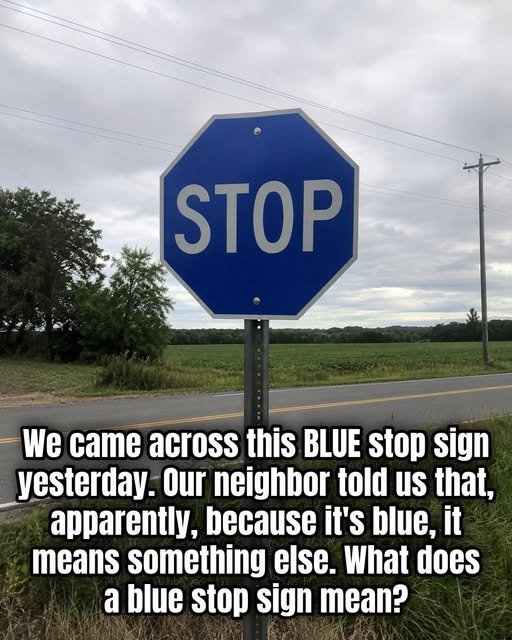
    The image displays an octagonal blue traffic sign containing the word “STOP,” accompanied by text asking what a blue stop sign means. This image is an edited clickbait photo graphic designed to generate fake curiosity and exploit social media algorithms through false legal claims.

    The core mechanics rely on fabricating an urban legend around traffic regulation to spark debate. Standard traffic control manuals worldwide specify that regulatory stop signs must be solid red with white lettering. Blue octagonal stop signs do not exist as legally binding traffic markers. A blue color palette on road signs is reserved exclusively for motorist services, informational guidance, or private novelty displays. The primary cause for these viral images is digital image manipulation— hue shifts applied to standard red stop signs—or novelty signs installed on private land where municipal traffic codes do not apply.

    Publishers use these curiosity-driven prompts to exploit social media platform algorithms. When users leave comments explaining basic traffic laws, debating state regulations, or alleging secret legal exemptions, the high comment volume signals engagement to the platform. This metric surge boosts post visibility, allowing content farms to drive traffic to external websites and monetize ad impressions.