Author: Mohsin king

  • Deconstructing Optical Illusion Clickbait: The Sky “Eye” Pareidolia Trap

    Deconstructing Optical Illusion Clickbait: The Sky “Eye” Pareidolia Trap

    The image displays a grid of four photo panels showing backlit night clouds parted around the moon above a treeline, paired with a classic mystery caption (“My brother took this photo only 21 km from our house… no one noticed the most important detail!”). This graphic represents a pareidolia-driven engagement template engineered to trigger optical curiosity and artificial debate.

    Anatomy of the Illusion & Clickbait Strategy

    • The Optical Illusion (Pareidolia): When viewed as a whole, the cloud formation lit by the moon naturally resembles a giant, glowing human eye staring out of the dark sky. The crescent moon forms the glint or pupil, while the surrounding breaks in the dark cloud cover form the sclera and eyelids. This psychological phenomenon—where the human brain perceives familiar shapes (like faces or eyes) in random patterns—is known as pareidolia.
    • The “Hidden Detail” Lie: Claiming that “no one noticed the most important detail” is a deliberate mind game. There is no secret anomaly, hidden craft, or secondary detail in the image. The entire focus is simply the eye-like optical illusion created by normal cloud geometry.
    • Grammatical Inconsistency as Bait: Notice the subtle contradiction in the caption (“My brother took this photo… She shared it on her page”). Content farms frequently use automated or translated text templates with pronoun errors, which double as accidental comment-bait when users enter the reply section to point out the typo.
    • Algorithmic Monetization: Prompts claiming a “hidden detail” force viewers to stare at the image longer (increasing dwell time) and zoom in. When users jump into the comments to ask what the detail is or state that they see an eye, the platform algorithm registers massive engagement, boosting the post’s reach to monetize ad impressions.
  • Deconstructing Health Advisory Clickbait: The Left-Side Sleeping Diagram

    Deconstructing Health Advisory Clickbait: The Left-Side Sleeping Diagram

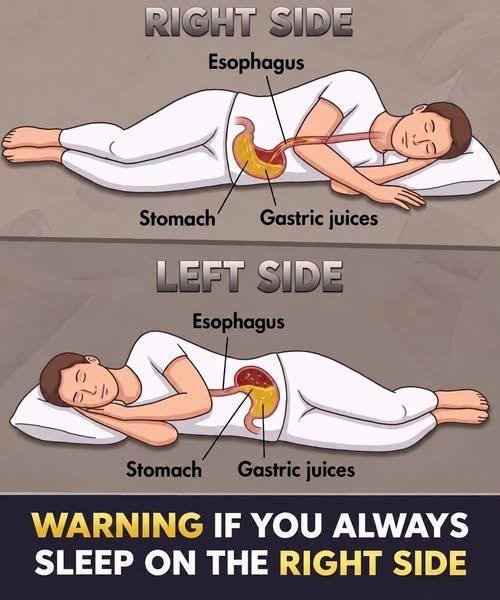
    The image depicts an anatomical diagram comparing gastric juice levels in the stomach when sleeping on the right side versus the left side, overlaid with a dramatic text banner stating, “WARNING IF YOU ALWAYS SLEEP ON THE RIGHT SIDE.” This graphic represents a health-anxiety clickbait template that takes a legitimate medical nuance and repackages it with alarmist framing to drive social media sharing.

    Anatomy of the Science & Clickbait Strategy

    • The Underlying Medical Fact: The core anatomical premise shown is actually rooted in real gastroenterology principles. Because the human stomach curves natural toward the left side of the abdomen, sleeping on your left side keeps the junction between the stomach and esophagus (the lower esophageal sphincter) above the level of gastric acid. Sleeping on your right side places the stomach higher than the sphincter, allowing stomach acid to pool against it and potentially trigger acid reflux (GERD) or heartburn.
    • The “WARNING” Alarmism: While left-side sleeping is often recommended for people suffering from chronic acid reflux or during late-stage pregnancy, framing right-side sleeping with a stark “WARNING” is designed to induce unnecessary panic in healthy individuals who do not suffer from digestive issues.
    • The Engagement Strategy: Health posts that use medical illustrations combined with urgent warnings tap into self-diagnosis tendencies. Viewers share the post with family members or leave comments asking for medical advice, which rapidly boosts the post’s visibility across social feeds.
    • Monetization Funnel: Aggregator pages deploy these simplified health diagrams to gain authority, build massive follower counts, and direct users to ad-heavy health blogs, supplement sales, or affiliate links in the comment section.
  • Deconstructing Public Health Panic Clickbait: The Toilet Paper Needle Myth

    Deconstructing Public Health Panic Clickbait: The Toilet Paper Needle Myth

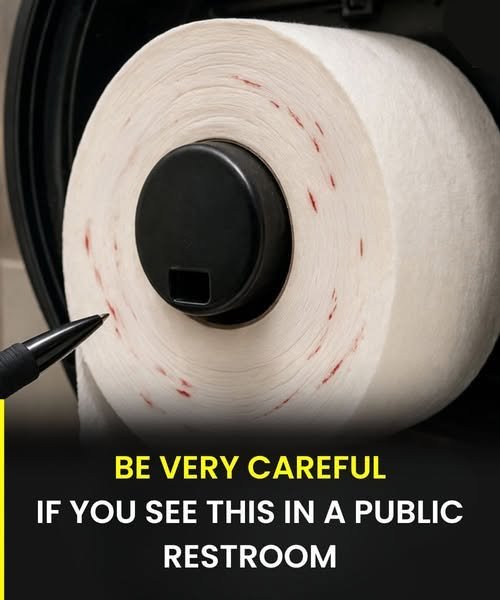
    The image shows a large roll of public restroom toilet paper marked with red flecks, pointed at by a pen, accompanied by text reading, “BE VERY CAREFUL IF YOU SEE THIS IN A PUBLIC RESTROOM.” This graphic represents a classic fear-mongering viral warning template that weaponizes urban legends to generate outrage and mass shares.

    Anatomy of the Myth & Strategy

    • The Viral Legend: The post relies on a recurring internet rumor claiming that red marks on public toilet paper rolls are blood left behind by intravenous drug users cleaning contaminated needles.
    • The Practical Reality: In commercial manufacturing and custodial maintenance, red or pink markings on large paper rolls typically indicate either a factory end-of-roll marker (notifying custodians to change the roll soon) or minor dye transfer/machinery residue from the production process.
    • Fear-Based Engagement: Leveraging anxieties around public hygiene, blood-borne pathogens, and illicit drug use guarantees an immediate emotional reaction. Users share the post out of a sense of public duty to “warn” friends and family without verifying the claim.
    • Algorithmic Monetization: High share counts and frantic comment sections signal to platform algorithms that the image is critically urgent content. Page administrators use this viral velocity to farm followers, build page reach, and steer users toward ad-monetized external sites.
  • Deconstructing Celebrity Clickbait: The Shiloh Jolie-Pitt Silence Myth

    Deconstructing Celebrity Clickbait: The Shiloh Jolie-Pitt Silence Myth

    The image pairs a portrait of Shiloh Jolie-Pitt with her father, Brad Pitt, alongside a sensationalized, unfinished headline: “Brad Pitt’s daughter has broken her silence: ‘My dad used to…’” This graphic is a classic example of fabricated celebrity clickbait designed to exploit public curiosity surrounding high-profile family disputes.

    Anatomy of the Hoax & Strategy

    • Fabricated Quote: Neither Shiloh Jolie-Pitt nor any of Brad Pitt’s other daughters have given a tell-all interview or made a public statement featuring the phrase “My dad used to…” The quote is entirely invented to generate intrigue.
    • The Cutoff Sentence Hook: By leaving the statement unfinished with an ellipsis (…), the post triggers curiosity, prompting viewers to click through to external websites or engage in the comments.
    • Exploiting Real-World Context: The clickbait feeds on real-life news regarding the family’s dynamics. Shiloh legally dropped “Pitt” from her surname upon turning 18, and several of her siblings (including Zahara and Vivienne) have also publicly used “Jolie” instead of “Jolie-Pitt.” Content farms weaponize these actual events to make fake interview headlines sound plausible.
    • Algorithmic Monetization: High click-through rates and active discussions drive engagement metrics on social platforms. Page administrators use these viral tactics to farm traffic, build follower bases, and direct users to ad-monetized sites.
  • Deconstructing Health Panic Clickbait: Fordyce Spots

    Deconstructing Health Panic Clickbait: Fordyce Spots

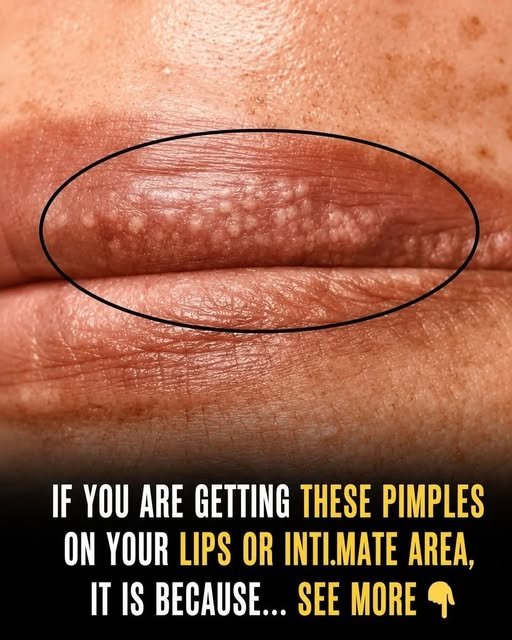
    The image shows a close-up of human lips featuring a cluster of small, yellowish-white bumps, overlaid with text stating, “IF YOU ARE GETTING THESE PIMPLES ON YOUR LIPS OR INTI.MATE AREA, IT IS BECAUSE… SEE MORE.” This graphic represents a classic medical fear-mongering engagement template designed to pathologize harmless, normal anatomical variations to farm clicks and sales.

    Anatomy of the Condition & Strategy

    • Identification: The image displays Fordyce spots (or Fordyce granules). These are completely benign, enlarged, ectopic sebaceous (oil) glands. They commonly appear as small, painless, non-contagious white or yellow bumps on the vermilion border of the lips or genital areas. Up to 80% of adults have them, and they require no treatment or medical intervention.
    • Sensationalized Framing: Content farms intentionally censor terms like “intimate” (“INTI.MATE”) to bypass automated content moderation filters while framing benign anatomy as a dangerous condition or STI (sexually transmitted infection).
    • The “See More” Funnel: Cutoff sentences like “IT IS BECAUSE… SEE MORE” force panicked viewers to click through to external blogs, sponsored landing pages, or quack remedies claiming to “cure” a completely natural bodily feature.
    • Algorithmic Monetization: Leveraging health anxiety and shame around skin anomalies ensures rapid user clicks and comment section queries. Page administrators exploit this concern to farm traffic and generate affiliate revenue.
  • Deconstructing Bed Bug Panic Bait: The Fly Pupae Trap

    Deconstructing Bed Bug Panic Bait: The Fly Pupae Trap

    The image shows a person holding three reddish-brown, capsule-shaped objects in the palm of their hand, paired with a prompt expressing panic over finding them on a bed. This graphic represents a classic anxiety-driven pest identification template engineered to trigger widespread concern over indoor infestations to drive social media engagement.

    Anatomy of the Object & Strategy

    • Identification: The items shown in the hand are fly pupae (most commonly from the housefly, Musca domestica, or blowflies). During the pupal stage, the maggot forms a hard, reddish-brown, pill-like outer shell called a puparium while transforming into an adult fly. They are non-venomous, do not bite, and are completely distinct from bed bugs, cockroach egg cases (oothecae), or rodent droppings.
    • The Bed Bug Panic Trigger: Framing mysterious capsule-like objects found near bedding leverages the universal fear of bed bug infestations. Because bed bug eggs and casings are heavily feared, viewers instantly associate any small, dark, pill-shaped object on a mattress with a severe household infestation.
    • The “Freaking Me Out” Engagement Trap: Expressing fear and asking for an emergency identification prompts hundreds of users to jump into the comments section to offer misidentifications, share pest control horror stories, or express disgust.
    • Algorithmic Monetization: High comment volume and active shares signal to platform algorithms that the post is driving intense user interaction. Content networks use this artificial reach to grow viral pages, farm followers, and redirect user traffic to ad-heavy landing pages or monetized websites.
  • Deconstructing Snake Infestation Bait: The Rodent Indication Trap

    Deconstructing Snake Infestation Bait: The Rodent Indication Trap

    The image shows a long, slender snake slithering across a tiled floor inside a home, paired with an incomplete prompt (“When this snake enters your house, it means you have…”). This graphic represents a classic open-ended engagement-bait template engineered to trigger widespread commenting and debate on social media.

    Anatomy of the Premise & Strategy

    • The Factual “Answer”: Biologically, when snakes enter a home, it typically means you have a rodent problem (mice or rats) or an accessible entry point offering shelter and water. Snakes do not randomly colonize living spaces unless they are actively hunting prey or seeking temperature regulation.
    • The Open-Ended Sentence Mechanism: Leaving the sentence unfinished forces the reader’s brain to want to complete the thought. It invites thousands of users to type responses ranging from practical advice (“a mouse problem”) to fear (“a house for sale”) and superstition.
    • Superstition & Fear Triggering: In many cultures, snakes inside the home are linked to folklore, omens, or extreme panic. Content aggregators exploit these deep-seated emotional triggers to maximize user reaction speed and share counts.
    • Algorithmic Monetization: High comment counts and debate loops signal intense interest to platform algorithms. Page administrators leverage this artificial reach to grow viral pages, farm followers, and direct traffic to external ad-monetized websites.
  • Deconstructing Snake Infestation Bait: The Rodent Indication TrapThe image shows a long, slender snake slithering across a tiled floor inside a home, paired with an incomplete prompt (“When this snake enters your house, it means you have…”). This graphic represents a classic open-ended engagement-bait template engineered to trigger widespread commenting and debate on social media.Anatomy of the Premise & StrategyThe Factual “Answer”: Biologically, when snakes enter a home, it typically means you have a rodent problem (mice or rats) or an accessible entry point offering shelter and water. Snakes do not randomly colonize living spaces unless they are actively hunting prey or seeking temperature regulation.The Open-Ended Sentence Mechanism: Leaving the sentence unfinished forces the reader’s brain to want to complete the thought. It invites thousands of users to type responses ranging from practical advice (“a mouse problem”) to fear (“a house for sale”) and superstition.Superstition & Fear Triggering: In many cultures, snakes inside the home are linked to folklore, omens, or extreme panic. Content aggregators exploit these deep-seated emotional triggers to maximize user reaction speed and share counts.Algorithmic Monetization: High comment counts and debate loops signal intense interest to platform algorithms. Page administrators leverage this artificial reach to grow viral pages, farm followers, and direct traffic to external ad-monetized websites.

    Deconstructing Snake Infestation Bait: The Rodent Indication TrapThe image shows a long, slender snake slithering across a tiled floor inside a home, paired with an incomplete prompt (“When this snake enters your house, it means you have…”). This graphic represents a classic open-ended engagement-bait template engineered to trigger widespread commenting and debate on social media.Anatomy of the Premise & StrategyThe Factual “Answer”: Biologically, when snakes enter a home, it typically means you have a rodent problem (mice or rats) or an accessible entry point offering shelter and water. Snakes do not randomly colonize living spaces unless they are actively hunting prey or seeking temperature regulation.The Open-Ended Sentence Mechanism: Leaving the sentence unfinished forces the reader’s brain to want to complete the thought. It invites thousands of users to type responses ranging from practical advice (“a mouse problem”) to fear (“a house for sale”) and superstition.Superstition & Fear Triggering: In many cultures, snakes inside the home are linked to folklore, omens, or extreme panic. Content aggregators exploit these deep-seated emotional triggers to maximize user reaction speed and share counts.Algorithmic Monetization: High comment counts and debate loops signal intense interest to platform algorithms. Page administrators leverage this artificial reach to grow viral pages, farm followers, and direct traffic to external ad-monetized websites.

  • Deconstructing Viral Emotional Stories: The Singing Nurse Case Study

    Deconstructing Viral Emotional Stories: The Singing Nurse Case Study

    The image captures a moment featuring a registered nurse standing by a patient’s bedside, accompanied by text stating, “Male nurse doesn’t know he’s on camera as he grants patient’s last wish.” This graphic is part of a viral emotional content template often circulated on social media channels.

    Real-World Context & Origin

    • The Event: The footage shows registered nurse Stephen Newbern (a U.S. Air Force veteran) singing to a 73-year-old terminal cancer patient named Lidia Humpert at Noland Hospital in Anniston, Alabama.
    • What Happened: As the patient was preparing to return home for hospice care, Stephen sang “Be a Lion” (from The Wiz) to comfort her and give her hope during a difficult transition.
    • The Filming: The moment was filmed by the patient’s granddaughter, Brianna O’Cull, to preserve a comforting memory of compassionate bedside care.

    Clickbait Framing vs. Reality

    • Sensationalized Titles: Social media pages frequently reframe genuine, touching moments with sensational titles like “Grants patient’s last wish” or “Doesn’t know he’s on camera”.
    • Engagement Strategy: While the core event is a genuine act of healthcare compassion, viral aggregator pages reuse these screenshots to generate emotional reactions, high comment volumes, and shares to drive page reach.
  • Deconstructing Household Object Clickbait: The Wire Cheese Slicer

    Deconstructing Household Object Clickbait: The Wire Cheese Slicer

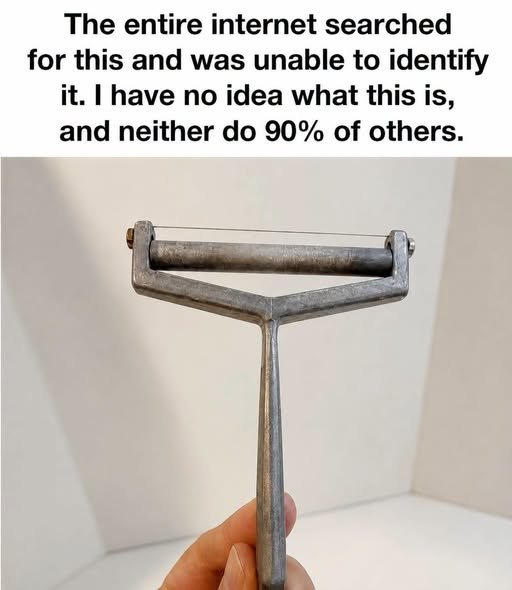
    The image displays a hand holding a vintage metal kitchen tool featuring a taut wire suspended over a metal roller, accompanied by text claiming, “The entire internet searched for this and was unable to identify it. I have no idea what this is, and neither do 90% of others.” This graphic represents a classic synthetic query clickbait template designed to exploit common kitchen gadgets to farm social media engagement.

    Anatomy of the Object & Strategy

    • Identification: The item shown is an ordinary handheld wire cheese slicer (or cheese cutter). The roller rests on top of a block of semi-firm or hard cheese (such as Cheddar or Gouda) to guide the depth, while the thin metal wire cuts smooth, uniform slices as the tool is pulled across the block.
    • The “Unsolvable Mystery” Lie: Claiming that “the entire internet” was unable to identify a ubiquitous kitchen tool is a deliberate falsehood. Handheld wire slicers have been standard culinary items found in millions of homes worldwide for decades.
    • The Ego-Driven Comment Trap: By falsely asserting that 90% of people cannot identify the object, the post triggers an immediate impulse in users to correct the caption. Viewers rush to type “It’s a cheese slicer!” in the comments to demonstrate their knowledge or call out the exaggerated claim.
    • Algorithmic Monetization: High comment volume and active shares signal to platform algorithms that the image is driving intense user interaction. Content networks use this artificial reach to grow viral pages, farm followers, and redirect user traffic to ad-heavy landing pages or monetized websites.