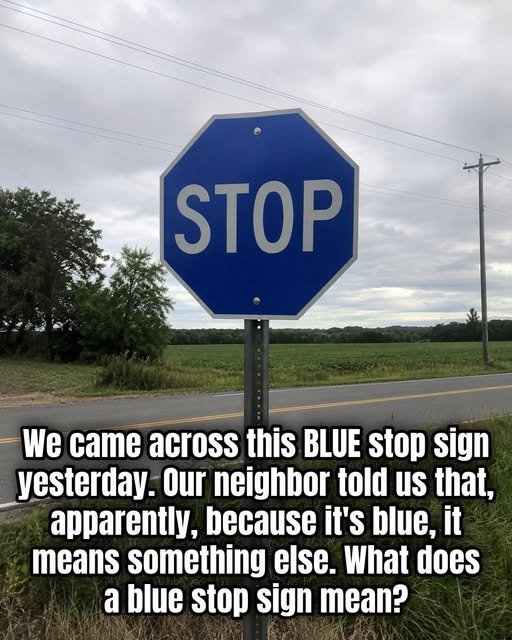
The image displays an octagonal blue traffic sign containing the word “STOP,” accompanied by text asking what a blue stop sign means. This image is an edited clickbait photo graphic designed to generate fake curiosity and exploit social media algorithms through false legal claims.
The core mechanics rely on fabricating an urban legend around traffic regulation to spark debate. Standard traffic control manuals worldwide specify that regulatory stop signs must be solid red with white lettering. Blue octagonal stop signs do not exist as legally binding traffic markers. A blue color palette on road signs is reserved exclusively for motorist services, informational guidance, or private novelty displays. The primary cause for these viral images is digital image manipulation— hue shifts applied to standard red stop signs—or novelty signs installed on private land where municipal traffic codes do not apply.
Publishers use these curiosity-driven prompts to exploit social media platform algorithms. When users leave comments explaining basic traffic laws, debating state regulations, or alleging secret legal exemptions, the high comment volume signals engagement to the platform. This metric surge boosts post visibility, allowing content farms to drive traffic to external websites and monetize ad impressions.
Leave a Reply