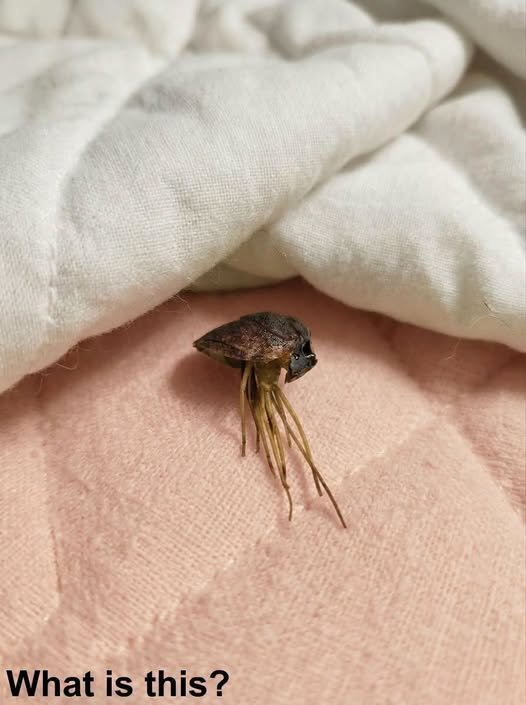
The image depicts a strange, organic-looking entity resting on a bed blanket, accompanied by a caption presenting it as an unidentified creature or bug found in a home. This graphic represents a classic synthetic query clickbait template engineered to trigger visceral reactions—specifically disgust and fear—to drive social media engagement.
Anatomy of the Object & Strategy
- Identification: The object featured is not a spider, parasite, or alien organism. It is a dried botanical seed husk or nut cap that has begun sprouting roots (such as a germinating nut, acorn cap, or water chestnut hull). The dark, shield-like outer shell resembles a bug’s carapace, while the emerging pale root shoots mimic insect or jellyfish legs.
- The Suspense Narrative: The accompanying text relies on a manufactured “scare” story (“I came home tired… lifted the blanket… no idea what it is”). By framing a piece of dried plant matter as a mysterious bed-dwelling pest, the post creates an immediate reaction of disgust and panic in the viewer.
- The “What Is This?” Trap: Presenting an ambiguous, uncanny object with a direct question prompts hundreds of users to jump into the comments section to offer guesses, express horror, or debate whether it is a parasite, a spider, or a fake object.
- Algorithmic Monetization: High comment volume and rapid shares signal to platform algorithms that the image is generating intense curiosity. Page administrators exploit this artificial reach to grow viral pages, farm followers, and redirect user traffic to ad-heavy landing pages or monetized websites.
Leave a Reply