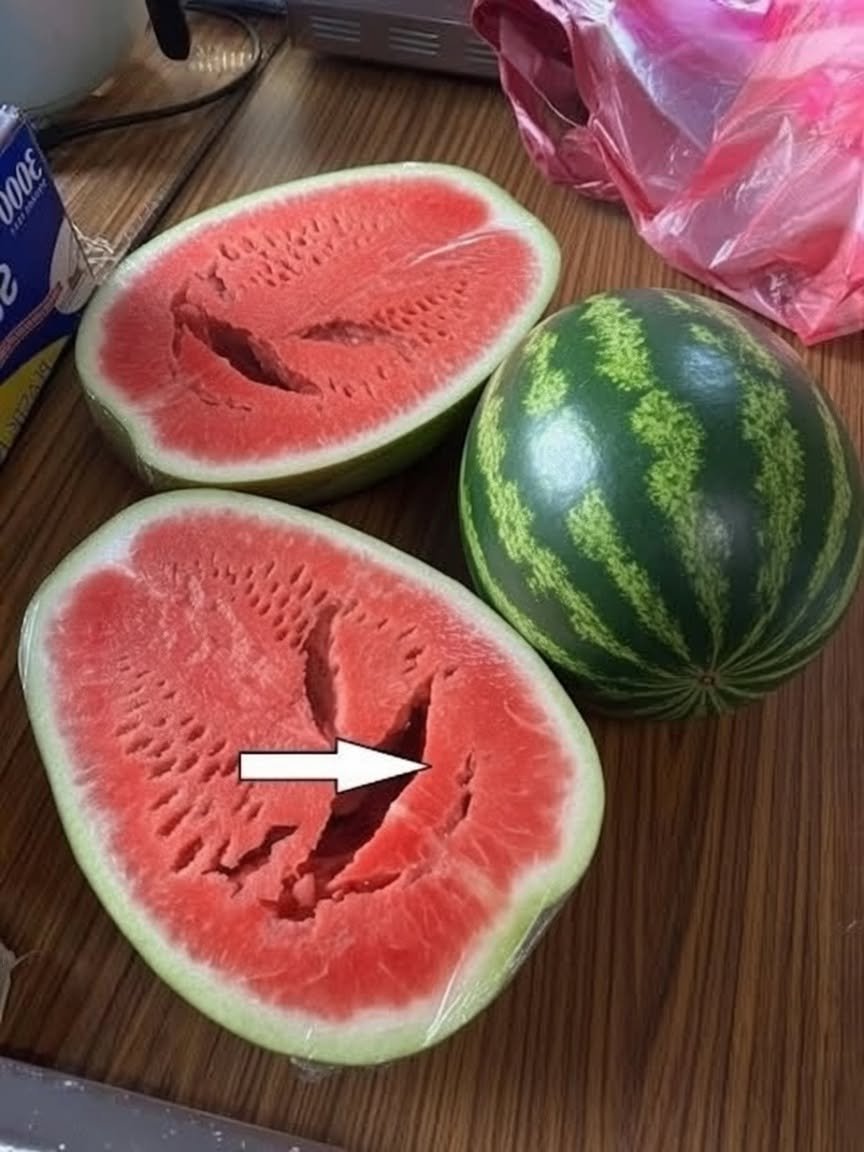
Cutting open a watermelon and discovering large cracks through the flesh can look alarming, but cracks alone do not mean the watermelon is poisonous or unsafe. This condition is commonly known as “hollow heart,” an internal quality disorder that can occur while the fruit is developing. Agricultural experts associate hollow heart with factors such as pollination, genetics, and environmental conditions during growth. The USDA specifically recognizes hollow heart as a defect involving cracks within the watermelon flesh, rather than automatically treating it as evidence of contamination or decay. The National Watermelon Promotion Board also explains that watermelons with hollow heart are generally safe to eat and may sometimes taste sweeter because sugars can become more concentrated around the cracks.
So why does the watermelon sometimes appear as though someone has cut or split the inside apart? During development, incomplete or uneven pollination and environmental stresses can contribute to this unusual structure. Seedless watermelons can be particularly susceptible because they require appropriate pollination for fruit development. The cracks themselves are not the same thing as mold, bacterial decay, or chemical contamination. However, you should still inspect the fruit carefully before eating it. Food-safety experts distinguish harmless physiological changes from genuine spoilage: unpleasant odors, mold, slimy areas, significant softening, watery breakdown, or other obvious deterioration are reasons to discard fruit. In other words, a clean-looking internal crack is very different from a watermelon that smells bad or shows signs of rot.
The safest approach is to judge the entire fruit rather than reacting to the cracks alone. If the watermelon has normal color and smell, firm flesh, and simply contains the characteristic hollow-heart cracks, it is generally considered edible. If the flesh is extensively deteriorated, moldy, slimy, unusually soft, or has an unpleasant odor or taste, throw it away. Always wash the outside of a watermelon before cutting it so surface contaminants are less likely to transfer to the flesh during preparation. Disclaimer: This article is for general educational and food-safety information only and does not constitute professional medical or food-safety advice. Internal cracks in watermelon are often a natural quality disorder and do not automatically mean the fruit is dangerous, but spoiled or contaminated fruit should not be consumed. Always verify food-safety information through reliable agricultural, scientific, or government sources.
Leave a Reply