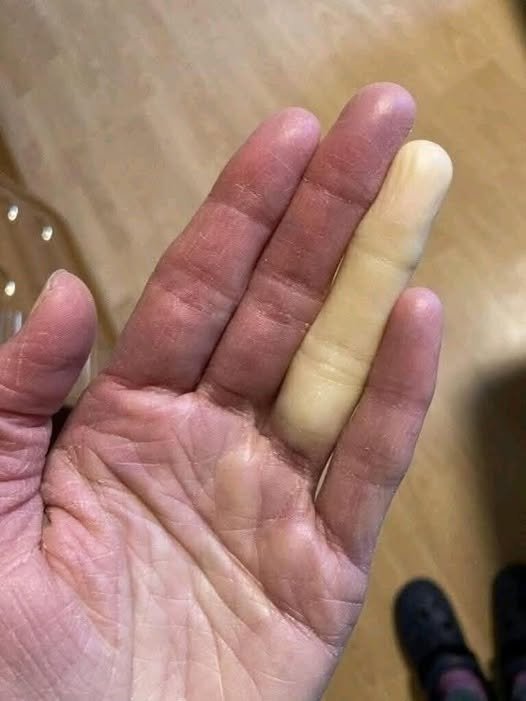
Viral posts featuring dramatic images of starkly blanched or waxy-white fingers often append incomplete, ominous captions like “These are the consequences of sleeping with the…” to spread fear or attribute common medical symptoms to bizarre habits. In reality, the distinct pale discoloration visible on the ring finger in the photograph is a classic demonstration of Raynaud’s phenomenon. This vascular condition causes small blood vessels (capillaries) in the extremities to undergo temporary spasms, severely restricting blood flow in response to cold temperatures, emotional stress, or vibration—not strange nocturnal habits.
Mechanisms and Triggers of Raynaud’s Attacks
- Vaspasm and Blanched Skin: During an episode, small peripheral arteries rapidly constrict (vasospasm), temporarily cutting off oxygenated blood to individual digits. This results in a sharp, distinct boundary where the affected finger turns pale white or yellowish-wax.
- Color Triphasic Shift: As blood oxygen depletes, the affected finger may turn blue or purple (cyanosis). Once the area rewarms or stress passes, blood vessels dilate, causing a red blush (erythema) accompanied by tingling, throbbing, or numbness.
- Primary vs. Secondary Types: Primary Raynaud’s (Raynaud’s disease) is a common, benign condition occurring independently without an underlying illness, whereas Secondary Raynaud’s (Raynaud’s syndrome) is linked to underlying connective tissue disorders such as lupus, scleroderma, or rheumatoid arthritis.
Managing Vasospasms and When to Seek Advice
Attributing acute peripheral paleness to viral clickbait tropes distracts from straightforward medical management. Individuals experiencing Raynaud’s attacks can manage symptoms by wearing insulated gloves in cold environments, avoiding sudden temperature changes, quitting smoking (which further constricts blood vessels), and gently rewarming hands under warm water or in armpits during an active vasospasm. Consulting a primary care physician helps confirm the diagnosis and rule out underlying autoimmune factors.
Leave a Reply