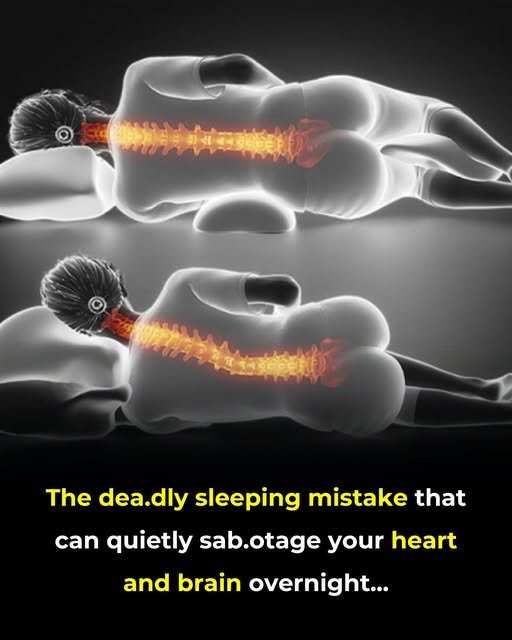
Digital media platforms frequently feature anatomical 3D renderings comparing sleeping postures—such as a side-sleeper with proper neutral spine support versus one with improper cervical curvature—paired with sensationalized headlines claiming a “deadly sleeping mistake” that sabotages the heart and brain overnight. These viral posts rely on strategic character punctuation (such as “dea.dly” or “sab.otage”), exaggerated cardiovascular threats, and curiosity-driven hooks to bypass social media moderation algorithms, provoke intense health anxiety, and drive rapid sharing and ad-monetized click-through rates rather than providing evidence-based biomechanical or medical education.
From a somnology and biomechanical perspective, poor spinal alignment during sleep primary causes localized musculoskeletal strain, neck stiffness, and lower back discomfort rather than sudden cardiac sabotage or cerebral ischemia. While chronic severe sleep apnea (a separate respiratory condition involving upper airway collapse during sleep) is clinically linked to hypertension and cardiovascular stress, routine postural misalignment of the spine on a soft or firm mattress does not restrict systemic arterial blood flow to the heart or brain. Content-farming networks systematically take standard ergonomic diagrams regarding proper pillow elevation, exaggerate minor spinal curvature into life-threatening vascular catastrophes, and insert censorial text alterations to manipulate platform distribution algorithms and maximize digital ad revenue.
Optimizing sleep posture effectively relies on straightforward ergonomic principles and supportive bedding rather than succumbing to fear-based health warnings. Maintaining a neutral spine—where the neck, mid-back, and hips remain relatively aligned using contoured pillows or a pillow placed between the knees for side-sleepers—reduces mechanical joint stress and enhances daytime physical comfort. Understanding how clickbait algorithms distort basic physical ergonomics helps consumers evaluate online health claims with critical media literacy. For verified guidance regarding chronic neck or back pain, postural corrections, or evaluated sleep quality, consulting physical therapists, orthopedists, or board-certified sleep medicine physicians provides authoritative, scientifically grounded care.
Leave a Reply