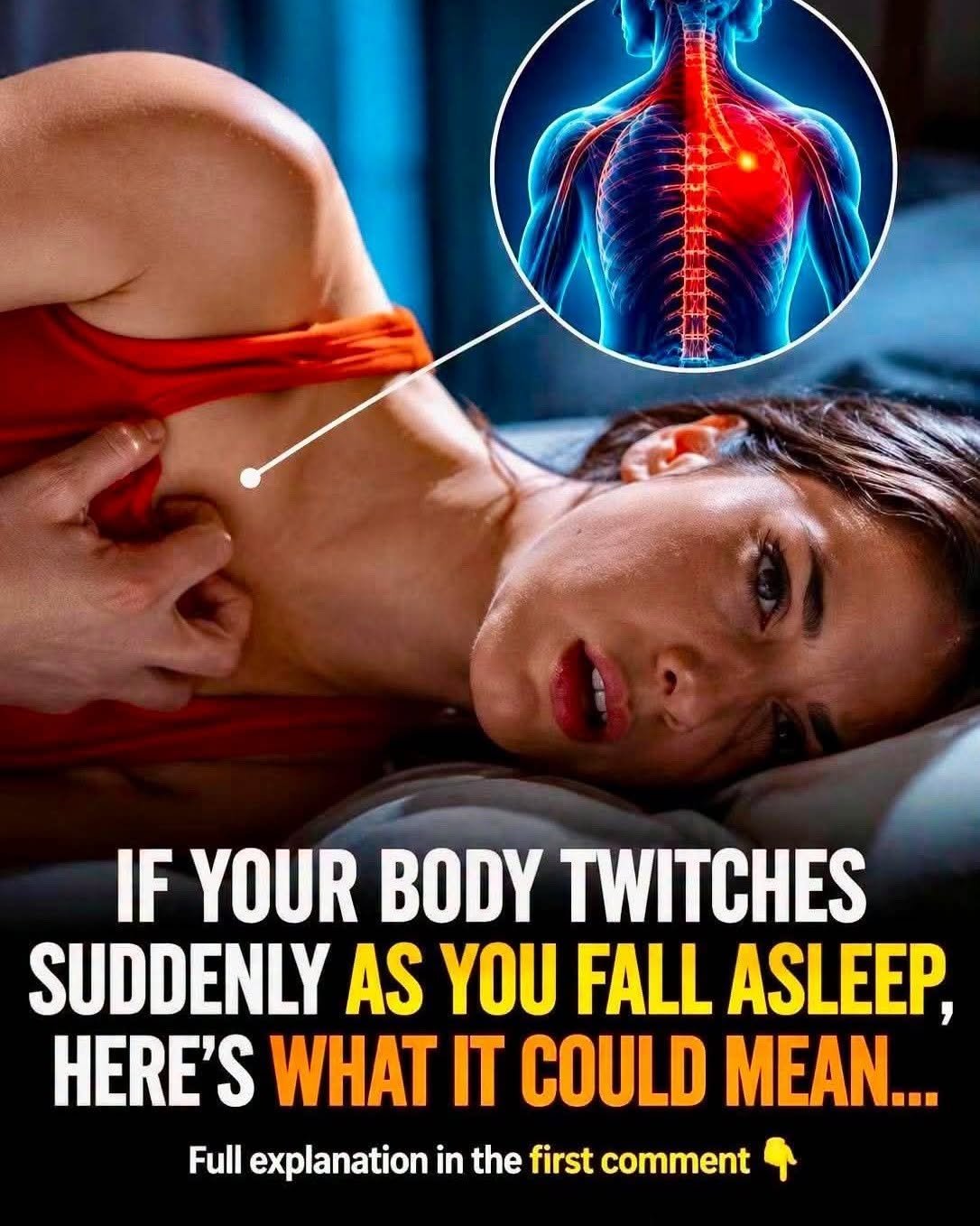
Digital media platforms frequently feature dramatic medical graphics and alarmist clickbait headlines—such as warning that sudden body twitches while falling asleep indicate a hidden medical hazard. These viral posts are specifically engineered to provoke health anxiety, curiosity, and rapid online comment sharing rather than providing accurate, evidence-based neurological or sleep science education.
From a clinical neurology and sleep medicine perspective, these sudden involuntary muscle contractions are known as hypnic jerks (or sleep starts). They are completely normal, harmless physiological phenomena that frequently occur as the body transitions from wakefulness into the early stages of sleep. As muscles relax, the brain can misinterpret this sudden relaxation as a sensation of falling, triggering a brief motor reflex response. Sensationalized online content regularly mischaracterizes routine neurological reflexes as mysterious or dangerous warnings to maximize digital engagement metrics.
Maintaining healthy sleep hygiene involves keeping a consistent sleep schedule, managing daily stress, reducing caffeine and stimulant intake before bedtime, and relying on professional clinical guidance rather than worrying about harmless physical twitches. Personal health choices and sleep concerns should always reflect scientific fact rather than internet myths. If you experience severe, painful sleep disruptions, chronic insomnia, or persistent neurological symptoms, consulting a licensed physician or sleep specialist provides safe, evidence-based direction.
Leave a Reply