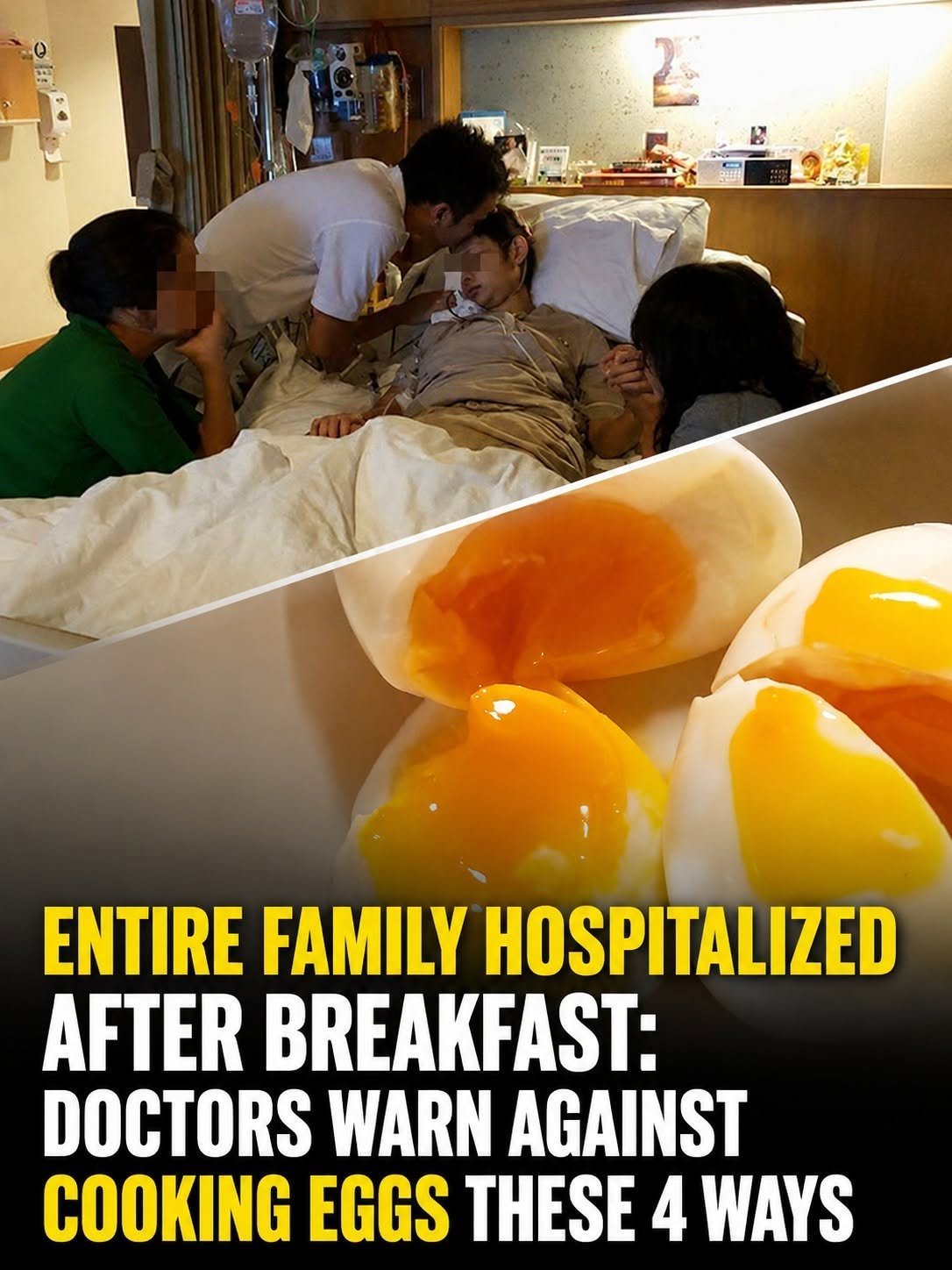
Digital media platforms frequently feature high-stakes emergency imagery—such as a hospital patient surrounded by family paired with a close-up inset of runny soft-boiled eggs—accompanied by sensationalized, alarmist headlines like “Doctors Warn: Stop Cooking Eggs These 4 Ways Before Your Next Breakfast!” and “ENTIRE FAMILY HOSPITALIZED AFTER BREAKFAST: DOCTORS WARN AGAINST COOKING EGGS THESE 4 WAYS”. These viral posts rely on dramatic family tragedy hooks, medical panic framing, and listicle warnings to bypass content moderation filters, provoke intense food safety anxiety in comment sections, and drive rapid social media sharing and ad-monetized click-through rates rather than offering accurate culinary science or public health education.
816030255_1412616290963070_6407456335970384731_n.jpg+ 1
From a clinical nutrition and food safety perspective, eggs are a highly nutritious source of complete protein, healthy fats, vitamins, and minerals. While raw or undercooked eggs carry a well-documented risk of Salmonella contamination if handled improperly, standard domestic cooking methods (such as boiling, poaching, scrambling, or frying) render eggs safe for consumption when proper storage and hygiene practices are followed. The primary food safety concerns regarding eggs stem from using cracked or unpasteurized eggs, leaving prepared egg dishes at room temperature for extended periods, or cross-contaminating surfaces rather than specific, inherently “deadly” culinary styles. Content-farming networks systematically take standard food hygiene guidelines and reframe them as catastrophic family medical emergencies to manipulate recommendation algorithms and maximize digital ad revenue.
816030255_1412616290963070_6407456335970384731_n.jpg+ 3
Practicing safe egg preparation and preventing foodborne illness effectively relies on established food safety standards rather than succumbing to viral internet panic. Standard culinary guidance emphasizes keeping eggs refrigerated below 40°F (4°C), cooking egg dishes to appropriate internal temperatures, utilizing pasteurized eggs for recipes calling for raw or runny yolks (especially for vulnerable groups like young children, the elderly, or pregnant individuals), and washing hands and surfaces after handling raw shells. Understanding how engagement algorithms weaponize health and food anxieties helps consumers approach online dietary warnings with critical media literacy. For verified guidance on food preparation, safe internal cooking temperatures, or foodborne pathogen prevention, consulting the U.S. Food and Drug Administration (FDA), local public health agencies, or certified food safety experts provides authoritative, scientifically grounded care.
816030255_1412616290963070_6407456335970384731_n.jpg+ 3
Leave a Reply