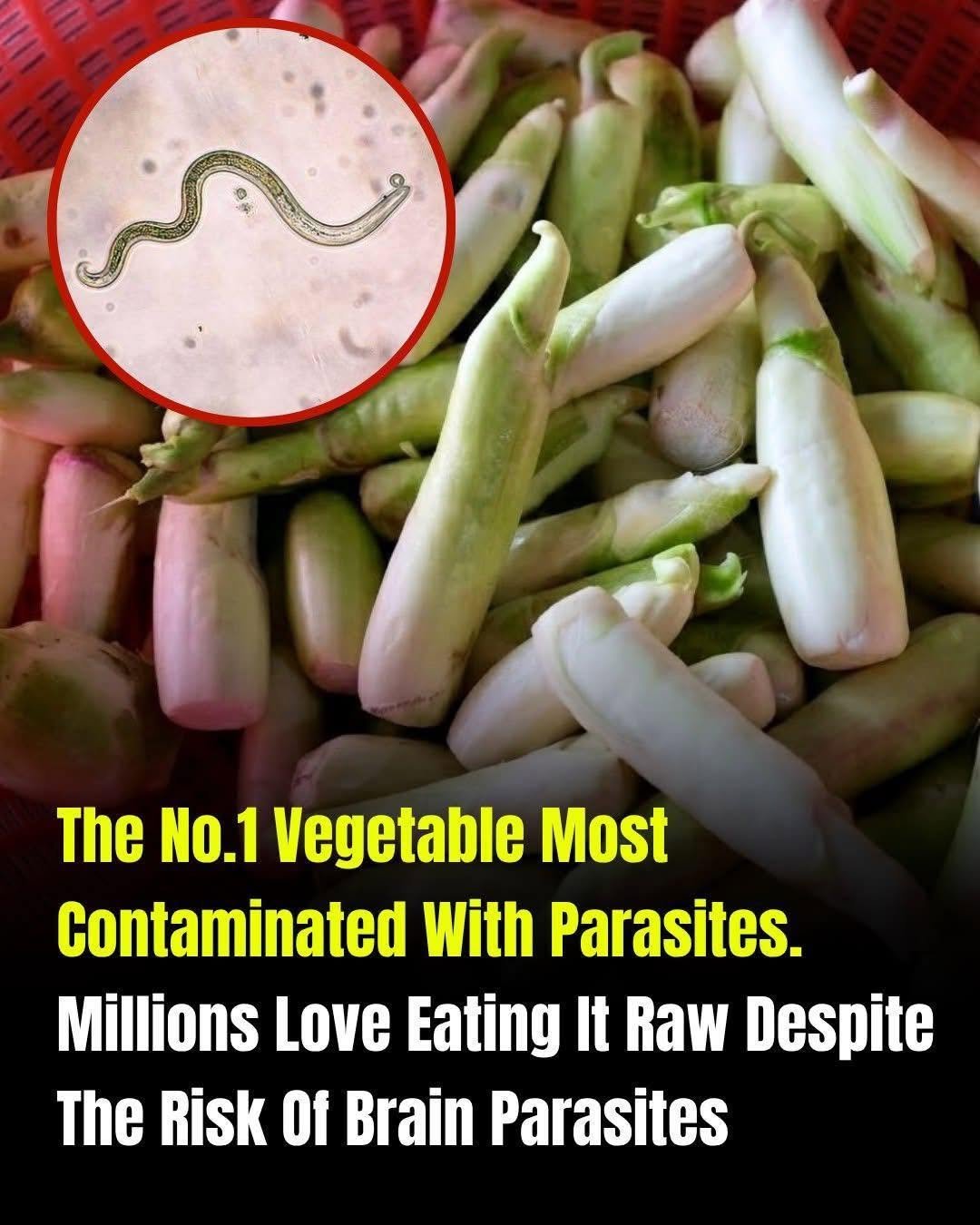
Digital media platforms frequently feature sensationalized medical graphics and alarming clickbait warnings claiming that popular raw vegetables serve as a primary vector for catastrophic brain-eating parasites. These viral posts are specifically designed to provoke intense health anxiety, fear, and rapid online sharing rather than providing accurate, evidence-based parasitological or clinical education.
From a clinical and public health perspective, foodborne parasitic infections are typically associated with consuming contaminated water, improperly washed produce grown in unsanitary soil, or undercooked meats, rather than a single specific “most contaminated” vegetable. While raw produce can occasionally harbor soil-dwelling microorganisms or protozoa if not thoroughly washed, modern agricultural safety standards and basic food hygiene—such as rinsing fruits and vegetables under clean running water—effectively minimize these risks. Sensationalized online narratives routinely exploit microscopic imagery and extreme worst-case scenarios to manufacture panic and maximize user engagement metrics.
Maintaining long-term food safety involves practicing proper hygiene, thoroughly washing fresh produce before consumption, adhering to clean food preparation habits, and relying on professional public health guidance rather than alarming internet generalizations. Personalized health decisions should always reflect sound hygiene and clinical evidence. If you suspect a foodborne illness or experience persistent gastrointestinal symptoms, consulting a licensed physician or public health specialist provides safe, evidence-based direction.
Leave a Reply