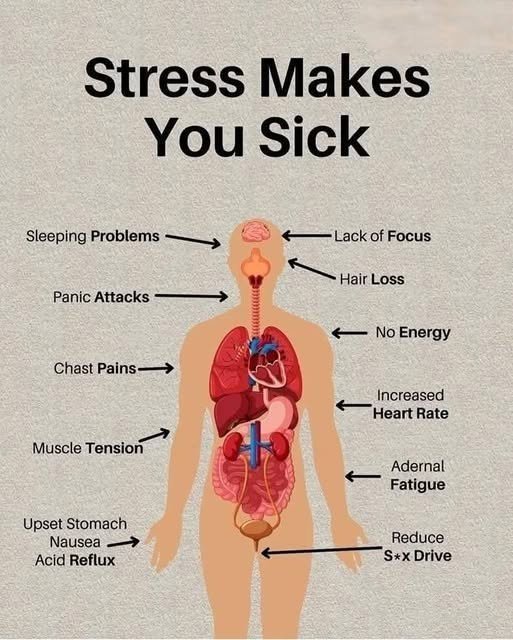
Digital media platforms frequently feature sensationalized medical infographics and generalized clickbait graphics claiming that psychological stress acts as an all-encompassing, immediate cause of severe physical disease. These viral posts are specifically designed to provoke health anxiety, fear, and rapid online sharing rather than providing accurate, evidence-based neurobiological or clinical education.
From a clinical and physiological perspective, the human stress response is an adaptive survival mechanism mediated by the hypothalamic-pituitary-adrenal (HPA) axis and the sympathetic nervous system. While prolonged or unmanaged chronic stress can contribute to functional bodily changes—such as tension headaches, transient gastrointestinal upset, elevated heart rate, and sleep disturbances—viral graphics routinely present a cumulative laundry list of complex medical conditions as inevitable, direct outcomes. Furthermore, concepts like “adrenal fatigue” are not recognized medical diagnoses within endocrinology, reflecting how online content creators flatten complex pathophysiology into alarming, oversimplified narratives to maximize user engagement metrics.
Managing chronic stress effectively involves adopting evidence-based lifestyle practices, including regular aerobic exercise, structured sleep hygiene, mindfulness interventions, and building strong social support networks. Personalized wellness approaches should always prioritize comprehensive, individual clinical evaluations over generalized internet infographics. If you experience persistent physical symptoms, severe anxiety, chest pain, or functional impairment, consulting a licensed physician or mental health professional provides safe, evidence-based guidance and personalized care.
Leave a Reply