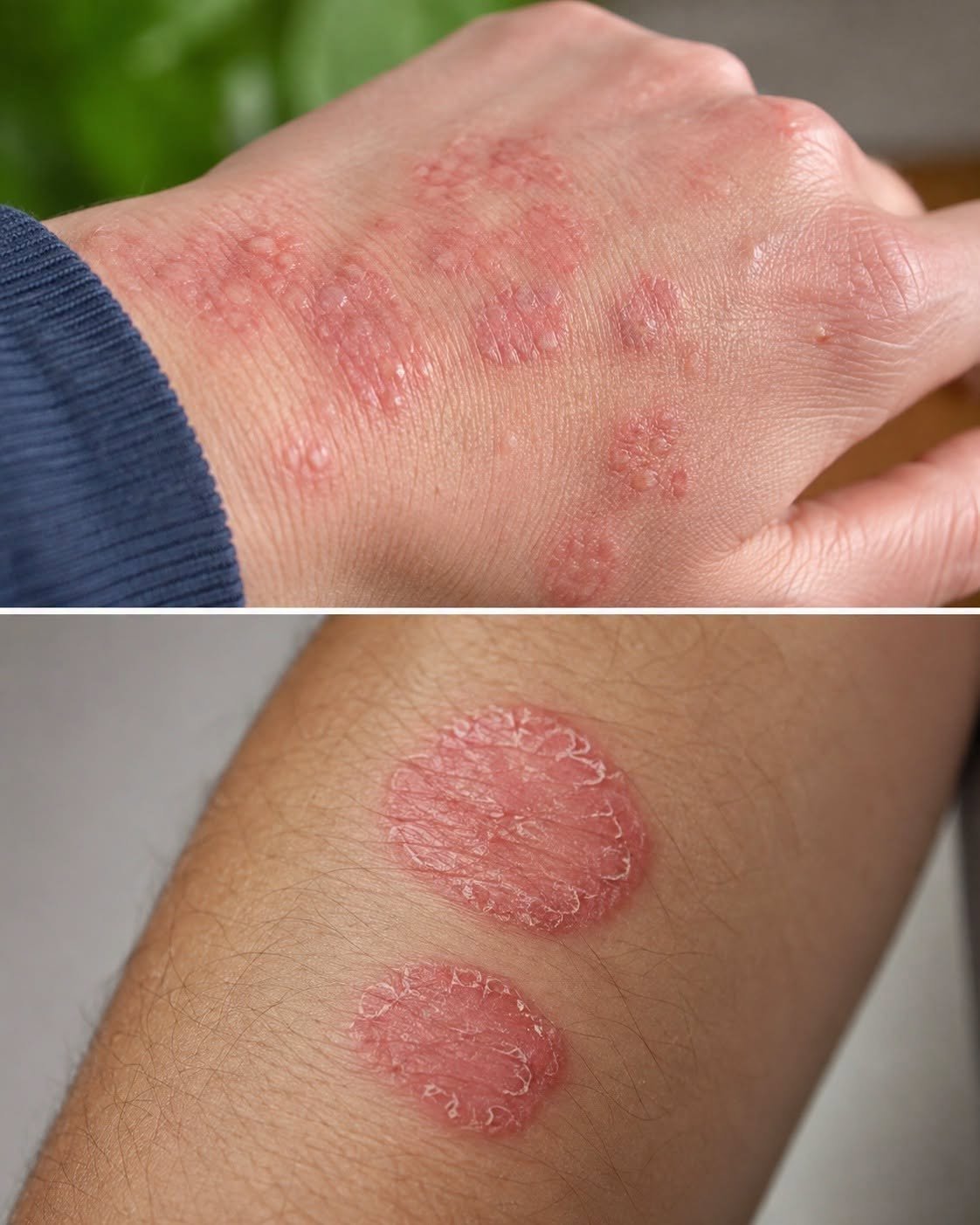
Circular, discolored skin lesions are a frequent cause of dermatological concern and often trigger viral clickbait headlines promising quick self-diagnoses. While raised or coin-shaped patches on the skin can look strikingly similar at first glance, they typically point to distinct skin conditions such as nummular eczema (discoid eczema) or tinea corporis (ringworm).
Understanding the key differences between these two conditions helps clarify why accurate identification is necessary:
- Nummular Eczema: This is a non-contagious, inflammatory skin condition characterized by itchy, coin-shaped plaques. The patches are typically solid throughout, scaly or crusty, and commonly appear in multiple clusters across the arms, legs, or hands.
- Ringworm (Tinea Corporis): This is a contagious fungal infection caused by dermatophytes. It classically forms raised, distinct circular borders with a clearer center, creating a characteristic “ring” appearance, and can spread through direct contact or shared items.
Because these conditions arise from completely different underlying causes—inflammation versus a fungal organism—their treatments are opposite. Applying over-the-counter corticosteroid creams intended for eczema can worsen a fungal ringworm infection, while antifungal creams will not soothe inflammatory eczema. Consulting a board-certified dermatologist for visual evaluation or skin scraping ensures an accurate diagnosis and proper treatment plan.
Leave a Reply