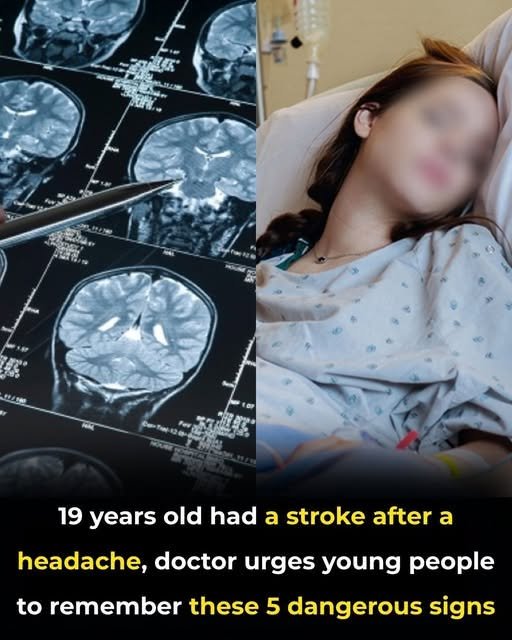
Digital media platforms frequently feature high-stakes medical imagery—such as brain scan imaging paired with a young patient in a hospital bed—accompanied by sensationalized headlines like “If you spot #3, call the doctor immediately,” “19 years old had a stroke after a headache, doctor urges young people to remember these 5 dangerous signs,” and related variations. These viral posts rely on extreme medical fear-mongering, numeric listicle hooks, and curiosity-driven truncation (“If you spot #3…”) to bypass content moderation filters, incite severe health anxiety in comment sections, and drive rapid social media sharing and ad-monetized click-through rates rather than offering accurate neurological or emergency medicine education.
From a neurology and emergency medicine perspective, while strokes can occur in younger demographics due to congenital vascular anomalies, hypercoagulable states, or arterial dissections, viral listicles often conflate common, benign symptoms—like routine tension headaches or general fatigue—with acute cerebrovascular events. True stroke recognition relies on standardized clinical frameworks such as the FAST acronym (Facial drooping, Arm weakness, Speech difficulty, Time to call emergency services), which identify sudden neurological deficits. Content-farming networks systematically take rare, tragic medical anomalies in young people and reframe them into generalized, clickbait warnings to manipulate recommendation algorithms and maximize digital ad revenue.
Recognizing neurological emergencies and evaluating persistent health symptoms effectively relies on evidence-based clinical protocols rather than sensationalized social media slideshows. Standard medical guidance emphasizes seeking immediate emergency evaluation for sudden neurological deficits, severe acute headaches (“thunderclap” headaches), sudden vision changes, or unexplained loss of motor function. Understanding how engagement algorithms weaponize medical anxiety helps consumers approach online health content with critical media literacy. For verified guidance on stroke prevention, neurological symptoms, or emergency care, consulting board-certified neurologists, emergency physicians, or accredited medical organizations provides authoritative, scientifically grounded care.
Leave a Reply