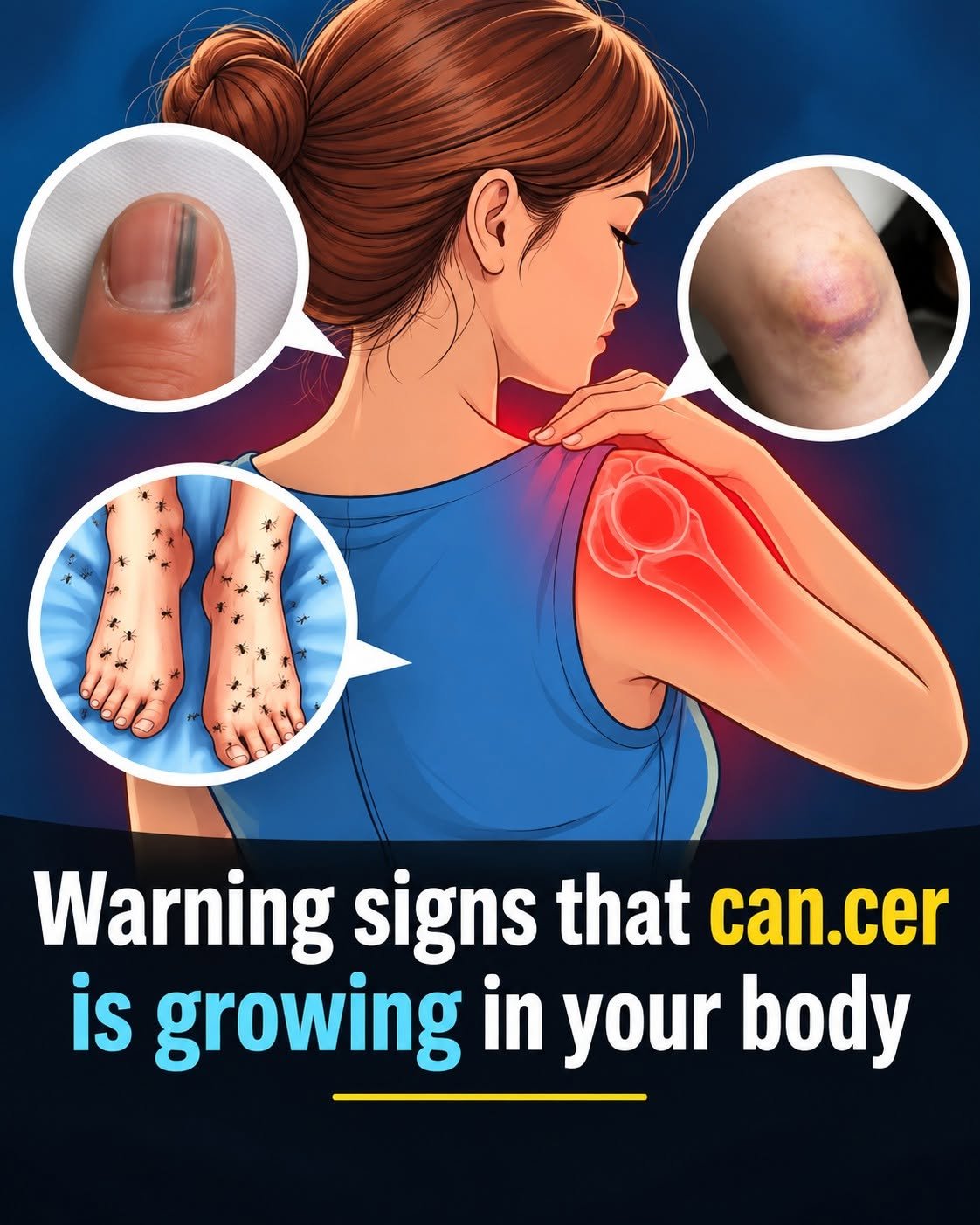
Digital media platforms frequently feature composite medical illustrations paired with alarmist clickbait headlines—such as claiming that arbitrary physical sensations, common bruises, or skin markings serve as definitive warning signs of hidden cancer growing in the body. These viral posts systematically utilize stylized graphics and altered text (such as “can.cer”) to bypass automated platform filters while provoking intense health anxieties, panic, and rapid online comment sharing.
From a clinical oncology and dermatology perspective, malignant conditions require rigorous diagnostic evaluation rather than speculative self-assessment based on generalized symptoms. While specific persistent skin anomalies—such as subungual dark streaks under nails (which can occasionally warrant evaluation for acral lentiginous melanoma) or unexplained bruising patterns—merit professional medical assessment, they are frequently caused by benign physical trauma, vitamin deficiencies, localized dermatological conditions, or normal physiological variations. Content-farming operations routinely exploit common physical signs by associating them with terminal illnesses to maximize digital engagement metrics, click-through rates, and advertising revenue.
Maintaining proactive health and oncological safety involves adhering to scheduled clinical screenings, monitoring unusual or persistent physical changes with qualified healthcare providers, and relying on evidence-based medicine rather than alarming internet generalizations. Diagnostic verification of oncological conditions requires professional physical examinations, laboratory blood tests, advanced imaging, and histological biopsies. If you notice persistent, unexplained physical changes or have health concerns, consulting a licensed physician, dermatologist, or oncologist provides safe, definitive, and individualized care.
Leave a Reply