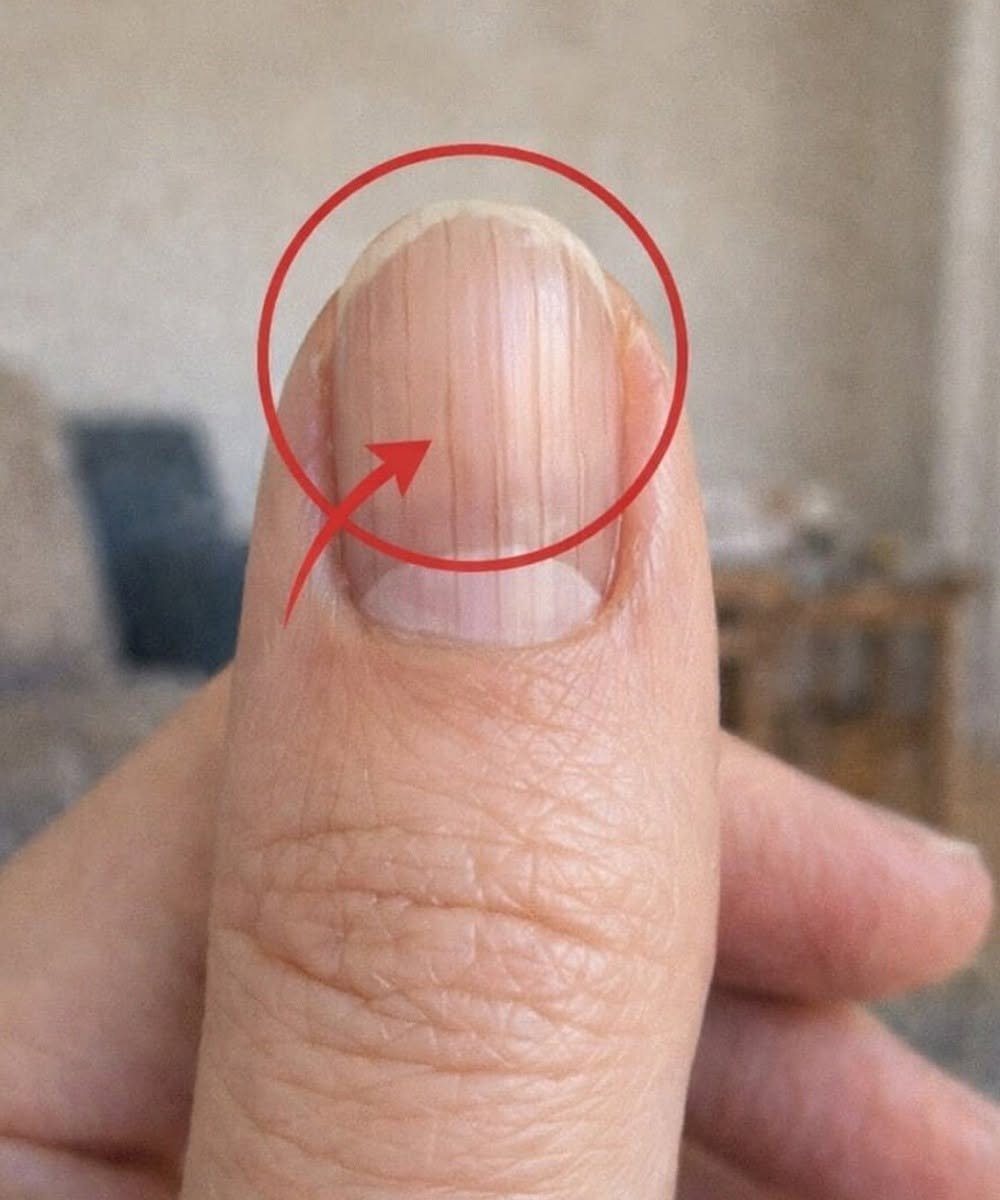
Digital media platforms frequently feature close-up medical macro-photography—such as a thumb displaying distinct vertical lines running from the cuticle to the tip—paired with sensationalized clickbait captions like “If you have these lines on your nails it is a clear sign that…”. These viral posts rely on ominous sentence truncation, body-focused health anxiety, and manufactured diagnostic mystery to bypass content moderation filters, provoke unnecessary medical panic in comment sections, and drive rapid social media sharing and ad-monetized click-through rates rather than offering accurate dermatological education.
From a clinical dermatology perspective, vertical or longitudinal nail ridges running from the base of the nail to the free edge are an extremely common, typically benign anatomical finding. As individuals age, the rate of nail cell turnover changes, moisture retention decreases, and the nail matrix experiences natural structural shifts, much like the development of fine lines on facial skin. While prominent ridging can occasionally be associated with minor dryness, nail trauma, or nutritional factors, vertical lines are usually a normal part of the physiological aging process and do not inherently indicate severe internal illness. Content-farming networks systematically take ordinary, age-related bodily variations and frame them as alarming medical warnings to manipulate recommendation algorithms and maximize digital ad revenue.
Evaluating nail health and interpreting physical changes effectively relies on established medical principles rather than sensationalized internet speculation. Routine nail maintenance involves keeping hands and cuticles moisturized, avoiding harsh chemical exposures, and recognizing the distinction between harmless vertical ridges and more concerning changes—such as dark pigmented bands or deep horizontal depressions (Beau’s lines). Understanding how engagement algorithms weaponize everyday physical traits helps consumers approach online wellness claims with critical media literacy. For verified diagnostic evaluations of persistent nail changes, brittleness, or structural abnormalities, consulting a board-certified dermatologist provides authoritative, scientifically grounded care.
Leave a Reply