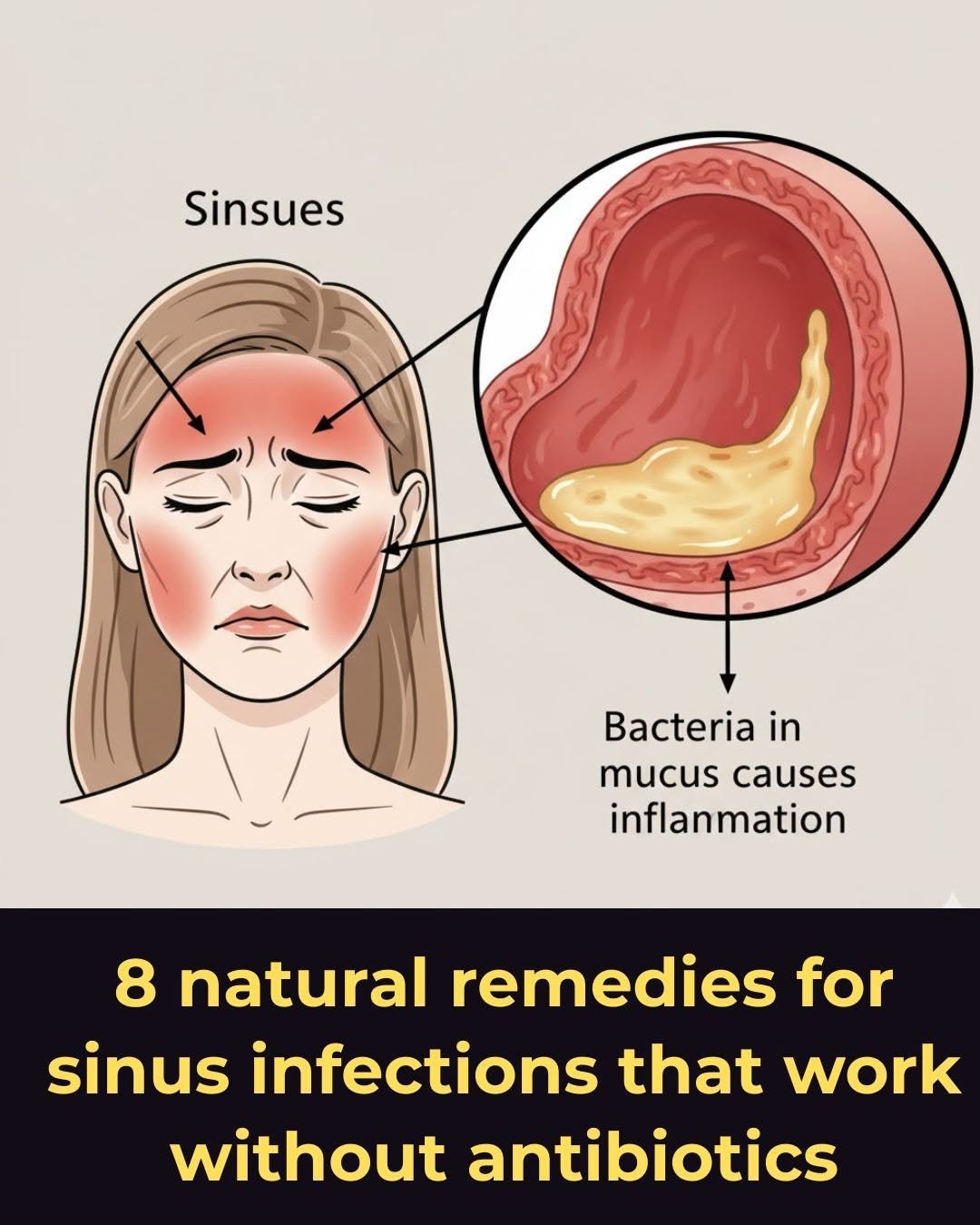
Sinus infections, or sinusitis, can cause nasal congestion, facial pressure, headache, thick mucus, and discomfort around the nose, cheeks, or forehead. Fortunately, many acute cases improve without antibiotics, particularly when they are caused by a viral infection. One of the most useful home measures is a saline nasal spray or rinse, which can help loosen thick mucus and improve sinus drainage. If you use a neti pot or nasal-rinse bottle, it is important to use distilled, sterile, previously boiled and cooled, or appropriately filtered water—not untreated tap water. (mayoclinic.org) Drinking adequate fluids, getting plenty of rest, and using a clean humidifier can also help keep nasal passages more comfortable. (mayoclinic.org)
Another simple option is warm moisture and gentle heat. Taking a warm shower or breathing comfortably in warm, moist air may help loosen mucus, while a warm compress placed over the nose, cheeks, or forehead can reduce feelings of facial pressure. (mayoclinic.org) Sleeping with your head slightly elevated may also encourage drainage and make congestion more manageable. For pain or fever, commonly used over-the-counter medicines such as acetaminophen or ibuprofen may provide relief when they are appropriate for you. Decongestants can sometimes reduce congestion, but nasal decongestant sprays should generally be used only for a few days because prolonged use can cause rebound congestion. (mayoclinic.org) People with high blood pressure, heart conditions, pregnancy, or certain medication interactions should check with a healthcare professional before using some decongestants.
It is important to know when home treatment is no longer enough. If symptoms persist for more than about 10 days without improving, become significantly worse after initially getting better, or involve severe facial pain or persistent fever, a healthcare professional should evaluate you for possible bacterial sinusitis or another cause. (mayoclinic.org) Antibiotics do not treat viral infections and should not be taken without appropriate medical guidance. Recurrent or chronic sinus symptoms may also require evaluation for allergies, nasal polyps, or other underlying problems. Disclaimer: This article is for general educational and informational purposes only and does not constitute medical advice, diagnosis, or treatment. Home remedies can ease symptoms but may not treat the underlying cause in every case. Always verify health information through reliable medical and scientific sources and consult a qualified healthcare professional for severe, persistent, recurrent, or worsening symptoms.
Leave a Reply