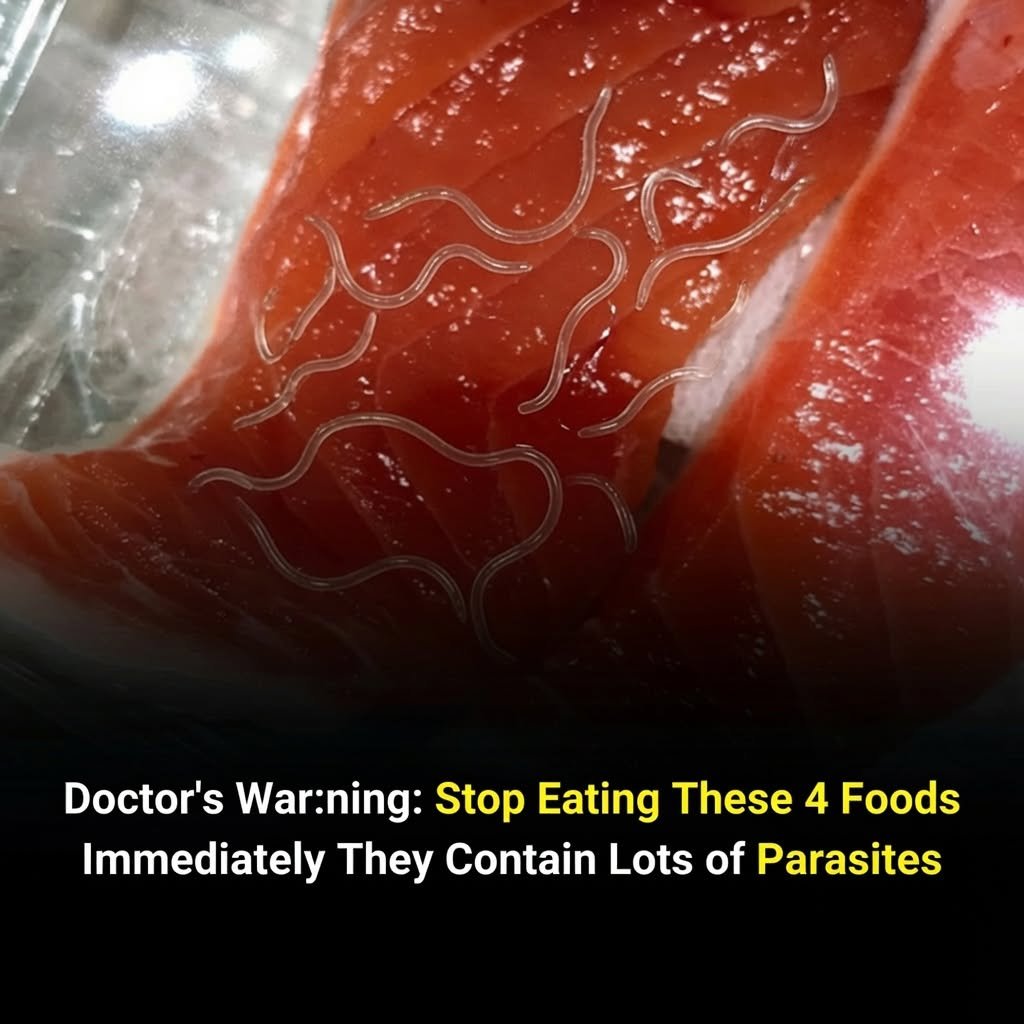
Parasites are not something you should expect to find in ordinary food, but certain foods have a higher risk when they are raw, undercooked, unwashed, or contaminated during handling. One of the most important examples is raw or undercooked fish and squid. Parasites such as Anisakis can infect people who eat inadequately cooked seafood and may cause abdominal pain, nausea, vomiting, diarrhea, or other digestive symptoms. (cdc.gov) A second food group is undercooked meat, particularly pork and certain wild-game meats. Trichinella larvae can cause trichinellosis when contaminated meat is eaten raw or insufficiently cooked. (cdc.gov) This doesn’t mean these foods are inherently unsafe—proper cooking dramatically reduces the risk.
The third group is raw or unwashed fruits and vegetables, including leafy greens. These foods can become contaminated with parasites through contaminated soil, irrigation water, animal feces, or poor handling. The CDC identifies parasites such as Cryptosporidium, Giardia, and Cyclospora among organisms that can be transmitted through contaminated food, while unwashed produce can provide a route of exposure. (cdc.gov) A fourth category is raw aquatic plants, such as watercress, which can carry certain parasites when grown or harvested in contaminated environments. (cdc.gov) People should also remember that foodborne illness is not limited to parasites: bacteria and viruses can contaminate many of the same foods. Pregnant women, young children, older adults, and people with weakened immune systems can face a higher risk of serious foodborne illness and should take additional precautions. (cdc.gov)
The good news is that simple food-safety habits can greatly reduce the risk. Cook seafood thoroughly to an internal temperature of about 145°F (63°C), cook meat to appropriate safe temperatures, wash fresh produce under running water, and prevent raw meat or seafood from contaminating ready-to-eat foods. (cdc.gov) For seafood eaten raw, freezing under appropriate conditions can kill certain parasites, but freezing does not eliminate every harmful germ, so thoroughly cooking seafood remains the safest option. (fda.gov) Avoid relying on appearance, smell, or taste to determine whether food contains parasites. Disclaimer: This article is for general educational and food-safety information only and does not constitute medical advice, diagnosis, or treatment. Parasite risk varies according to food type, origin, preparation, and handling, and most properly prepared foods are safe. Always verify food-safety information through reliable medical, scientific, and government sources and consult a qualified healthcare professional if you develop persistent or concerning symptoms after suspected foodborne exposure.
Leave a Reply