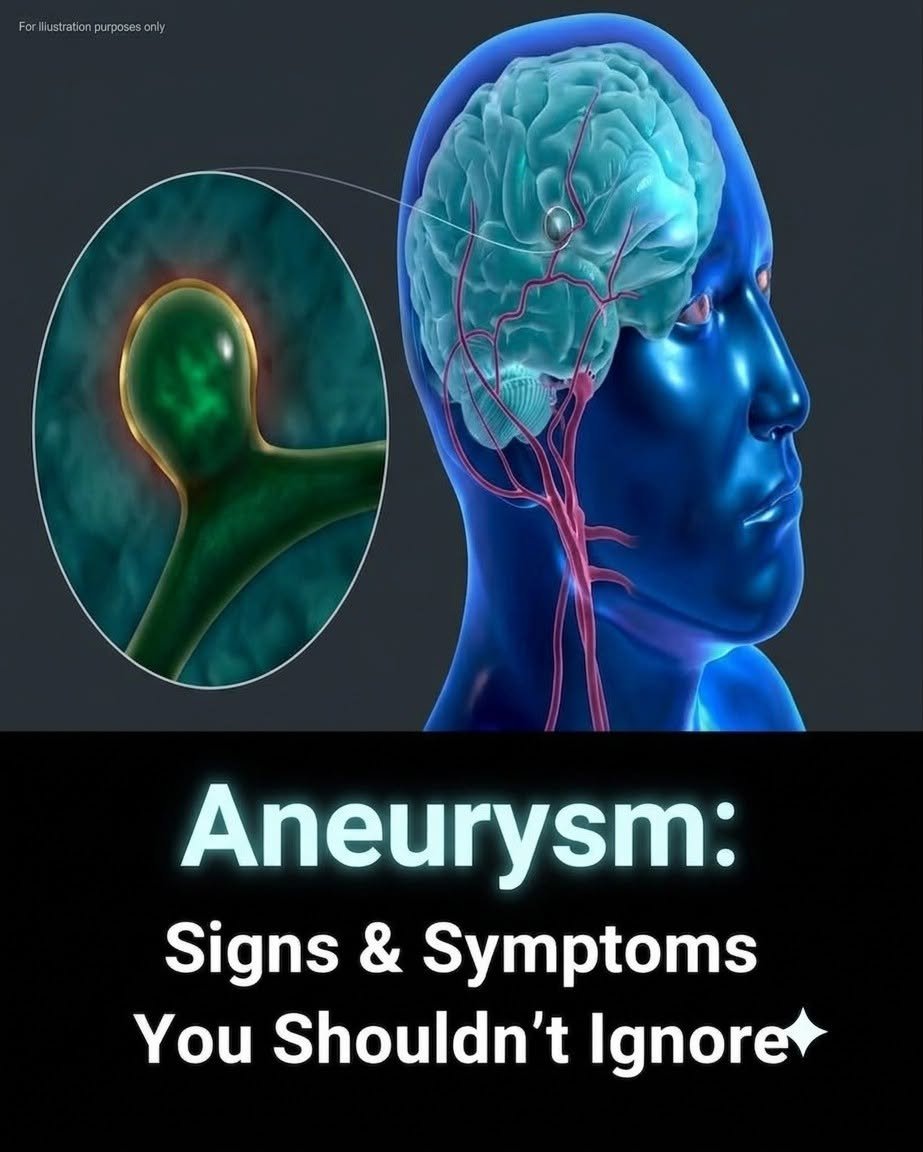
A brain aneurysm is a weak area in the wall of a blood vessel in the brain that can form a balloon-like bulge. Most unruptured aneurysms are small and cause no noticeable symptoms, meaning they are sometimes discovered accidentally during brain imaging performed for another reason. However, a larger aneurysm can occasionally press on nearby nerves or brain tissue and produce warning symptoms such as pain above or behind one eye, changes in vision or double vision, numbness or weakness on one side of the face, headaches, or seizures. These symptoms do not prove that someone has an aneurysm, because many other conditions can cause similar problems. Nevertheless, persistent or unusual neurological symptoms deserve professional medical evaluation rather than being dismissed as ordinary headaches or fatigue.
The most important warning appears when an aneurysm leaks or ruptures. The classic symptom is a sudden, extremely severe headache that develops rapidly and is often described as a “thunderclap” headache or the worst headache a person has ever experienced. Other possible symptoms include nausea or vomiting, stiff neck, sensitivity to light, blurred or double vision, confusion, seizure, weakness or numbness on one side of the body, and loss of consciousness. In some cases, a small leak may occur before a larger rupture, producing an unusually severe headache that can last for days. A ruptured aneurysm can cause bleeding around the brain and is a medical emergency requiring immediate treatment. Risk factors associated with brain aneurysms include smoking, uncontrolled high blood pressure, certain inherited conditions, and a family history of aneurysms or hemorrhagic stroke.
The key message is not to panic over an ordinary headache, but never ignore a sudden and extraordinary one. If someone suddenly develops an extremely severe headache, especially when accompanied by vomiting, stiff neck, confusion, seizure, fainting, vision problems, or weakness or numbness on one side of the body, emergency medical help should be sought immediately. Early assessment can make an important difference when serious bleeding has occurred. People with significant risk factors, particularly a strong family history, can also discuss with a healthcare professional whether screening or other evaluation is appropriate. Disclaimer: This article is for general educational and informational purposes only and does not constitute medical diagnosis, treatment, or personalized health advice. Brain aneurysms may cause no symptoms, and the symptoms described can have many other causes. Some online health claims may be general, exaggerated, or unauthenticated, so important information should be verified through reliable medical sources and qualified healthcare professionals. If a sudden, extremely severe headache or other emergency warning signs occur, seek emergency medical care immediately.
Leave a Reply