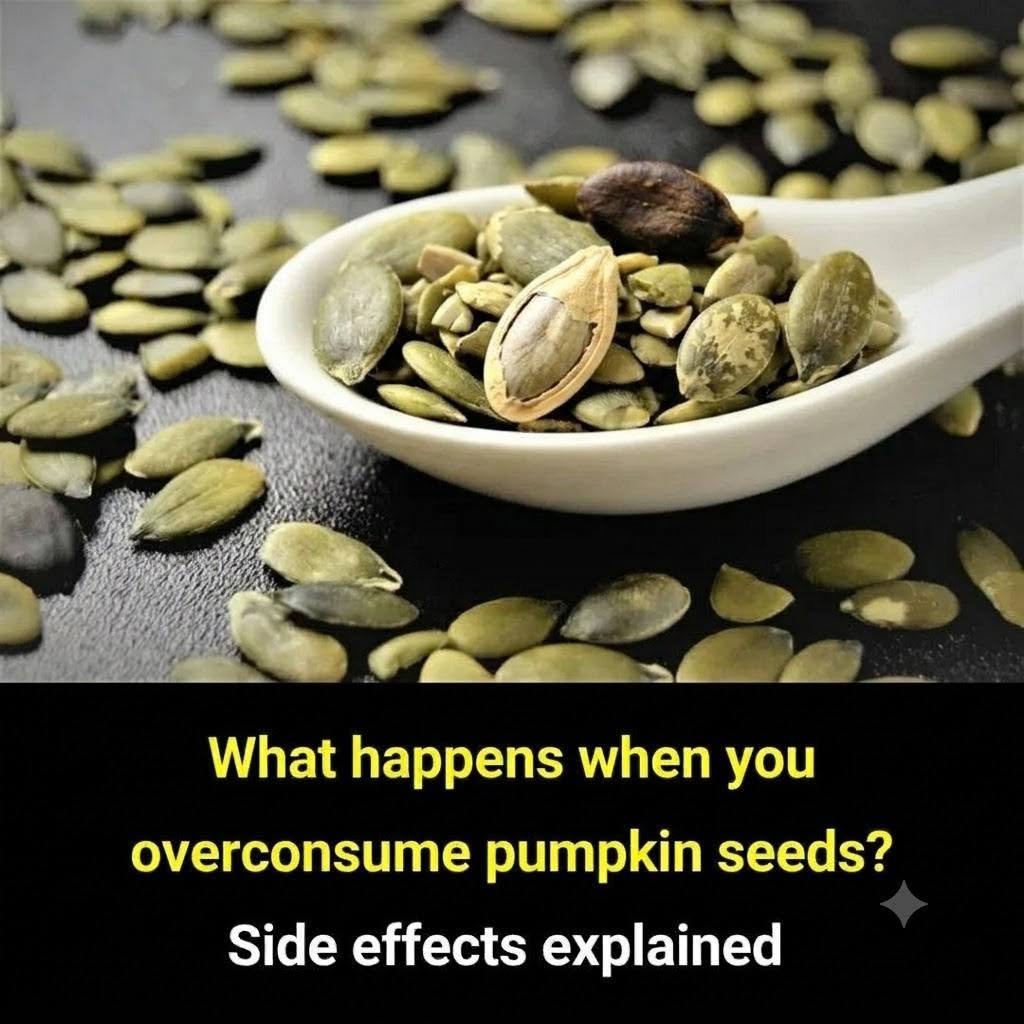
Pumpkin seeds are small but remarkably nutrient-dense, providing protein, unsaturated fats, magnesium, zinc, iron, phosphorus, and fiber. A modest serving can contribute valuable nutrients to a balanced diet, which is why pumpkin seeds are often used as a convenient snack or added to salads, yogurt, oatmeal, and other meals. (webmd.com) Their magnesium content is particularly notable, while their protein and healthy fats can make them more satisfying than many highly processed snack foods. However, nutritious does not mean unlimited. Pumpkin seeds are calorie-dense and very easy to eat by the handful, so portion size matters. About 1 ounce (28 grams) is a commonly referenced serving, and regularly consuming much larger amounts can add substantial calories to your daily intake. (clevelandclinic.org)
Eating too many at once may also cause digestive discomfort, especially if your body is not accustomed to a high-fiber diet. Depending on the type and whether the shells are eaten, large portions can contribute to bloating, stomach cramps, gas, constipation, or diarrhea. (webmd.com) Salted or heavily seasoned pumpkin seeds present another concern because they can contain significant amounts of sodium, which may be unsuitable for people who have been advised to restrict salt. (clevelandclinic.org) Some people can also have an allergic reaction to pumpkin seeds, although such allergies appear to be uncommon. If you develop swelling, hives, wheezing, vomiting, or difficulty breathing after eating them, seek appropriate medical attention. Young children should also be supervised when eating seeds because of choking concerns.
The healthiest approach is to enjoy pumpkin seeds in sensible portions and choose plain or lightly salted varieties. You can sprinkle a small amount over a salad, add them to oatmeal, or use them as a crunchy topping instead of eating directly from a large bag. People with kidney disease or other conditions requiring specific mineral or sodium restrictions should ask their healthcare professional how pumpkin seeds fit into their individual diet, because their relatively high mineral content may need to be considered. (acibademinternational.com) Disclaimer: This article is for general educational and nutritional information only and does not constitute medical diagnosis, treatment, or personalized dietary advice. Pumpkin seeds can be a healthy food for many people, but eating excessive amounts may cause digestive problems or contribute significant calories and sodium. Individual dietary needs vary, so always verify important health information through reliable sources and consult a qualified healthcare professional if you have a medical condition, food allergy, or specific dietary restrictions.
Leave a Reply